Affiliate tracking sources tell you where your partner-led growth is really coming from. When you are looking at a dashboard full of clicks, signups, conversions, rejected leads, and payout requests that all seem to tell different tales, it can get a bit daunting.
For marketers running affiliate, partner, or performance campaigns, traffic is only useful when it can be tied back to quality. A source that brings 10,000 clicks but no serious buyers is not growth.
That is why brands need to look beyond surface-level traffic and understand how each source behaves after the click. With the right affiliate tracking software, you can connect clicks, conversions, fraud signals, approvals, and partner payouts in one cleaner view.
Search still plays a major role, with 69% of affiliate marketers using SEO as a traffic source, while social media follows closely at 67%. But those numbers only become useful when you know which affiliate tracking sources are actually driving revenue home.
What are Affiliate Tracking Sources Really Telling You?
Affiliate tracking sources tell you more than where a click came from. They show intent. They show how ready a user is to take action. They also show whether a partner is bringing useful traffic or simply sending numbers that look good on paper with no impact.
A blog review, a creator post, a paid ad, and an email campaign can all send traffic to the same offer. On the surface, they may look similar. Same landing page. Same form. Same goal. But the user mindset is different in every case.
Someone coming from search may already know the problem. Someone from social may still be exploring. Someone from email may already trust the sender. Someone from paid traffic may need a sharper landing page before they convert.
Why does source quality beat traffic volume?
Volume is easy to admire. A source sends 20,000 visits, and everyone gets excited for five minutes. Then the quality report arrives. Low approvals. Poor sales follow-up. High duplicate leads. Maybe some fake activity is hiding in plain sight.
Good affiliate tracking does not reward baseless volume. It helps you see which sources bring people who actually move through the funnel. Trackier’s own guide on affiliate marketing channels also points to the same idea, where channel choice depends on intent, funnel stage, and consistency.
Marketers need to be slightly less impressed by traffic and a little more interested in what happens after it.
Ask these questions more often:
- Do users submit real details?
- Do they engage after signup?
- Do they reach the sales stage?
- Do they buy, renew, or come back?
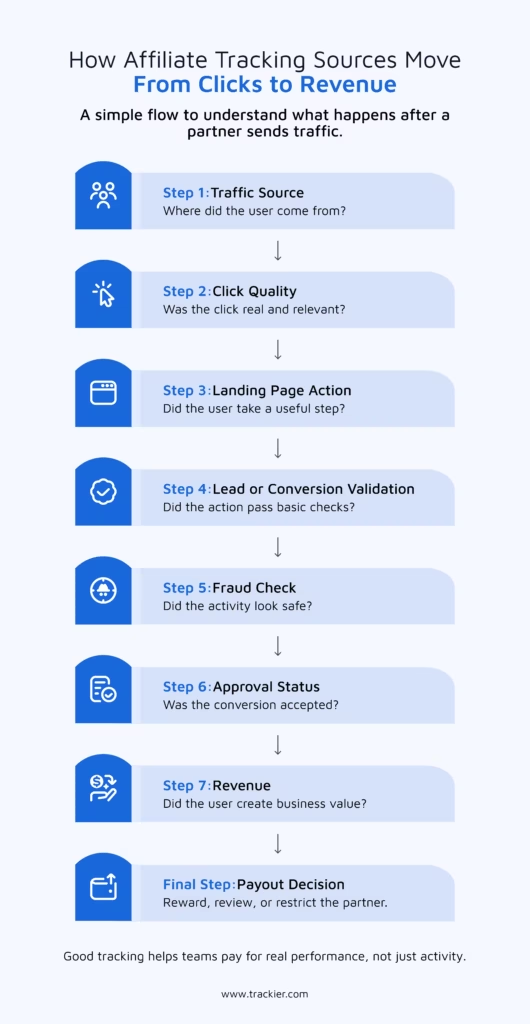
How does tracking connect clicks to revenue?
A click is the start of the journey.
Useful tracking connects that click to the campaign, partner, device, offer, conversion status, approval quality, and payout logic. When these actions sit together, you can see which partner created value and which source only created activity.
This is also why a clean tracking infrastructure really matters. Trackier supports methods such as API-based tracking, fraud detection, universal tracking tags, cookie tracking, pixel tracking, and gateway methods for monitoring affiliate conversions.
You do not want to pay every source equally if every source is not creating the same value. One source may bring fewer leads but better sales conversations. Another may bring quick form fills that never move forward.
Affiliate tracking sources help you separate both before your budget starts getting wasted.
Which Affiliate Tracking Sources to Watch First?
Some sources bring buyers who already know what they want. Some bring curious visitors who need more education before they convert. Some look great in reports but create very little value once approvals, sales follow-ups, and repeat activity are all accounted for.
So, the question is not “which source brings the most traffic?” The question is “which source brings traffic that behaves well after the click?”
1. Organic search traffic
Organic search is still one of the strongest Affiliate tracking sources because the user usually arrives with intent. They are looking for a solution, a comparison, a review, or a clear answer. That makes SEO traffic different from traffic that interrupts the user while they are doing something else.
Recent affiliate marketing data shows that 69% of affiliate marketers use SEO to drive traffic. That number matters because it tells us something simple. Search-led partner content is still doing serious work, especially for reviews, comparison pages, tutorials, and problem-led blogs.
For brands, this means SEO partners should not be judged only by clicks. You need to check which keywords they rank for, using sources such as a Google organic results API to evaluate search visibility, what kind of content they publish, and whether the traffic converts after the first visit. A partner ranking for “best software for affiliate payouts” will usually bring a very different user than one ranking for a broad “make money online” phrase.
2. Social media traffic
Social is no longer just a top-of-funnel source that creates buzz and then disappears from the report. Many affiliates now use LinkedIn, YouTube, Instagram, TikTok, and niche communities to explain products, share use cases, and move users toward action.
Around 67% of affiliates use social networks as a traffic source, which puts social very close to search in terms of adoption. But social traffic can be tricky because it often mixes serious interest with casual browsing. That is why tracking matters more here, not less.
A creator post may get attention today and conversions three days later. A LinkedIn recommendation may not create a direct sale immediately, but it may warm up the buyer before a branded search or demo request. If you only reward the final click, you may miss the partner who shaped the decision earlier.
3. Mobile traffic
Mobile is where many Affiliate tracking sources either prove their value or quietly break. People research on mobile, click affiliate links on mobile, compare offers on mobile, and sometimes complete the purchase later on desktop.
One recent data point shows that around 62% of affiliate-referred traffic comes from mobile devices. It means brands need to check whether partner links, landing pages, forms, tracking tags, and attribution windows are built for mobile-heavy behavior.
This is especially important for SaaS, fintech, ecommerce, travel, and app-first brands. If your tracking setup loses users between mobile click and desktop conversion, your report may undercount good partners. Worse, you may cut a source that was actually doing its job.
4. Email traffic
Email may not look as loud as social or as scalable as paid traffic, but it can be one of the cleaner Affiliate tracking sources when used by the right partner. The reason is simple. Email usually reaches an audience that already has some trust in the sender.
About 42% of affiliates use email marketing as a traffic source. That may be lower than SEO or social, but the quality can be strong when the list is relevant, active, and built properly. A good email partner can drive informed clicks, not random traffic.
Still, email needs careful tracking. You should review open-to-click quality, conversion rate, unsubscribe patterns, approval rate, and duplicate submissions. A list that performs well once may not stay strong forever, so source-level reporting helps you spot fatigue before it turns into wasted payout.
5. Paid and partner referral traffic
Paid traffic can scale fast, which is both the good news and the problem.
When affiliates use paid search, native ads, display, or sponsored placements, brands need clearer rules around bidding, brand terms, landing pages, and traffic quality.
This source should be watched closely because it can create quick volume. But quick volume without source rules can lead to overlap, bidding conflicts, and low-quality conversions. Nobody wants to pay twice for demand they already owned.
Partner referral traffic works differently. It often comes from communities, review platforms, industry newsletters, agencies, consultants, or niche publishers. These sources may not always bring the highest click count, but they can bring serious buyers because the recommendation comes with context.
For both paid and referral traffic, the job is to compare cost, approval quality, sales movement, and payout value. Affiliate tracking sources should help you see whether a source is helping the funnel or simply standing near the finish line.
How Should Brands Judge Affiliate Tracking Sources?
Traffic tells you that people arrived. It does not tell you whether those people were useful, interested, ready, real, or worth paying for.
After the first click, look at how users behave once they land on your page, submit a form, install an app, start a trial, or move into the sales funnel. Source-level reporting is useful here because it connects channel activity with conversion quality, approval rates, and long-term value.
1. Do users from this source convert with quality?
A source can have a strong conversion rate and still create weak results. That sounds annoying, but it happens often. Some partners drive quick form fills, coupon-led actions, or low-intent signups that look good in the first report but fall apart later.
So, check what happens after the conversion. Are these users accepted by your team? Do they pass validation? Do they move from lead to opportunity? Do they buy at a healthy value? For SaaS, ecommerce, finance, and agency-led programs, this matters more than a clean-looking conversion count.
2. Are approvals stable over time?
Approval rate is one of the most honest ways to read tracking sources. It shows whether a source is bringing actions that your business can actually accept. If approvals keep dropping, the source may be attracting the wrong audience or the partner may be pushing the offer too broadly.
A steady approval rate does not mean the source is perfect, but it gives you a cleaner base for decisions. It helps you understand which partners deserve better terms, which sources need closer checks, and which traffic should be slowed before it eats more budget.
3. Is the source creating revenue or only activity?
This is where many reports get a little too generous. They celebrate clicks, leads, and signups without checking whether the source helped create real revenue. For performance teams, that is a risky way to scale.
Industry guidance on affiliate measurement commonly recommends tracking conversion rate, click-through rate, average order value, and return on investment to understand which partnerships are performing well. That fits the real-world problem neatly. You need more than one number to judge the value of a source.
4. Are fraud signals showing up by source?
Fraud does not always enter through the whole program. Sometimes it clusters around one partner, one campaign, one device type, one geography, or one traffic source. This is why tracking sources should be reviewed with fraud checks, not just performance checks.
Look for repeated IPs, strange click spikes, very fast click-to-conversion times, duplicate leads, mismatched geos, and unusual device patterns. Trackier’s affiliate fraud guidance explains how smart rules, automated alerts, attribution checks, and continuous monitoring can help brands identify suspicious activity before it affects payouts.
5. Does the source match the buying journey?
Not every source should be judged with the same target. Search may bring high-intent users who are ready to compare. Social may warm people before they come back through search. Email may work better for known audiences. Paid placements may scale quickly but need tighter controls.
So, judge each source based on its role. If a source creates awareness, check assisted conversions and returning users. If it claims to bring high-intent buyers, check approval rate, sales quality, and revenue. The point is simple. Do not punish a source for doing a job it was never meant to do.
What Does The Final Source Quality Checklist Look Like?
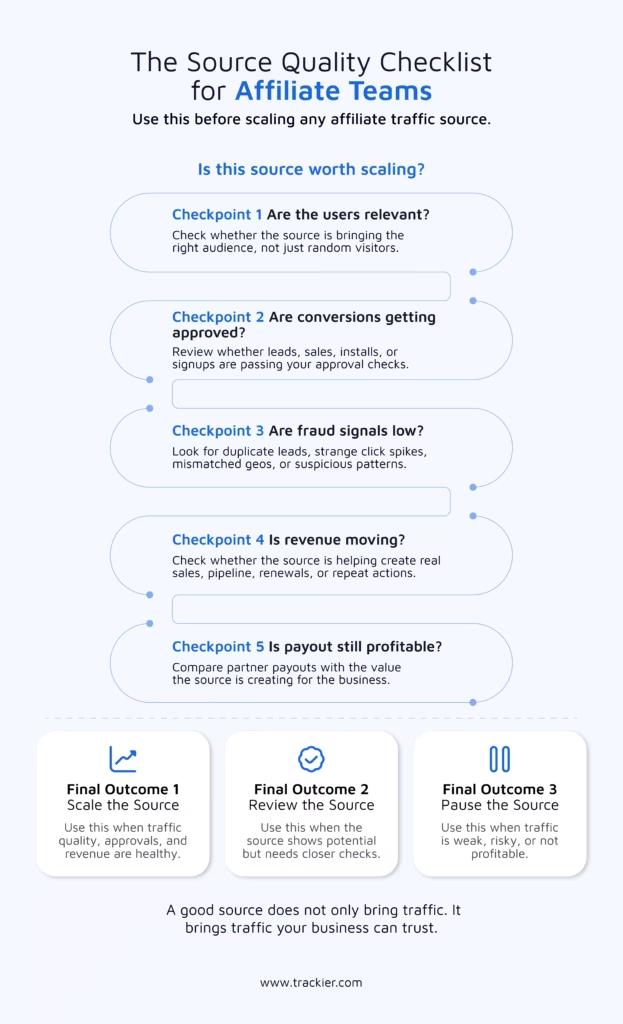
Here is a simple checklist for you to check your final source quality:
What To Do Next?
Affiliate tracking sources are useful only when they help you make better decisions. So, the next step is not to collect more reports. The next step is to clean the way your team reads the reports you already have.
Start by grouping every source properly. Keep SEO, social, email, mobile, paid, referral, and partner-led traffic separate enough to compare. If all sources are sitting in one messy bucket, your team will keep arguing with the data instead of learning from it.
Then review what happens after the click. Check approval rate, fraud signals, sales movement, revenue quality, and payout value.
Once you know which Affiliate tracking sources bring quality, act on it. Give better terms to partners who bring clean revenue. Slow down sources that bring weak traffic. Fix pages that lose mobile users. Tighten rules where paid traffic starts creating overlap or poor-quality leads.
Good source tracking does not make affiliate marketing more complicated. It makes the complicated parts visible, so your team can stop guessing and start making cleaner calls.
Hungry for more? Download our free case studies that cover real stories.
Or sign up for Trackier’s newsletter to get weekly best practices on referral programs and partner marketing.
Frequently Asked Questions
1. What are Affiliate tracking sources?
Affiliate tracking sources are the channels, partners, campaigns, or placements that send users to your offer through affiliate links. These sources can include organic search, social media, email, paid ads, mobile traffic, referral websites, creators, communities, and review platforms. The goal is not only to see where traffic came from. The real value is understanding which source created useful actions, approved conversions, and revenue.
2. How often should marketers review Affiliate tracking sources?
Marketers should review Affiliate tracking sources at least weekly for active campaigns and monthly for broader performance decisions. Fast-moving sources such as paid traffic, creator campaigns, and coupon-led traffic may need tighter checks because quality can change quickly. For SEO, referral, and content partners, monthly reviews are usually enough, unless approval rates or fraud signals suddenly shift. The key is to watch both traffic and post-conversion quality.
3. Which Affiliate tracking sources work best for B2B brands?
For B2B brands, the best Affiliate tracking sources are usually search-led content, partner referrals, industry newsletters, niche communities, review platforms, and trusted creator recommendations. B2B buyers often need more context before they act, so sources that educate the user tend to perform better than sources built only for quick clicks. The strongest source is usually the one that brings fewer but more serious leads.
4. Why do Affiliate tracking sources show different results across tools?
Affiliate tracking sources can show different results because every tool may read clicks, sessions, attribution windows, devices, redirects, and conversions differently. A CRM may focus on lead status, while an analytics tool may focus on sessions. An affiliate platform may focus on partner attribution and payout logic. This is why teams should define one reporting method clearly before comparing source performance. Otherwise, the same source can look good in one report and weak in another.