
The affiliate marketing industry used to be easier to explain. Give partners a link. Pay when something converts. Check the report at month end.
Today, serious brands are running a much tighter play now.
The affiliate marketing industry is closer to revenue planning, CAC control, and partner-led growth. For brands, SaaS teams, agencies, and networks, the job is no longer limited to recruiting partners. The team also has to know which partner brought the buyer, which action took place, whether the traffic was clean, and whether the payout made sense.
A reliable affiliate marketing platform helps when campaigns, partners, devices, and payouts start moving at the same time. Without that structure, even a growing program can become hard to read.
A program can bring traffic and still fail if the traffic does not turn into useful business.
Why Is the Affiliate Marketing Industry Growing So Fast?
The affiliate marketing industry is growing because brands want clear results from their marketing spend.
Paid ads still matter. Search, social, display, and retargeting are not going away. But budgets are being watched more closely. A lead source has to show quality. A partner has to show value. A campaign has to prove more than activity.
Affiliate is no longer only a way to fill the top of the funnel. It now supports customer acquisition, sales validation, regional growth, partner-led content, and revenue accountability.
The model works because it connects partner reach with a defined action. Brands can work with partners who already have attention, context, and audience trust. They can also connect payment to a defined action, which makes the model easier to defend when budgets are tight.
Brands are under pressure to prove spend quality.
A campaign report cannot stop at clicks, impressions, and form fills. Leadership wants to know which source created a qualified lead, which partner influenced the sale, which traffic converted into revenue, and which payouts created weak returns.
Affiliate marketing can answer those questions when the program is built with the right tracking and rules.
A publisher may bring research-led traffic. A review site may help a buyer compare vendors. A creator may build early trust. A coupon partner may close a buyer already near purchase. These partners do not do the same job, so measuring them with one flat view creates confusion.
Affiliate is becoming part of revenue planning.
Affiliate marketing industry was often treated as a traffic source. Bring visitors. Bring leads. Bring orders.
But for brands with longer journeys, higher deal values, or strict lead quality checks that doesn’t do the job.
A B2B SaaS lead may take months to close. A fintech signup may need verification. An iGaming lead may need fraud screening. An app install may not mean much unless the user completes a valuable event. A sale may still be refunded.
Volume does not give enough context by itself.
A good affiliate program rewards clean traffic, verified actions, and partners that help the business grow without creating hidden cost.
How Big Is the Affiliate Marketing Industry Now?
The U.S. remains the strongest market, supported by e-commerce brands, financial services companies, SaaS platforms, media publishers, creator-led businesses, and mature partner networks. It also gives marketers some of the clearest public data, which helps when comparing affiliate with other channels.
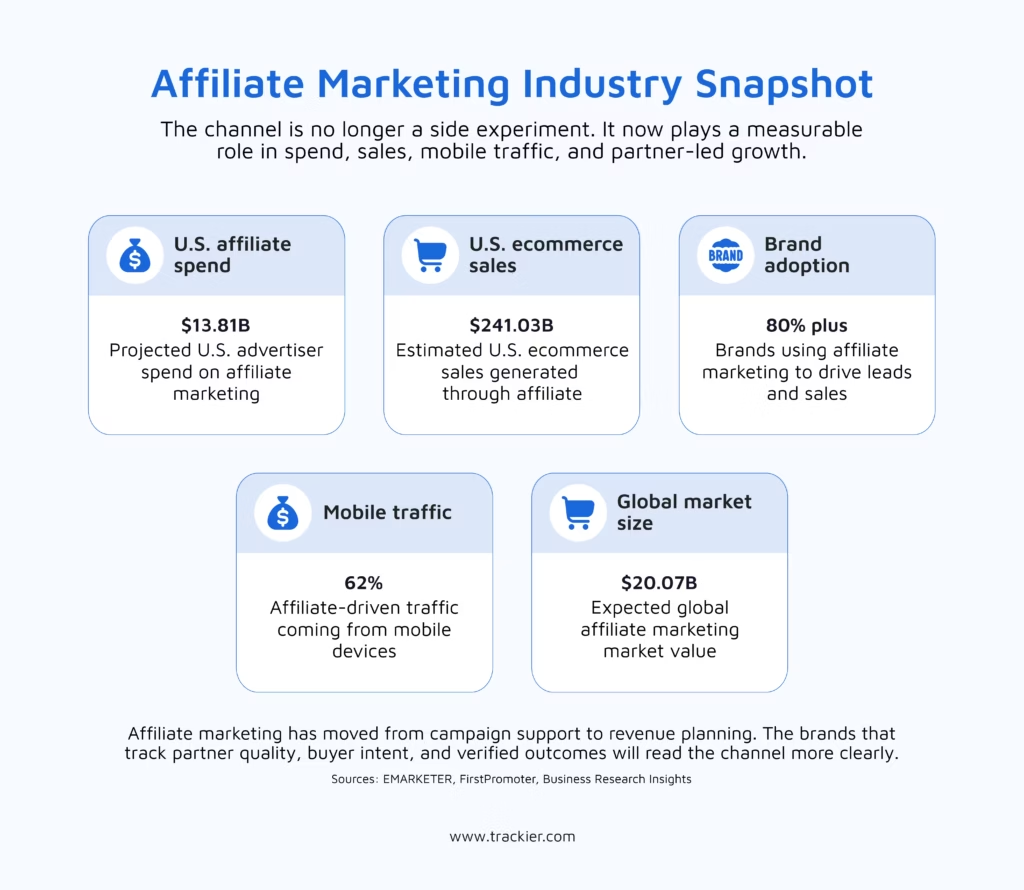
Projections show that the U.S. affiliate spending is expected to reach $13.81 billion, while affiliate-driven U.S. ecommerce sales are estimated at $241.03 billion in 2026.
Europe needs more care around consent, disclosure, privacy, and reporting clarity. India is growing through commerce, fintech, SaaS, and app-first brands, but the same rule applies in every market. Track cleanly before scaling.
Buyers already move through reviews, creators, communities, offers, and search before they convert. Affiliate marketing industry gives brands a way to work with that behavior. The channel connects outside influence with measurable action, provided the tracking is strong enough to follow the path.
Why Are Brands Taking Affiliate Data More Seriously?
Affiliate data used to be treated like campaign reporting. It showed clicks, conversions, partner names, payout totals, and maybe the country or device.
A partner can send high traffic and poor buyers. A campaign can create signups that never become customers. A coupon partner can collect credit for demand created by another source. A media buyer can send conversions that look fine until refund, chargeback, or lead rejection data comes in.
For the affiliate marketing industry, better data has become a practical need. Brands need to know which partners create real value and which partners create risk.
Clicks are useful, but they are not enough.
Clicks show interest, not quality.
A campaign with ten thousand clicks can still be weak if the landing page does not convert, the audience is too broad, or the partner is sending low-intent traffic. A campaign with fewer clicks can outperform it if the audience is narrow and the buyer already understands the problem.
This is common in B2B SaaS and high-value categories.
A smaller audience with strong buyer intent can outperform a larger one anyday.
The partner role changes the value of the click.
Affiliate teams need reports that separate activity from progress. Clicks belong in the report, but they should not sit alone.
Attribution needs to show who influenced the buyer.
Most buyers do not move in a straight line.
They may read a blog, leave the site, compare three vendors, watch a product video, search the brand name, return through a coupon page, and convert after a retargeting ad. If the program pays only the last click, the final partner may look like the strongest contributor.
Sometimes that is fair. Sometimes it is not.
Content partners often influence early research. Review partners help buyers compare. Coupon partners may close a transaction. Creators can build trust before the buyer ever reaches the website. Agencies and referral partners may shape the decision long before a form is filled.
A flat attribution model hides those roles.
Modern affiliate tracking software should help teams see more than the final click. It should show the path, the partner type, the conversion event, the source quality, and the payout impact.
Fraud checks need to happen before payout.
Fraud is not always a big scam that just empties your bank in a split second.
Sometimes it is duplicate leads. Sometimes it is fake form fills. Sometimes, it is suspicious traffic from one geography. Sometimes it is a sudden spike from a partner that never brought quality before. Sometimes it is a source that produces conversions but no accepted revenue.
A weak fraud process can make a partner look profitable until the sales team rejects the leads or the finance team questions the payout. By then, the program has already lost money and time.
Brands need fraud checks inside the program flow, not after the damage is done. Lead validation, conversion approval, traffic source checks, device signals, payout holds, and partner-level quality reviews should be part of normal operations.
What Are the 5 Moves Brands Should Make Now?
The affiliate marketing industry rewards teams that manage the channel with discipline. More partners alone will not fix weak tracking. Bigger payouts will not fix poor traffic. More campaigns will not fix unclear attribution.
Start with these five checks.
1. Audit partner quality before increasing spend
Start with the partners already active.
Look at accepted leads, conversion quality, refund rate, duplicate events, sales feedback, and revenue per partner. Do not review only the partners with the highest traffic. Review the partners with the biggest gap between activity and business value.
A partner sending fewer leads may deserve more budget if those leads reach sales faster, match your ICP better, or convert into paying customers more often.
For SaaS and B2B teams, partner quality should connect to pipeline. For commerce teams, it should connect to order value, repeat purchase, refund rate, and customer quality. For app-first brands, it should connect to in-app events, retention, and fraud signals.
2. Track beyond the last click
Last-click reporting is clean to read. It is also easy to misread.
If the same coupon, cashback, or deal partner keeps appearing at the end of the journey, the report may overstate its role. That partner may still have value, but it may not be creating the demand.
Brands should review first click, assisting partners, partner category, conversion path, and time to convert. This helps separate partners that introduce buyers from partners that close buyers.
Both can matter. They should not always be paid or judged the same way. Different partner roles may need different commission models and review cycles.
3. Group partners by role, not just volume
Many affiliate programs use one long partner list which becomes harder and harder to read with every passing month.
A better setup groups partners by role. Content publishers, review sites, coupon partners, creators, loyalty partners, media buyers, agencies, and niche communities all influence buyers differently.
Grouping partners makes reporting easier. It also makes payout rules fairer.
Review sites, creators, coupon partners, niche publishers, and media buyers all influence buyers differently and it is important for reporting to show those differences.
When every partner is measured against the same surface-level numbers, strong partners can be undervalued and noisy partners can look better than they are.
Role-based reporting gives the team a cleaner view.
4. Build mobile-first affiliate journeys
Mobile now carries a large share of affiliate traffic, so landing pages, forms, and app paths need to be built for smaller screens first.
A partner link that opens a slow landing page will lose buyers. A form with too many fields will cut conversion. A page that does not match the partner message will create drop-offs. An app campaign without deep links can send users to the wrong screen and waste intent.
Mobile-first affiliate journeys need clean pages, fast loading, simple forms, clear CTAs, deep links where needed, and tracking that follows the user across web and app.
5. Tie payouts to verified business value
Payout rules shape partner behavior.
If the program pays too quickly on weak actions, it attracts weak actions. If it rewards volume without quality checks, partners will chase volume. If it treats every conversion as equal, the business may overpay for low-value outcomes.
Better payout logic connects commission to verified value.
For lead generation, that may mean accepted leads or qualified opportunities. For SaaS, it may mean demo completion, opportunity creation, or paid customer status. For commerce, it may mean completed purchase after refund window. For apps, it may mean install plus a valuable in-app event.
Payouts should also include validation windows, rejection rules, fraud checks, and partner-level review.
A clean payout model protects the brand and gives good partners more confidence.
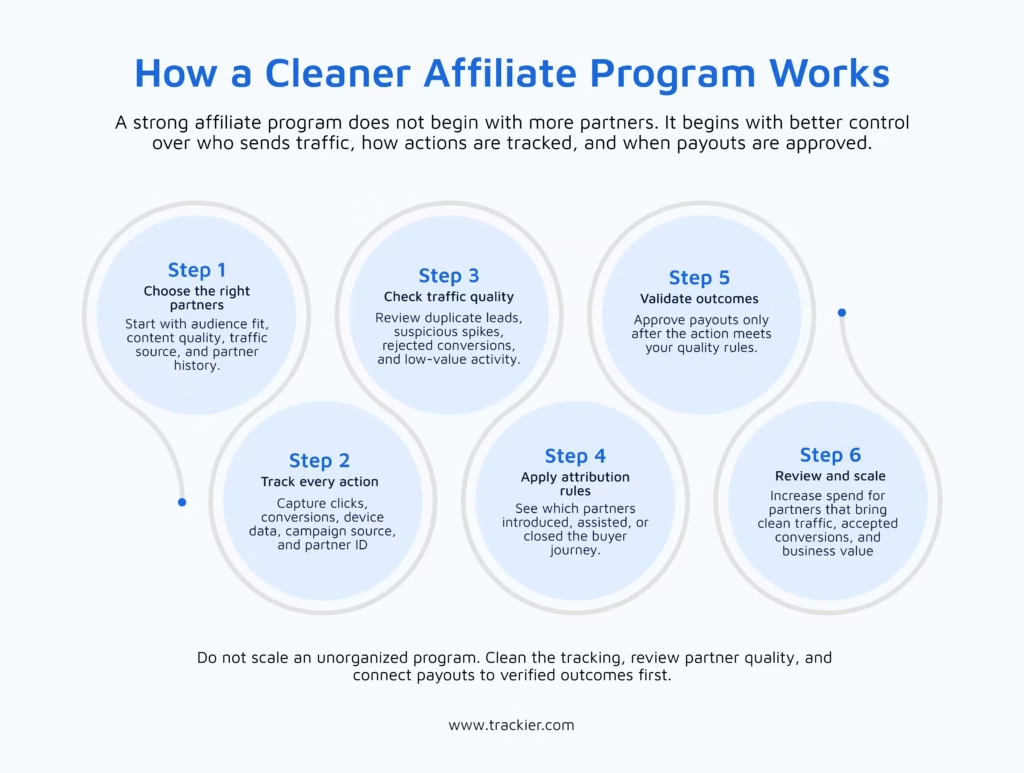
The next phase of the affiliate marketing industry will be more careful, not just bigger. Brands will group partners by role, review source quality more often, and connect payouts to verified outcomes.
AI may help teams spot unusual traffic or summarize reports faster. The final call still belongs to the marketer. A partner is useful only when the traffic, conversion quality, and business value make sense together.
What Should You Fix Before Scaling Your Affiliate Program?
Before adding more partners, review the program you already have.
Start with partner quality. Look at accepted leads, sales feedback, revenue, refunds, duplicate conversions, and suspicious traffic patterns. The goal is not to punish partners. The goal is to understand which partners are helping the business and which ones are adding noise.
Then review attribution.
Check whether last-click reporting is giving too much credit to partners who appear at the end of the journey. Look at assisting partners, first-touch sources, partner categories, and time to convert. A cleaner view may change how you judge performance.
Review payout rules next.
A payout should match the value of the action. If the business needs qualified opportunities, do not reward every raw lead the same way. If refunds are common, use a validation window. If fraud risk is high, hold payout until quality checks are complete.
Clean up reporting.
A useful affiliate report should show clicks, conversions, partner source, quality status, payout, and revenue impact. For B2B and SaaS teams, it should also connect with CRM stages. For app-first brands, it should connect with post-install events. For commerce, it should connect with order value and refund status.
The affiliate marketing industry has less room for lazy tracking, unclear partner rules, and payout models that incentivize wrong behavior.
Fix the program before increasing spend.
Your partners will trust the system more. Your team will read the numbers faster. Your budget will go to sources that bring value, not just movement.
Hungry for more? Download our free case studies that cover real stories.
Or sign up for Trackier’s newsletter to get weekly best practices on referral programs and partner marketing.
Frequently Asked Questions
1. Is affiliate marketing still profitable for B2B brands?
Yes, but B2B brands need to judge affiliate performance differently from consumer brands.
A B2B affiliate program should not be measured only on clicks or raw leads. The sales cycle is longer, and buyer intent is usually harder to read from one action. Track lead quality, ICP fit, opportunity creation, sales acceptance, deal value, and time to close. A smaller partner that brings qualified decision-makers can be more useful than a larger partner sending broad traffic. For B2B teams, affiliate profitability depends on partner fit, clean attribution, and revenue visibility.
2. How should brands choose the right affiliates?
Start with audience fit.
A good affiliate should reach people who can actually buy, influence, or recommend your product. Review the partner’s content quality, traffic source, past campaign behavior, disclosure practices, and reporting transparency. Also check whether the partner understands your category. A high-traffic partner with weak audience fit can create poor leads and payout waste. A smaller partner with strong buyer trust can create better results. The affiliate marketing industry rewards fit more than reach when programs are measured properly.
3. What metrics should marketers track beyond clicks?
Marketers should track accepted leads, qualified opportunities, customer rate, revenue, refund rate, fraud rate, repeat purchase, payout-to-revenue ratio, and partner-level ROI.
Clicks still matter, but they should be treated as an early signal. They show activity, not value. A partner with fewer clicks may still bring better customers. A partner with high conversions may still create weak outcomes if those conversions are rejected, refunded, or of low quality. Good reporting connects partner activity with business results, not only campaign movement.
4. Where is the affiliate marketing industry headed by 2027?
The affiliate marketing industry is expected to move further from volume-based reporting toward verified-outcome tracking.
Expect more programs built around AI-assisted fraud detection, real-time partner scoring, and payout models tied to confirmed pipeline or revenue rather than raw clicks, especially as privacy rules tighten and third-party tracking keeps eroding.
5. How will affiliate tracking adapt as third-party cookies phase out further by 2027?
The affiliate marketing industry is shifting toward first-party tracking, server-to-server (S2S) postbacks, and parallel tracking methods that don’t rely on browser cookies.
Brands that build affiliate infrastructure around first-party data now will have cleaner attribution as privacy restrictions tighten, while programs still dependent on cookie-based tracking risk losing visibility into partner performance.