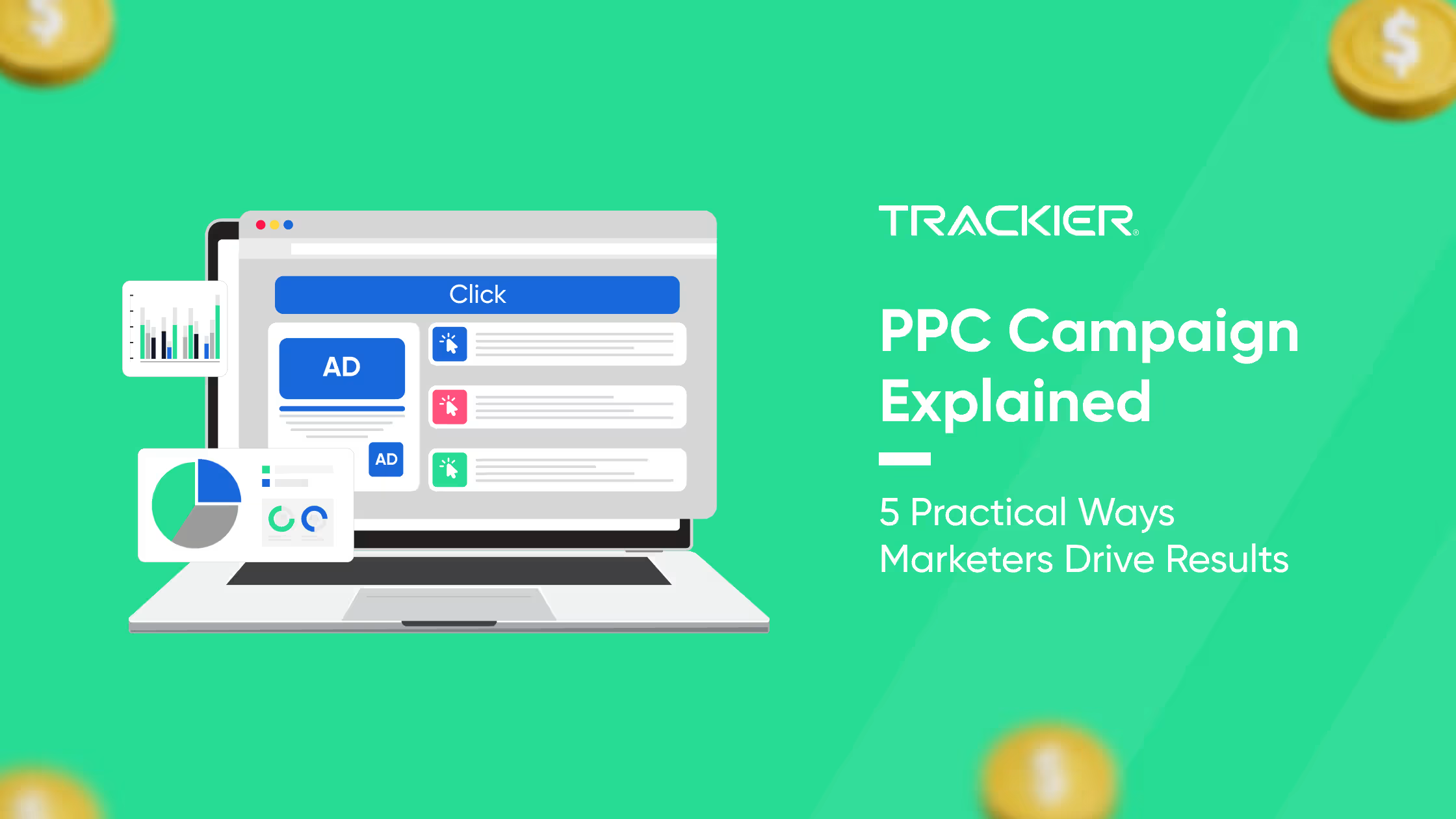
A PPC campaign is often considered one of the fastest ways to get your brand in front of a high-intent audience.
You run an ad, someone clicks it, you pay only for that click. Simple, right? Sounds simple, yet a successful PPC campaign involves a lot of strategy, targeting, bidding, tracking, and constant optimization.
Global PPC driven search ad revenue was expected to reach $351.5 billion in 2025, showing how heavily businesses rely on paid search to acquire customers.
If you are running performance marketing, partner marketing, or growth campaigns, understanding how a PPC campaign works is essential.
If you are exploring performance-based acquisition strategies, you might also want to understand how platforms like Trackier support partner and performance marketing attribution through advanced tracking systems.
In this article, we will understand how a PPC campaign works, the types marketers use, the metrics of success, and all the practical ways to improve performance.
What is a PPC Campaign and Why Do Marketers Use It?
A PPC campaign stands for Pay Per Click campaign. It is an online advertising model where advertisers pay a platform each time a user clicks their ad.
Instead of paying for overall visibility, brands pay only when a potential customer actually interacts with the ad.
This model offers a few clear advantages.
First, it captures high intent traffic. When someone searches for a specific product or solution, a PPC campaign allows brands to appear right at that moment.
Second, it offers full budget control. You decide how much to spend, how much to bid, and which keywords trigger your ads.
Third, results are measurable. Every PPC campaign generates detailed data including clicks, impressions, cost, and conversions.
Because of these benefits, PPC campaigns are widely used by SaaS companies, agencies, ecommerce brands, and B2B organizations.
How Does a Pay Per Click Campaign Actually Work?
Behind every campaign, there is a sequence of events. Once you see the flow, the system becomes much easier to understand.
- Keyword targeting
A PPC campaign begins with keyword research.
Marketers identify search queries that their potential customers are likely to use. For example, a SaaS company selling attribution tools may bid on keywords like “marketing attribution platform”.
When someone searches for that keyword, the ad becomes eligible to appear.
- Ad auction and bidding
Every PPC campaign runs on an auction system.
Advertisers bid on keywords and the advertising platform decides which ad appears based on factors like bid amount, ad relevance, and quality score.
The cost per click varies widely depending on competition. In 2025, the average CPC for search campaigns was around $5.26, reflecting rising competition for high intent keywords.
- Ad click and landing page
Once a user clicks the ad, they are directed to a landing page designed to convert that visit into a lead, signup, or purchase.
Landing page quality has a huge impact on the success of a PPC campaign. Better pages improve conversion rates and reduce wasted ad spend.
- Conversion tracking
The final step in a pay per click campaign is tracking the action you want users to take.
That could be a demo request, purchase, or app install. Accurate tracking ensures marketers know which ads and keywords generate real revenue.
What Are the Main Types of PPC Campaigns Marketers Use?
Every campaign is different, and different formats support different marketing goals.
Search ads
Search ads appear on search engine results pages when users look for a specific keyword. These are usually the most effective for lead generation because they capture active intent.
Display campaigns
Display campaigns show visual ads across websites, apps, and blogs. They are often used for awareness and remarketing rather than direct conversions. Interestingly, exposure to display ads increases brand searches by over 150%, showing their impact on brand recall.
Shopping ads
Shopping ads display product images, prices, and store information directly in search results. These campaigns are particularly powerful for e-commerce brands.
Video campaigns
Video PPC campaigns run on platforms like YouTube and help brands explain products through short videos. They are widely used for storytelling and product demonstrations.
Remarketing campaigns
Remarketing PPC campaigns target users who previously visited your website. These users already know your brand, which makes them far more likely to convert.
What Metrics Define a Successful PPC Campaign?
A PPC campaign is only as strong as the metrics behind it. Marketers typically monitor four core indicators.
Click Through Rate (CTR)
CTR measures how often people click on your ad after seeing it. Across industries, Google Ads search CTR averages about 6.66% in 2025, though this varies widely by sector. Higher CTR usually indicates that your ad copy and targeting match user intent.
Cost Per Click (CPC)
CPC represents the average amount you pay for each click. This metric helps marketers understand the cost efficiency of their PPC campaign.
Conversion Rate
Conversion rate measures how many clicks turn into desired actions. For Google search campaigns, the average conversion rate is around 7.52% in 2025.
Cost Per Lead (CPL)
CPL tracks how much you spend to acquire a qualified lead. In 2025, the average CPL for search ads is about $70.11. Monitoring these metrics helps marketers refine bidding strategies and improve campaign profitability.
How Can You Optimize a PPC Campaign for Better ROI?
Once a PPC campaign is live, optimization becomes the real work. Here are practical ways marketers improve results.
- Refine keyword targeting
Start by reviewing search term reports regularly. Remove irrelevant queries and add negative keywords to reduce wasted spend.
- Improve ad relevance
Your ad copy should closely match the search intent behind the keyword. Clear headlines and strong value propositions improve CTR.
- Optimize landing pages
A PPC campaign is only as strong as the page it leads to. Fast loading pages, clear messaging, and strong calls to action significantly improve conversion rates.
- Use remarketing
Remarketing campaigns target visitors who already interacted with your brand. These audiences often convert at much higher rates than new visitors.
- Track and analyze performance
Consistent analysis helps marketers identify which campaigns generate revenue and which ones need adjustments. This is where attribution and partner marketing platforms become essential.
Final Thoughts
A well structured PPC campaign can drive immediate traffic, qualified leads, and measurable revenue.
But success rarely comes from simply launching ads.
Marketers should start by researching keywords and building tightly focused campaigns. Next, track conversions carefully so every click can be tied to real outcomes.
Finally, optimize continuously. Small improvements in targeting, bidding, and landing pages can dramatically improve performance over time.
When executed thoughtfully, a PPC campaign becomes one of the most predictable growth engines in modern digital marketing.
Hungry for more? Download our free case studies that cover real stories.
Or sign up for the Trackier’s newsletter to get weekly best practices on referral programs and partner marketing.
Frequently Asked Questions
What are the PPC campaigns?
A PPC campaign is a digital advertising strategy where advertisers pay only when users click on their ads.
These campaigns typically run on search engines, social platforms, and websites. Marketers bid on specific keywords so their ads appear when users search for related queries. Because advertisers pay only for clicks, PPC campaigns offer measurable performance and clear cost control, making them popular among SaaS companies, agencies, and ecommerce brands.
Is PPC better than SEO?
A PPC campaign and SEO serve different purposes, so one is not universally better than the other.
PPC campaigns generate immediate visibility and traffic because ads appear instantly after launch.
SEO, on the other hand, focuses on organic rankings and typically takes months to deliver results. Many marketers use both strategies together.
PPC drives short-term growth, while SEO builds long-term authority and sustainable traffic.
How many types of PPC campaigns are there?
There are several types of PPC campaigns, but the most common ones include search ads, display ads, shopping ads, video ads, and remarketing campaigns.
Search campaigns target users actively searching for products or services.
Display and video campaigns focus on brand awareness.
Shopping campaigns promote e-commerce products.
Remarketing campaigns re-engage previous website visitors. Most marketing teams combine multiple PPC campaign types to build a full funnel acquisition strategy.
Is PPC harder than SEO?
Running a PPC campaign is not necessarily harder than SEO, but it requires different skills. PPC campaigns involve keyword research, bid management, ad testing, and performance tracking.
Results appear quickly, which means mistakes also show up quickly in the form of wasted budget. SEO requires patience and content strategy, while PPC demands constant optimization and data analysis.
Skilled marketers often manage both channels together for balanced growth.