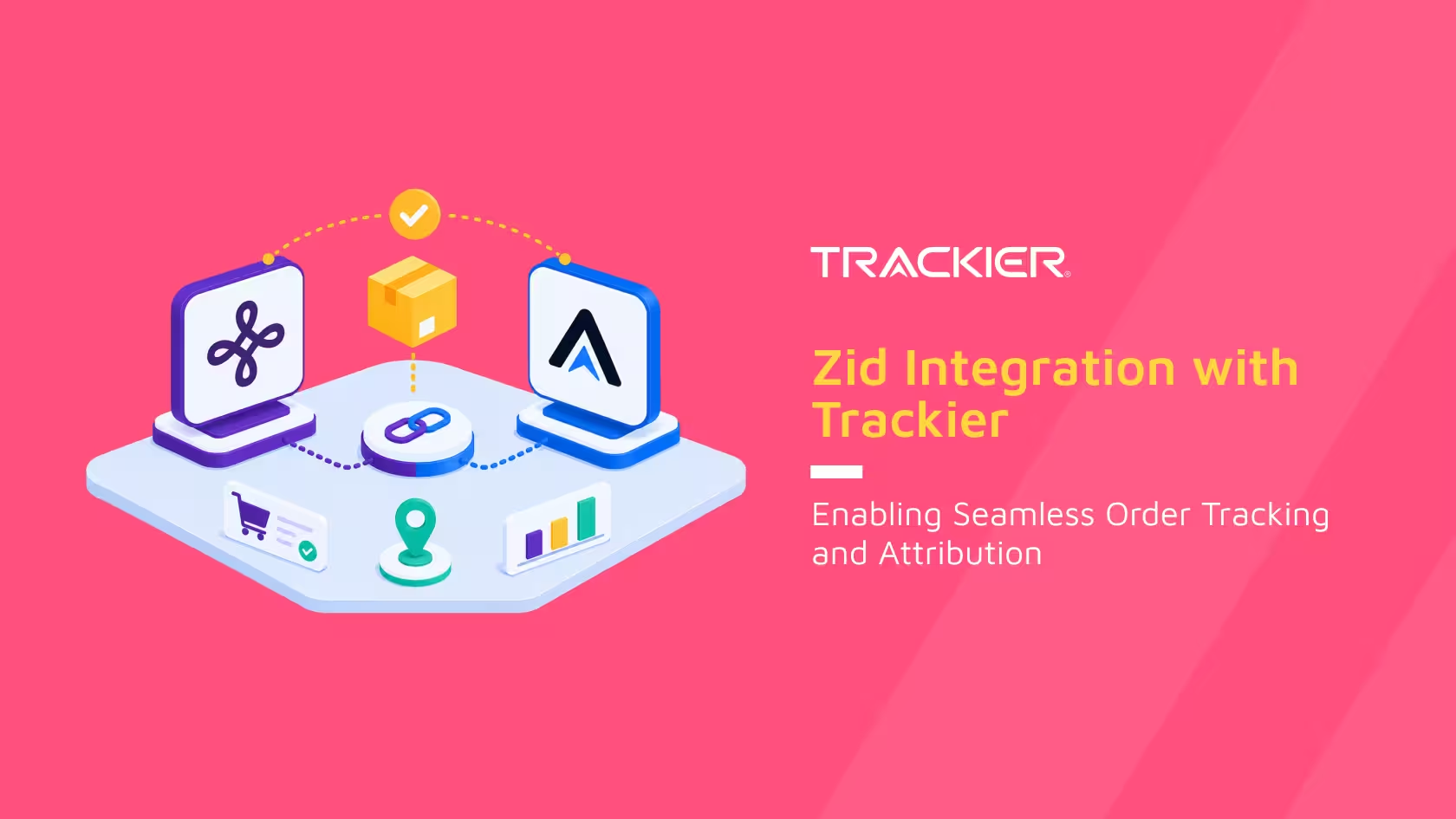
E-commerce brands that run affiliate and performance campaigns expect their data to be easily fed into their tracking platform without manual work. That is exactly the purpose that the Zid integration feature by Trackier aims to fulfil.
Zid is one of the most prominent e-commerce platforms in Saudi Arabia. It powers thousands of online stores in the region. Hence, with this integration, advertisers and publishers running Zid stores can sync their orders and conversion events directly into the Trackier panel. All of this without the need of spreadsheets or manual work.
What the Zid Integration Solves
Earlier, merchants who ran affiliate or influencer campaigns on Zid had no direct way to connect store-side purchase events to the click data from the Trackier platform itself. Such gaps would make it difficult to know which campaigns, partners, or channels actually drove sales.
With the new integration, a tracking script containing the Trackier pixel is injected directly to the Zid store. Every time an order is placed, that event is captured and reported back to the Trackier dashboard. This automatically closes the to-and-fro between click and purchase.
Key Highlights of the Integration
- Direct connection between Zid stores and the Trackier panel
- Automatic capture of order/purchase events as they happen on the storefront
- Accurate attribution of conversions back to the originating campaign or partner
- Centralized reporting alongside all other channels already tracked in Trackier
- Deeper visibility into customer behavior and campaign-level ROI
- Built on Zid’s official app framework, combining authenticated app setup with Trackier’s tracking script for purchase-event reporting
How Does the Zid Integration Work?
Getting orders from Zid into Trackier comes down to two connected pieces of setup. Let us understand them.
Install and Configure a Zid App
Store owners or their partners register a tracking app inside Zid’s “My Apps” section, which generates a client ID, client secret, and authorization endpoint.
Scopes, redirect URLs, and a webhook subscription are configured so Trackier is notified the moment the app is installed.
Deploy the Tracking Script
Using the client credentials, a technical team generates an auth token and builds a script that embeds Trackier’s web SDK pixel. Once Zid’s support team approves the script for injection, it fires automatically on every order, sending that purchase event into Trackier.
On the Trackier side, the corresponding tracking script is generated from –
Automation > E-Commerce > Integration,
where you select the relevant advertiser, confirm the tracking domain, and copy the generated script for injection into the Zid store.
Benefits for Advertisers and Agencies
- Advertisers won’t have to cross-check Zid order exports against click logs anymore
- Real-time visibility into which affiliates and campaigns are converting
- One dashboard for clicks, conversions, and revenue across Zid along with every other integrated channel
- Faster and more reliable campaign optimization decisions based on verified purchase data
- Reduced setup difficulties because of Zid’s official authentication and webhook framework
Best Practices For a Smooth Set Up
- Double-check webhook responses and authentication tokens after installation
- Keep client ID and client credentials secure like every other API detail
- Loop in Zid support early to avoid delays around script approval
- Validate that conversions are landing correctly in Trackier before scaling campaigns
- Keep an eye on incoming purchase events during the first few days after launch
To Conclude
Ultimately, Trackier’s new Zid integration cements its presence in the booming Middle Eastern market, expanding an e-commerce ecosystem that already supports WooCommerce, Amazon, Daraz, and Temu.
For advertisers and agencies, this update eliminates the hassle of manual data reconciliation by uniting all campaign performance metrics into a single source of truth. It provides businesses with the clear attribution necessary to accurately measure ROI and confidently scale their operations.