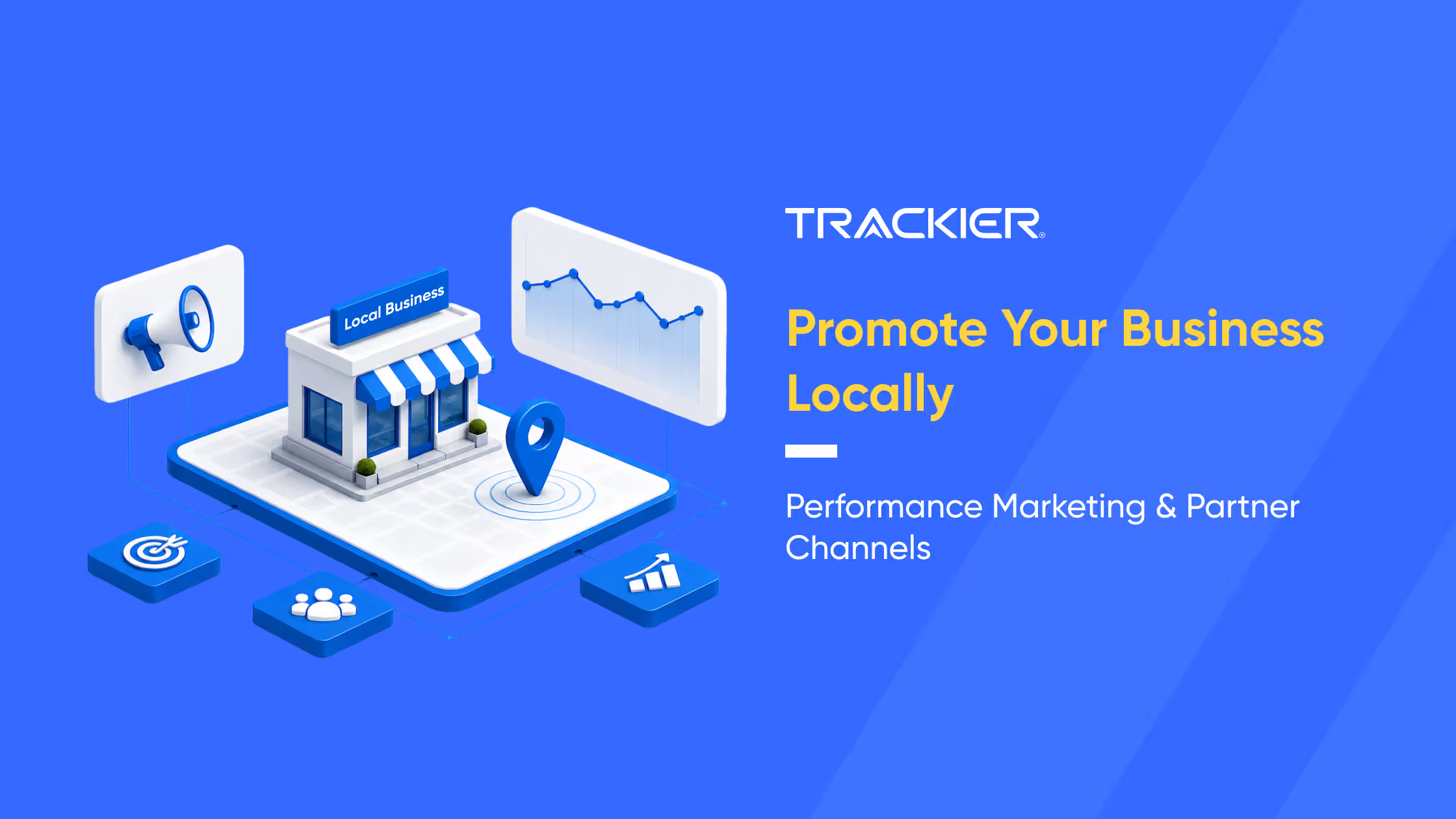
Whether you run a chain of fitness studios, a regional home services brand, or a multi-location retail outlet, the challenge is the same: national-level marketing strategies rarely work at the local level without significant customization. Customers in Mississauga don’t behave the same way as customers in Thunder Bay. What drives conversions in a downtown core looks very different from what works in a suburban neighbourhood.
That’s where performance marketing, combined with the right partner channels, becomes a game-changer for local business growth.
In this guide, we’ll walk through how local and regional businesses can build a performance-driven marketing engine that ties every dollar spent to a measurable outcome, and how the right affiliate and partner programs can amplify reach without exploding your budget.
What Is Performance Marketing, and Why Does It Matter Locally?
Performance marketing is a model in which advertisers pay only when a specific action occurs, such as a click, a lead form submission, a phone call, an in-store visit, or a purchase. Unlike traditional advertising, where you pay for exposure regardless of results, performance marketing keeps you accountable to outcomes.
For local businesses, this matters enormously. You don’t have the luxury of burning budget on brand awareness campaigns that take months to show ROI. You need customers walking through your door, booking appointments, or calling your number, and you need to know which marketing channels are actually making that happen. Performance marketing gives you exactly that visibility.
But here’s the part most local businesses miss: performance marketing isn’t just about running Google Ads or Meta campaigns. It’s about building a full ecosystem, paid channels, organic presence, referral programs, and partner networks, all tracked under a unified performance framework so you know what’s working and why.
The Three Pillars of Local Performance Marketing
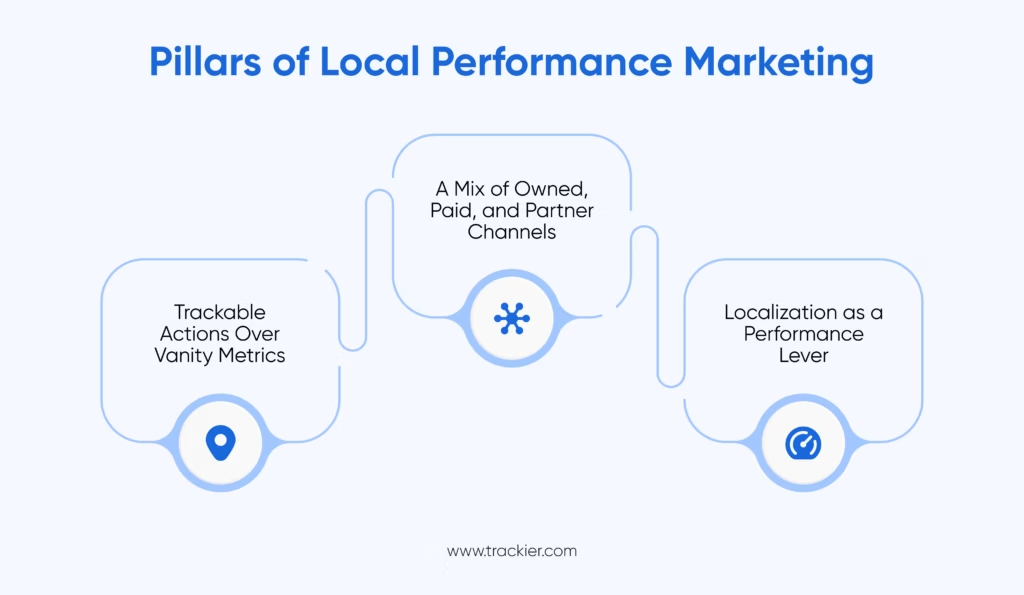
Before diving into tactics, it’s worth understanding the structural foundation that makes local performance marketing work.
1. Trackable Actions Over Vanity Metrics
Every campaign you run, whether it’s a local influencer partnership, a coupon code promotion, or a neighbourhood-targeted Facebook ad, must be tied to a trackable action. That means setting up UTM parameters, using unique phone numbers per campaign, deploying location-specific landing pages, and leveraging platforms to centralize attribution across all your channels. For service brands such as cleaning companies, cleaning business software can also help connect campaign-generated calls, booking forms, and local referrals with scheduled jobs, customer records, and repeat-service revenue.
Impressions and reach are not performance metrics. Calls booked, forms submitted, redemptions at the till, those are performance metrics.
2. A Mix of Owned, Paid, and Partner Channels
Relying on a single channel is a vulnerability. Local businesses that grow sustainably through performance marketing typically run three types of channels in parallel:
- Owned channels: Your website, email list, SMS subscribers, Google Business Profile
- Paid channels: Local search ads, geo-targeted social ads, display retargeting
- Partner channels: Affiliates, local influencers, referral programs, deal aggregators, and co-marketing partnerships
Each of these can be run on a performance basis. The key is to have a single platform that stitches together the data from all three.
3. Localization as a Performance Lever
Generic creative doesn’t convert locally. A banner ad that says “Book a plumber near you” will underperform compared to one that says “Same-day plumbing in Brampton, call now.” Local specificity in your ads, landing pages, and partner briefs consistently lifts conversion rates and is one of the lowest-cost optimizations available to regional businesses.
Building a Local Partner Channel Program
This is where many businesses leave significant revenue on the table. A well-structured partner or affiliate program can drive a substantial portion of local revenue, at a fraction of the cost of traditional paid acquisition, because you only pay when a partner actually delivers a result.
Here’s how to structure one for local success.
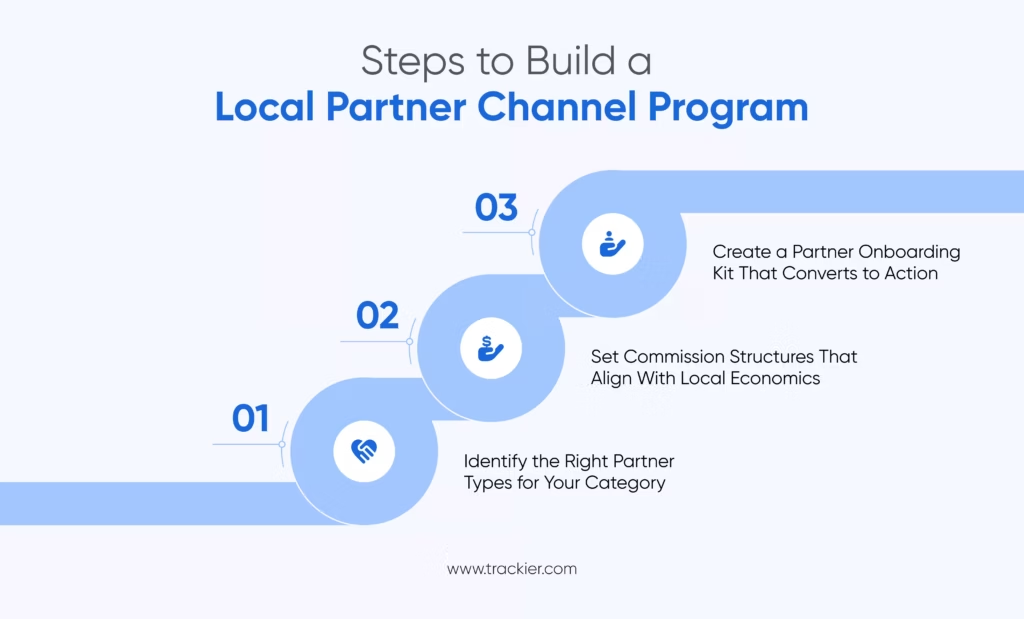
Step 1: Identify the Right Partner Types for Your Category
Not all affiliate or partner models work equally well for every business. Here’s a breakdown by common local business category:
- Home Services
Best partner types: Home improvement bloggers, local Facebook group admins, real estate agents, property management companies, neighbourhood apps.
- Health and Wellness
Best partner types: Local fitness influencers, workplace wellness programs, HR departments at nearby employers, complementary health practitioners
- Food and Beverage
Best partner types: Local lifestyle bloggers, food delivery aggregators, office managers at nearby businesses, event planners, wedding coordinators
- Retail and Fashion
Best partner types: Local style influencers, community event organizers, loyalty app platforms, neighbourhood associations
- Professional Services
Best partner types: Referral networks of complementary professionals, business chambers of commerce, local business associations, community organizations
The principle is the same across all categories, find people and organizations who already have trusted relationships with your target customer, and give them a compelling reason and a trackable mechanism to send those customers your way.
Step 2: Set Commission Structures That Align With Local Economics
One of the biggest mistakes in local affiliate programs is applying generic commission rates without thinking about the local economics of the business.
For a national e-commerce brand, a 5–10% commission on a sale might be standard. But for a local gym with a $60 month membership, paying a $40 flat fee per new member sign-up might make far more sense, because the lifetime value of a local member is high, and the competitive acquisition cost benchmark in your market is what matters.
Think about your commission structure in terms of:
- Customer lifetime value – What is a new customer worth to you over 12 months? A one-time transaction business should set commissions differently from a subscription or repeat-visit business.
- Local competitive benchmark – What are other local businesses in your category paying for a referred customer? If your commission is too low, quality partners will choose a competitor.
- Action-specific payouts – Consider paying different amounts for different actions. A lead might earn the partner a smaller fee, with a bonus when that lead converts to a paying customer. This hybrid model protects your margins while keeping partners motivated.
A platform like Trackier makes it easy to set up tiered payout structures, so you can automatically increase commission rates for partners who consistently drive high-converting referrals, incentivizing your best partners to focus even more on your program.
Step 3: Create a Partner Onboarding Kit That Converts to Action
The most common reason local partner programs fail is that businesses recruit partners but then give them nothing useful to work with. Partners, especially small local influencers or community connectors, don’t have time to create content or figure out how to promote your business on their own.
Build a simple partner onboarding kit that includes:
- 3-5 pre-written social media captions that the partner can post with minimal editing.
- A personal tracking link that they can insert into any content.
- A unique promo code specific to that partner, both for tracking and to give their audience a sense of exclusivity.
- A one-page brief explaining your business, your best offer, and who your ideal customer is.
- A quick-win checklist, the top 3 things a partner can do in their first week to start generating referrals.
The easier you make it for partners to promote you, the faster they will. And because everything is tracked through Trackier’s partner dashboard, both you and your partners can see performance data in real time, which itself is a motivator for active partners to keep going.
What’s Working in 2026 and Beyond
Your partner program doesn’t exist in a vacuum. It works best when supported by paid performance channels that keep your brand visible locally. Here’s a brief overview of what’s performing well for local businesses right now.
Google Local Services Ads
For home services, legal, and healthcare businesses, Google Local Services Ads operate on a pay-per-lead basis. You only pay when a prospective customer actually contacts you through the ad. This is the definition of performance marketing for local service businesses, and it should be a primary channel for any eligible category.
Combine LSAs with a well-optimized Google Business Profile to dominate local search intent.
Geo-Targeted Meta Ads with Hyper-Local Creative
Meta’s ad platform remains one of the most powerful tools for local business growth, particularly for businesses targeting specific postal codes, neighbourhoods, or a defined radius around a location.
The key to performance on Meta locally is to use highly specific creative, neighbourhood names, local landmarks, community references, and to send traffic to location-specific landing pages rather than your generic homepage.
Local SEO and Content as a Performance Asset
Organic search traffic is a performance asset in that it generates leads at near-zero marginal cost once established. Build neighbourhood-specific landing pages, publish genuinely useful local content, and earn links from local media, community organizations, and business associations.
While SEO takes longer to show results than paid channels, it builds a compounding asset that makes your paid and partner channels more efficient, because customers who have seen you in organic results before are more likely to convert on a retargeted ad or partner referral.
Manage and Optimize Your Local Program
All of the strategies above generate data, and data is only valuable if you can see it, act on it, and optimize against it. This is where a dedicated performance marketing platform becomes essential.
Here’s how to use a performance marketing platform for local businesses specifically:
Unified Attribution Across All Channels
When a customer comes from a local influencer’s Instagram story, clicks a tracked link, and books a service three days later after seeing a retargeting ad, who gets credit? Without a unified attribution system, you’ll either over-credit paid ads, because they’re the last touch, or under-invest in your partner channels, because you can’t see their contribution.
Performance marketing platform’s multi-touch attribution shows you the full customer journey, so you can make investment decisions based on what actually drives revenue, not just what shows up last in the funnel.
Real-Time Partner Dashboards
Give your local partners access to a live dashboard showing their clicks, leads, and conversions. Partners who can see their own performance data stay more engaged with your program. It removes the ambiguity of “is this working?” and gives high-performing partners a reason to invest more time in promoting you.
Fraud Prevention at the Local Level
Local affiliate programs can be vulnerable to fake leads, form submissions from non-existent customers, and phone calls that never convert. Built-in fraud detection tools help you identify suspicious patterns so you’re only paying for legitimate referrals. This is especially important as you scale your program and onboard partners you don’t know personally.
Automated Payouts and Compliance
Managing payouts to dozens of local partners manually is time-consuming and error-prone. Performance marketing platforms automate commission calculations and payouts based on the rules you set, eliminating disputes and ensuring your best partners are paid on time, which keeps them loyal.
Running Co-Marketing Campaigns Through Partner Channels
Once your partner program is established, you can evolve from simple referral arrangements into co-marketing partnerships that generate significantly more value.
A co-marketing arrangement means two complementary local businesses run a joint campaign together, sharing audience access and cost. For example:
- A yoga studio and a health food café offer a joint “wellness week” promotion, cross-promoting each other’s offer to their respective email lists and social audiences, with shared tracking links so both parties can see how the campaign performed.
- A real estate agent and a local moving company offer a bundled welcome package to new homeowners, tracked through a shared referral code.
- A wedding photographer and a florist create a joint promotional guide for engaged couples, with each party’s offer tracked through a performance marketing platform like Trackier through partner links.
These campaigns work well locally because they leverage the trust that each business has built in the community, and they create genuine value for the customer rather than just adding another promotional touchpoint.
The key to making co-marketing accountable is to treat it exactly like any other partner channel, every action tracked, every outcome measured, every dollar tied to a result.
Common Mistakes Local Businesses Make
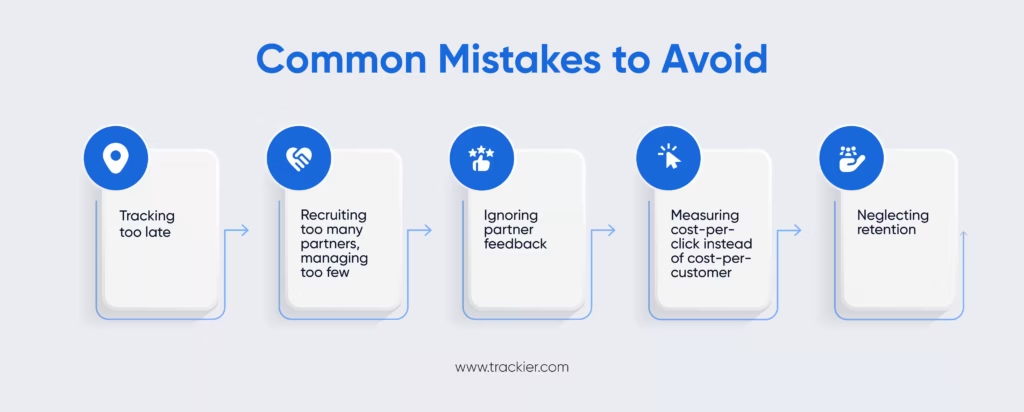
To wrap up, here are the most common pitfalls to avoid as you build your local performance marketing program:
- Tracking too late – Don’t launch campaigns before your tracking infrastructure is in place. You can’t optimize what you can’t measure, and early-stage data is often your most valuable, it sets your baseline.
- Recruiting too many partners, managing too few – A program with 50 half-engaged partners will underperform one with 10 deeply engaged partners every time. Focus on quality, provide excellent support, and let your program grow organically.
- Ignoring partner feedback – Your local partners are in the community every day. They hear what customers say, they know what objections come up, and they see which offers land and which fall flat. Build a feedback loop, a quick monthly check-in, or a simple partner survey, so you can act on their insight.
- Measuring cost-per-click instead of cost-per-customer – Clicks are cheap. What matters is how much it costs you to acquire a paying customer from each channel. Build your reporting around customer acquisition cost by channel, and set targets that are tied to your business economics.
- Neglecting retention – Performance marketing drives acquisition. But the true performance metric for a local business is whether acquired customers come back. Integrate your partner program with a loyalty or retention strategy, referral credits for repeat customers, and exclusive offers for long-term members, so the customers your partners bring in actually stick.
Local Is a Performance Opportunity, Not a Limitation
The persistent myth that local businesses can’t access the sophisticated marketing tools available to large national brands is no longer true. Platforms democratize access to performance marketing infrastructure, the same affiliate tracking, attribution modelling, and partner management capabilities that enterprise brands use are now accessible to regional and local businesses at a fraction of the cost.
The local businesses that will win in the next five years are those that treat their community as a performance channel, building structured partner programs, tracking every referral, paying for results rather than reach, and using data to sharpen their approach continuously.
Start with one or two partner types, get your tracking set up properly, and measure what happens. The results will tell you where to invest next.
FAQs
What is performance marketing?
Performance marketing is an advertising model where you only pay when a specific action occurs, like a click, lead, or sale, making every dollar directly tied to measurable results.
Why is performance marketing ideal for local businesses?
Performance marketing gives local businesses full visibility into what’s driving customers through their door, so they can stop wasting budget on exposure and focus only on channels that convert.
How do I get started with performance marketing?
Start by setting up tracking on your key actions, calls, form submissions, or purchases, then test one or two paid or partner channels before scaling what works.
How does performance marketing differ from traditional advertising?
Traditional advertising charges you for exposure regardless of results. Performance marketing only charges you when a desired action happens, making it more cost-effective and measurable.
Is performance marketing effective?
Yes, because you only pay for real results, it’s one of the most cost-effective ways to grow your business.