Picture this: A person promotes your brand. It reaches a handful of 100 people. And out of those 100 people, 10 people decide to convert. A 10% conversion rate? That’s actually really good. But there’s a twist. One person can only target a few people.
If your brand wants to go from 100 people to 1,00,000 people, you’re not only looking at better conversions. You’re looking at more promoters, more people to promote it to, and especially, more channels to reach them. Now, if all 1,000 promoters are pitching to the same audience on the same platform using the same strategies, you will be disappointed with the results.
You cannot expect flourishing conversions if efforts start overlapping. The growth will be slow, and the costs will go up. This is the current state of affiliate marketing. Till now, brands were focused on a few channels like coupon sites, cashback programs, and on-and-offline promotional deals. But consumers don’t follow a single-track journey anymore.
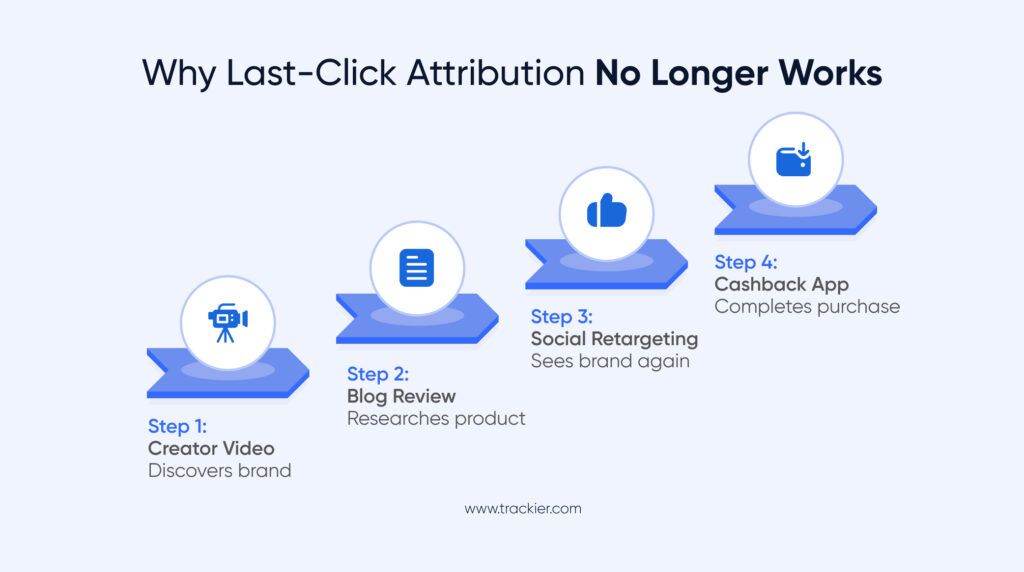
A consumer can find a brand for the first time in a creator’s video. They might get curious and explore the brand via a blog review. Once this stage is over, they may compare the products available within an editorial website, go back to the brand’s social media, and convert through a loyalty app.
No one can deny the number backing this change. Affiliate marketing expenditure is on a continuous rise. Spending in the US grew by almost 50% between 2021 and 2024. It reached $13.6 billion and made over $113 billion in e-commerce sales.
Today, the companies that are growing sustainably are doing something more than just growing. They are building a dynamic partnership network.
Brands don’t see affiliate marketing as just about isolated campaigns. Instead, they are using creators, publishers, mobile partnerships, referral ecosystems, loyalty programs, and strategic B2B partnerships.
And so, this guide will discuss the evolution of affiliate marketing and why diversification is significant. We’ll also talk about the types of partners that brands should target and the future of partnership marketing.
Evolution of Affiliate Marketing
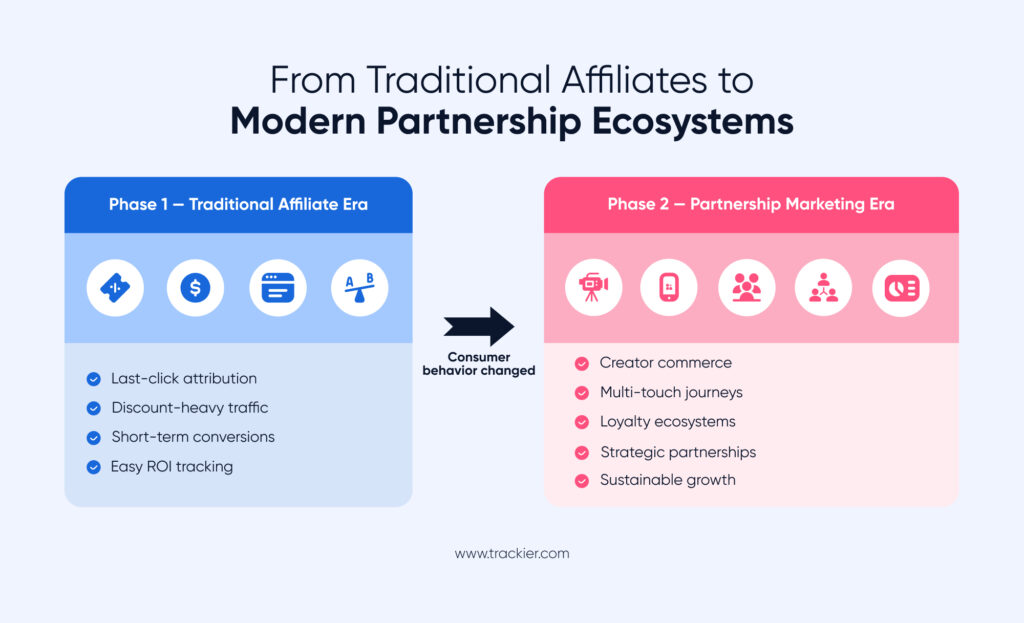
Affiliate marketing was originally thought of as a performance marketing avenue. Once a sale was made, brands were collaborating with the publishers for commissions.
This gave good results for a few years.
The Traditional Affiliate Model
The affiliate programs earlier were mostly built on coupon websites, cashback sites, deal aggregators, and comparison websites. These marketers in the industry did everything they could to get the right kind of traffic.
The advantages were clear:
- Low upfront costs
- Performance-based payouts
- Easy ROI measurement
- Rapid scalability
In particular, e-commerce brands came across affiliate marketing as a reliable tool to generate sales. Then consumers’ behavior changed.
Have Old Models Stopped Being Enough?
People don’t buy the same way today as they did even about 10 years ago. Video-first and creator-led commerce are rapidly reshaping affiliate marketing, with video now accounting for over 62% of internet traffic in Europe. And social commerce is growing nearly 30% annually.
Modern buyers don’t go through a straight purchase journey anymore. They spend a considerable amount of time researching products on several platforms, interacting with creators and niche communities, watching videos, and comparing products before purchasing. This change has converted the customer journey into a much more complex one than it was ten years ago.
As people began to go for more choices in their purchases, new approaches became important.
However, many brands became all about these discount-focused affiliates, resulting in reduced profit margins, low customer retention, price-sensitive customers, a lack of clear brand differentiation, and visibility issues of incremental growth. Many affiliates were simply enjoying the results of existing demand, rather than creating new demand. This has caused brands to rethink affiliate marketing completely.
The Rise of Partnership Marketing
Over time, affiliate marketing developed into a much larger entity—partnership marketing.
Brands started to go for relationships instead of mere transactions with influencers, content creators, industry publishers, mobile apps, referral partners, and strategic collaborators. The goal now became acquiring customers regularly. This shift became prominent when creator commerce came into existence.
Consumers will go over what creators have to say over conventional advertising. Because that recommendation becomes more meaningful and personal. B2B marketing saw the same difference.
B2B businesses started putting their money into co-marketing campaigns, SaaS integrations, webinar partnerships, industry referral programs, and educational collaborations. One of the sales channels was affiliate marketing, which grew into a growth model.
Did Technology Impact The Industry Too?
A modern partnership ecosystem essentially needs the efficient and advanced tools of today. Brands are able to handle several partner categories, optimize mobile attribution, and monitor affiliate quality through platforms like Trackier.
Thanks to technological proficiency, dynamic programs have become more efficient. The best affiliate programs don’t chase a specific type of partner. Rather, they revolve around ecosystems.
Why Diversifying Your Partner Mix Matters
The Risk of Overdependence
Putting all your hopes into one single category for all your affiliates is dicey. You’re looking at possible algorithm shifts, traffic volatility, platform reliance, audience saturation, increasing costs, and competition. Discounting-focused brands would need assistance when, let’s say, margins are under pressure or when consumer discounting evolves.
Diversification can help avoid this problem. That way, brands don’t have one growth channel, but multiple.
Can Diversification Create More Stable Growth?
With several growth channels, brands can lower their acquisition risk. A harmonious partner ecosystem leads to more stable income and better scalability. It also helps in a greater reach of the audience and less volatility due to platform or algorithm changes.
Value in different forms works across the different partner categories. That’s the balance that leads to sustainable development.
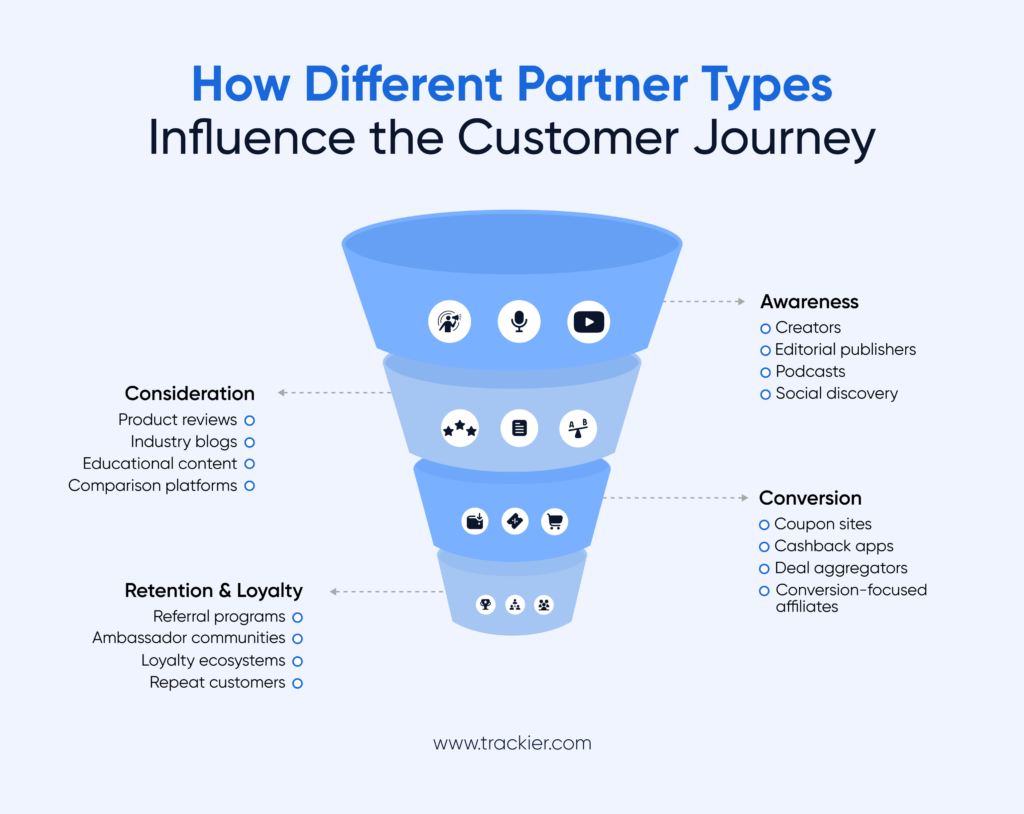
Different Partners Influence Different Funnel Stages
Top-of-Funnel Partners
Dealing with discovery and awareness:
- Influencers
- Creators
- Podcasts
- Editorial publishers
Mid-Funnel Partners
Focused on education and reflection:
- Product review sites
- Industry blogs
- Comparison platforms
- Thought leadership channels
Bottom-Funnel Partners
Focused on conversions:
- Coupon sites
- Cashback platforms
- Deal aggregators
Retention-Focused Partners
Emphasis on loyalty and repeat buying:
- Referral programs
- Ambassador communities
- Rewards ecosystems
Through these partnerships, a full customer journey comes into existence.
Can Diversification Improve Customer Quality?
All traffic coming your way is not because of affiliates. Discount-heavy traffic helps a lot with conversions, but the only problem here would be low retention or loyalty. This might eventually hamper your brand value. With content partnerships, you enjoy greater trust, engagement, customer relationships, and lifetime value.
That difference is everything.
Sustainable growth is not limited to better conversions. It also means coming across the right customers.
Sustainable Growth Needs Balance
A lot of brands cannot see things beyond conversions. But focusing too much on momentary sales can backfire on brand equity, customer quality, retention, and trust in the brand.
The best affiliate programs always understand the balance between performance, brand-building, keeping customers, and creating incremental growth. That’s the actual meaning of diversification.
Understanding the Modern Partner Ecosystem
With the dynamic affiliate landscape in place, the best brands have given up on any single type of affiliate. What they do now is have multiple base networks of complementary partners.
1. Content Publishers and Editorial Platforms
Content publishers remain one of the highest-paying affiliate types. What this means is the use of blogs, online magazines, industry publications, product review sites, and niche editorial communities.
With these, brands enjoy SEO visibility, long-term discovery, trust, and education.
A review article or guide can reach your targeted audience for a long time. B2B brands can benefit from editorial partnerships because they deal with people who research a lot before deciding on a purchase.
2. Influencers and Creators
The creator economy has completely altered the digital marketing landscape. Regular advertising, these days, has nothing over what influencers say. Creators make sure they create a niche for themselves. It could be education, entertainment, expertise, or lifestyle interests.
The tactics used for partnership opportunities are diverse. From tutorials, product reviews, and sponsored videos, to affiliate storefronts and live shopping campaigns. The reasoning here is that micro-influencers can easily enhance the trust and engagement levels. They can surely do so better than larger creators.
B2B creator marketing is also booming with LinkedIn creators, industry educators, podcast hosts, and YouTube experts.
The creators’ job is not just related to awareness. They contribute heavily to actually pushing for sales.
3. Loyalty and Cashback Platforms
Despite how fast the industry is changing, there’s a separate place for loyalty and cashback programs. Why? They target high purchase intent, strong conversion rates, repeat transaction opportunities, and customer retention support.
Having said that, brands should not be too enthusiastic about this category.
Too much discounting can hurt margins, weaken brand perception, and attract price-sensitive customers. The best solution is to use it in sync with other ones and not alongside the entire program.
4. Mobile and App-Based Partnerships
Mobile commerce has completely changed the way consumers act. Mobile commerce accounted for nearly 59% of total global e-commerce retail sales in 2025. This meant representing over $2.5 trillion in revenue. Consumers now go for apps, use digital wallets, engage with in-app experiences, and purchase directly from mobile devices.
Interestingly, this has given rise to rewards apps, fintech ecosystems, in-app affiliate campaigns, app-to-app partnerships, and mobile loyalty platforms.
Brands targeting digitally savvy audiences must look out for mobile-first partnerships.
5. Strategic Brand Partnerships
Brands can tap into complementary audiences through strategic partnerships. This can be done via co-branded campaigns, cross-promotions, joint webinars, product bundles, and SaaS integrations. And this partnership goes beyond the conversion.
They help in brand authority, industry positioning, audience trust, and market reach.
B2B organizations heavily benefit from these strategic partnerships as a major growth opportunity.
6. Referral and Ambassador Programs
Referral programs turn customers into acquisition channels. One would rather believe what their peers say than what a visual ad has to say. Such programs help brands in increasing retention, encouraging advocacy, generating organic growth, and building stronger communities.
These best-in-class affiliate programs focus on more kinds of partners than just one.
Building a Diversified Partner Strategy
Start With Clear Business Objectives
If the Goal Is Brand Awareness
Focus on:
- Influencers
- Creators
- Podcasts
- Editorial publishers
If the Goal Is Direct Conversions
Focus on:
- Cashback platforms
- Review websites
- Deal portals
- Comparison sites
If the Goal Is Retention
Focus on:
- Loyalty programs
- Referral systems
- Ambassador communities
Are There Gaps in Your Current Ecosystem?
A brand may have too many products in a single category.
Important questions to ask:
- Has anyone become reliant on the business model of coupons?
- Is there a lack of creator partnerships on the site?
- Is there a lack of the system serving mobile users?
- Are we creating new demand or stealing away some demand?
- Is there incremental growth being identified and tracked?
Understanding the gap is a crucial part of diversification.
Balance Short-Term and Long-Term Growth
The most ideal affiliate programs will go for a combination of immediate revenue drivers, brand-building partnerships, and evergreen content channels. Having a program with only conversion in it can be a risk of becoming volatile over time. Balance must be maintained in order to achieve sustainable growth.
Treat Partners Like Long-Term Collaborators
A common mistake brands make is to make everything about transactions. What theyn need to focus on is building a cooperative partnership. This means personalized outreach, understanding partner audiences, sharing campaign insights, offering creative flexibility, and maintaining regular communication. It is especially important in the case of creators and strategic partners.
In today’s competitive world, only the rarest of generic partnership requests stand out.
Build Flexible Incentive Structures
Partnership type decides the method of compensation. Prevalent structures include CPA commissions, revenue sharing, hybrid models, tiered incentives, and performance bonuses. How a brand decides on a structure depends on its campaign goals, audience type, partner category, and customer value.
Flexibility level is also a deciding factor in more efficient partner performances.
Use Technology to Scale Efficiently
A dynamic and highly scaled ecosystem cannot thrive with manual optimization. Affiliate management platforms help brands track performance, centralize attribution, automate reporting, detect fraud, and optimize campaigns.
Technology, however, represents just part of the solution. The real game-changer is building partnerships that are in line with today’s customer habits.
Measuring Success Beyond Last-Click Attribution
One of the major pain points of advertising today is measurement. Traditional attribution models worked well, but times have changed.
A customer may:
- Find a product via a creator
- Go to a review site and research it
- Retarget to the brand on social media
- Optimize through a cashback site
It comes across as inaccurate to solely credit the last click, overlooking the others.
Why Is Last-Click Attribution No Longer Enough?
Last-click models often underestimate the influence of creators, educational content, awareness campaigns, and editorial publishers. This leads to bad investments as brands may cut back on investments in the partnerships that are actually driving demand.
Metrics That Matter More Today
These days, all modern affiliate programs must have something to show more than just direct sales. Some important metrics include customer lifetime value, incremental revenue, assisted conversions, retention rates, average order value, customer acquisition cost, and engagement quality.
These are metrics that show a better picture of partner performance.
What Is Incrementality?
Affiliates bringing conversions may not necessarily be new businesses. A few of them are people who were already looking to buy.
It helps brands identify:
- Which partner(s) generate new demand?
- Which campaigns impact behaviour?
- Who are the audiences that will help you achieve sustainable value out of your content?
This is relevant, especially with creators and editorial publishers.
Cross-Device Attribution Is Becoming More Complex
In the modern world, everyone does almost everything through their smartphones, tablets, desktop computers, mobile apps, and social media platforms. The problem arises when you need to monitor these engagements.
Brands need to manage multi-touch attribution systems, app-to-app tracking, cross-device journeys, and privacy-compliant systems for analytics.
Privacy Changes Are Reshaping Measurement
With third-party cookies no longer in use, marketers need to come up with new strategies for attribution. Focus is now shifting towards first-party data, server-to-server tracking, consent-driven analytics, and privacy-friendly basic measurement. As we move forward, more intellectual and flexible models will become significant.
Automation and AI Are Improving Optimization
Brands are able to make predictive attributions, fraud detection, reporting, and finding high-performing partners easier through AI tools. To add to that, automation is gaining importance as we go through more complex affiliate problems.
Future Trends Shaping Affiliate and Partnership Marketing
Creator Commerce Will Continue Expanding
Creators are now full-fledged business channels. Some of the growing areas are live shopping, social commerce, creator storefronts, and third-party affiliate videos. Brands now look for real and popular ideas to reach consumers.
Mobile Commerce Will Dominate
Mobile is now the preferred means of acquiring digitally.
Brands can expect to see more growth in in-app purchases, mobile wallets, app-to-app collaborations, and mobile loyalty programs. It’s a breakthrough move to ensure all your strategies are mobile-friendly.
AI Will Transform Partnership Management
AI thrives when it comes to partner discovery, campaign optimization, fraud prevention, predictive analytics, and personalization. The end result is to make affiliate programs faster and more efficient.
Communities Will Become More Influential
Consumers put their trust in communities more than ads. This is why brands are investing in ambassador ecosystems, community-led marketing, peer-driven recommendations, and niche online groups. Purchasing choices will work in favor of all industry sectors with the communities’ willingness to engage.
Conclusion
Affiliate marketing has evolved tremendously from its inception.
Today’s world is a highly complex arena where the creator and the publisher have become the drivers of the business, mobile applications play a role, loyalty programs are effective, strategic partnerships are carved out, and communities are created.
This shift has completely changed the face of development for brands.
No more one source for affiliate sign-ups or instant conversion.
A spread-across partnership ecosystem helps develop these. It involves evolving consumer habits, acquisition costs, platform volatility, changing privacy laws, and mobile-first trends in buying. This means better revenue stability, more customer acquisition, better client retention, enhanced client confidence, and, over time, scalability.
The secret for the top companies is knowing that relationships are beyond business travel. It’s actually the assets that will benefit you eventually. In the competitive digital marketing world, only top brands will survive. And these are brands creating balanced, collaborative, and future-ready affiliate ecosystems.
The affiliate industry is changing by the minute. Brands need to hop on and expand.
FAQs
1. What is affiliate partner diversification?
Affiliate partner diversification means working with multiple types of partners, like creators, publishers, loyalty apps, and referral programs, instead of relying on one channel.
2. Why is diversifying affiliate partners important?
It helps brands reduce dependency risks, improve customer acquisition, and achieve more stable long-term growth.
3. Which affiliate partners drive the best long-term results?
Content publishers, creators, referral programs, and strategic partnerships usually deliver stronger customer trust and retention.
4. How does mobile marketing impact affiliate growth?
Mobile marketing expands reach through apps, in-app campaigns, digital wallets, and mobile-first customer experiences.
5. Why is last-click attribution no longer effective?
Because modern customers interact with multiple touchpoints before purchasing, a single-click measurement is incomplete.