What Are Cookies in Digital Marketing?
Data on the internet is no longer invisible, unlimited, or taken for granted. Every click, visit, and interaction is now properly scrutinized by regulators, browsers, and users themselves. In this shifting environment, the way websites recognize and understand themselves and their audiences has fundamentally changed and taken up a new form that needs to be addressed in order to function well and in a thoughtful manner. This is where first-party cookies take center of the whole situation in question.
Unlike external tracking methods, which rely on shared data across the web, first-party cookies operate within a brand’s own ecosystem, offering clarity, control, and continuity. Understanding first-party cookies vs third-party cookies is no longer just a technical distinction; it directly influences how businesses measure performance, personalize experiences, and earn user trust over time.
What are First-Party Cookies?
First-party cookies are created and stored by the website a user is directly visiting. These cookies are owned, controlled, and accessed exclusively by that domain.
Key Characteristics of First-Party Cookies

Before diving into how first-party cookies differ in practice, it helps to understand what actually defines them at a functional level. Their value does not come from complexity or scale, but from how closely they are tied to direct user interactions and owned digital environments. These characteristics shape why first-party cookies are increasingly favored for reliable measurement, user experience optimization, and privacy-aligned data collection.
Below are the key characteristics that distinguish first-party cookies and explain their growing role in modern digital strategies.
- Set by the website domain that the user interacts with
First-party cookies are created directly by the website a user chooses to visit. This means the data exchange happens within a single environment where the relationship between the user and the website is clear and intentional. Every interaction recorded through first-party cookies reflects real activity on that domain, such as page visits, sign-ups, or product interactions.
Because the website itself sets these cookies, it retains full ownership and control over the data. This allows businesses to collect insights that are directly aligned with their goals while maintaining clarity around how user data is handled.
- Not shared across other websites
One of the defining characteristics of first-party cookies is that they remain limited to the website that sets them. The data collected does not travel across unrelated domains or platforms.
This containment ensures that user behavior is analyzed within a single context rather than being combined with activity from elsewhere on the web. For businesses, this results in cleaner and more relevant insights. For users, it creates clearer boundaries around how their data is used, helping reduce concerns around excessive tracking.
- Considered privacy-friendly and compliant with most regulations
First-party cookies are generally viewed as more privacy-conscious because they rely on direct user consent. When visitors accept cookies on a website, they are granting permission to that specific platform rather than an unknown third party.
This model aligns well with global data protection regulations that emphasize transparency and accountability. It becomes easier for businesses to explain data usage, manage consent preferences, and demonstrate compliance when the data collected stays within their own ecosystem.
- Most accurate and reliable data source
Data gathered through first-party cookies is often more dependable because it comes straight from direct user interactions. There is no reliance on external data matching or shared identifiers that can dilute accuracy. Metrics such as engagement, session behavior, and conversions are recorded in real time and tied closely to actual user actions.
This level of accuracy supports better analysis and smarter optimization. Teams can make informed decisions based on data that reflects genuine user behavior rather than approximations or declining third-party signals.
Examples of First-Party Cookies in Action
- Remembering login details
- Saving language or region preferences
- Tracking on-site behaviour like page views and clicks
- Measuring conversions from owned channels
As first-party cookies are directly tied to user content and website ownership, they are becoming the backbone of modern digital analytics.
What Are Third-Party Cookies?
Third-party cookies are set by a domain different from the website a user is visiting. These are commonly created by ad networks, data providers, or embedded scripts.
Common Uses of Third-Party Cookies
While third-party cookies operate outside a brand’s owned environment, they have historically played a significant role in shaping how digital advertising and audience targeting function across the web. By enabling data collection beyond a single website, they have supported a range of use cases focused on reach, visibility, and repeated exposure.
Understanding these common applications helps explain why third-party cookies were widely adopted, even as their limitations and privacy concerns have become more apparent. Below are some of the most common ways third-party cookies have been used in digital marketing.
- Cross-site user tracking
Cross-site user tracking allows advertisers and data providers to monitor a user’s activity across multiple websites and platforms. This is typically achieved through third-party cookies that are placed on a user’s browser and recognized by the same external domain wherever its scripts are present. As users move from one website to another, these cookies help create a continuous trail of interactions.
While this approach has historically enabled broader visibility into user journeys, it often operates outside the context of a direct relationship with the user. As a result, transparency and consent become more complex, which is one of the primary reasons cross-site tracking has come under increasing scrutiny from regulators and browser providers.
- Behavioural advertising
Behavioral advertising relies on collecting user activity data over time to infer interests, preferences, and intent. Third-party cookies play a central role in this process by observing browsing behavior across different websites, including the pages visited, content engaged with, and time spent on specific topics.
These insights are then used to serve highly targeted ads that align with perceived user interests. While this has improved ad relevance in the past, it also raises concerns about data opacity, as users are often unaware of how their behavior is being tracked and used outside the sites they intentionally engage with.
- Retargeting campaigns
Retargeting campaigns use third-party cookies to reconnect with users who have previously interacted with a brand but did not complete a desired action. Once a user visits a website, a third-party cookie allows advertisers to display relevant ads to that same user across other websites and platforms.
This approach has been effective for reinforcing brand recall and driving conversions. However, it depends heavily on cross-domain data sharing, which is increasingly restricted. As browser support for third-party cookies declines, traditional retargeting models are becoming harder to sustain without alternative, privacy-aware solutions.
- Audience profiling across multiple domains
Audience profiling involves building detailed user profiles by combining data collected from various websites and online interactions. Third-party cookies enable this by linking activity from multiple domains into a single behavioral profile that advertisers can segment and target.
While this method offers scale and reach, it often lacks contextual accuracy and direct user consent. Profiles are built based on aggregated behavior rather than explicit engagement with a single brand, which can lead to assumptions that do not always reflect real intent. This limitation has accelerated the shift toward first-party data strategies that prioritize relevance, consent, and data ownership.
While third-party cookies have powered digital advertising for years, they raise significant privacy concerns and are increasingly restricted by browsers and regulations.
First-Party vs Third-Party Cookies: A Clear Comparison
Understanding first-party vs third-party cookies helps marketers adapt to a cookieless future.
| Aspect | First-Party Cookies | Third-Party Cookies |
| Ownership | Website owner | External provider |
| Data Control | Full control | Limited control |
| Privacy Compliance | High | Low to moderate |
| Browser Support | Fully supported | Being phased out |
| Data Accuracy | High | Often fragmented |
The industry shift clearly favours first-party cookies due to trust, transparency, and long-term viability.
Why First-Party Cookies Are the Future of Digital Marketing
As privacy rules evolve and user demands greater transparency, first-party cookies offer a sustainable way of collecting meaningful data without violating trust.
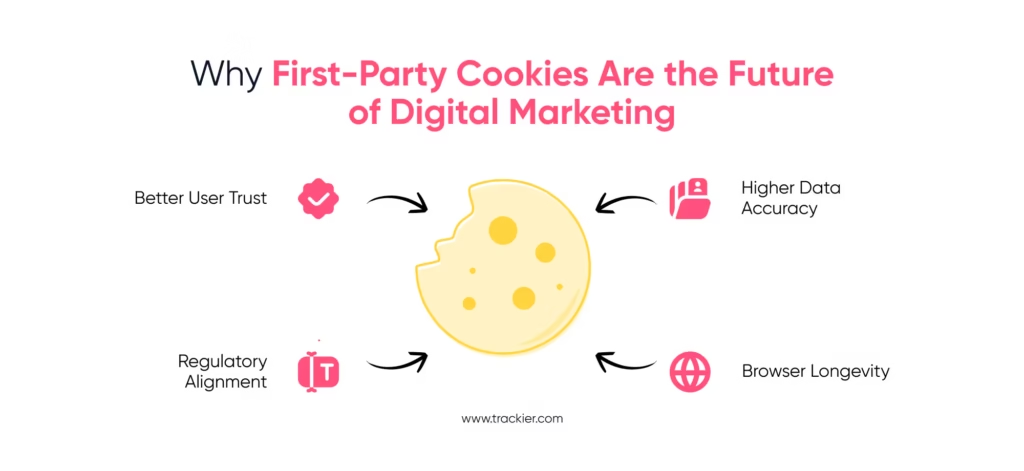
1. Better User Trust
- Users are more comfortable sharing data directly with brands they interact with, especially when consent is clear.
2. Higher Data Accuracy
- Since first-party cookies collect data directly from owned properties, the insights are cleaner and more reliable.
3. Regulatory Alignment
- First-party cookies align well with GDPR, CCPA, and other global privacy frameworks when implemented responsibly.
4. Browser Longevity
- Major browsers continue to support first-party cookies, making them a long-term solution for analytics and attribution.
How First-Party Cookies Support Performance Marketing
Modern performance marketing depends heavily on accurate attribution and user-level insights. First-party cookies play a crucial role in:
- Tracking conversion across owned channels
- Understanding customer journeys
- Measuring campaign effectiveness
- Optimizing user experiences in real time
By leveraging first-party cookies, marketers can maintain visibility even as third-party tracking declines.
The Role of Consent and Transparency
Using first-party cookies responsibly requires clear communication. Best practices include:
- Transparent cookie policies
- Easy to understand consent banners
- Clear explanation of data usage
This not only ensures compliance but also strengthens brand credibility.
Transitioning from Third-Party to First-Party Cookie Strategies
Shifting away from third-party dependencies doesn’t mean losing insight; it means restructuring data collection.
Steps to Build a First-Party Data Strategy
- Audit existing tracking methods
- Identify critical first-party data points
- Integrate consent-based tracking
- Align analytics with owned platforms
- Continuously optimize data governance
A strong first-party foundation ensures long-term resilience.
Challenges of Relying Only on First-Party Cookies
While powerful, first-party cookies are not without challenges:
- Limited cross-domain visibility
- Requires a strong internal data infrastructure
- Depends on consistent user engagement
However, these challenges are manageable with the right tools and strategies.
The Cookieless Future: What Marketers Should Prepare For
As the industry moves forward:
- Third-party cookies will continue to decline
- First-party cookies will become central to attribution
- Contextual targeting and consent-led analytics will grow
- Brands with strong owned data will outperform competitors
Preparing now will ensure a smoother transition and sustained growth.
Where Cookie Strategy Goes From Here
The debate around first-party vs third-party cookies ultimately highlights a broader shift towards an ethical, transparent, and user-centric environment. First-party cookies are no longer just an alternative; they are the foundation of modern digital strategy.
At Trackier, we believe that embracing first-party data and privacy-first tracking is the key to building scalable, compliant, and future-ready marketing processes, which will be the right way of leading a secure journey of growth and management for all individuals and businesses together.
FAQs
What are first-party cookies?
First-party cookies are small data files created by the website a user is directly visiting. They help the site remember user actions such as logins, preferences, and page interactions, allowing for a smoother and more consistent browsing experience.
How do first-party cookies work?
First-party cookies work by storing information in a user’s browser when they interact with a website. This data is then sent back to the same website on future visits, enabling it to recognize returning users and maintain session continuity.
Why are first-party cookies important for websites?
First-party cookies are important because they provide accurate, reliable insights into user behavior within a website’s own environment. They support essential functions like analytics, personalization, and conversion tracking without relying on external data sources.
Are first-party cookies privacy-compliant?
Yes, first-party cookies are generally considered more privacy-friendly when used with proper user consent. Since they are set by the website the user interacts with directly, they align well with most data protection regulations when transparency and consent are maintained.
What is the difference between first-party cookies and third-party cookies?
The key difference is ownership and data access. First-party cookies are set and controlled by the website being visited, while third-party cookies are created by external domains and can track users across multiple websites.