A referral program is one of the simplest yet most effective ways to grow in a market where customer acquisition costs keep climbing. Instead of spending heavily on ads, businesses can let satisfied customers do the talking. A well-designed referral program turns loyal users into brand advocates who bring in new customers through trust-driven recommendations.
This shift matters even more in 2026. In fact, the average ecommerce customer acquisition cost has reached $78 in 2026, after rising 40% between 2023 and 2025. At the same time, referral traffic converts at an average rate of 2.5%–3.5%, significantly outperforming typical paid social traffic.
Why Referral Marketing Matters
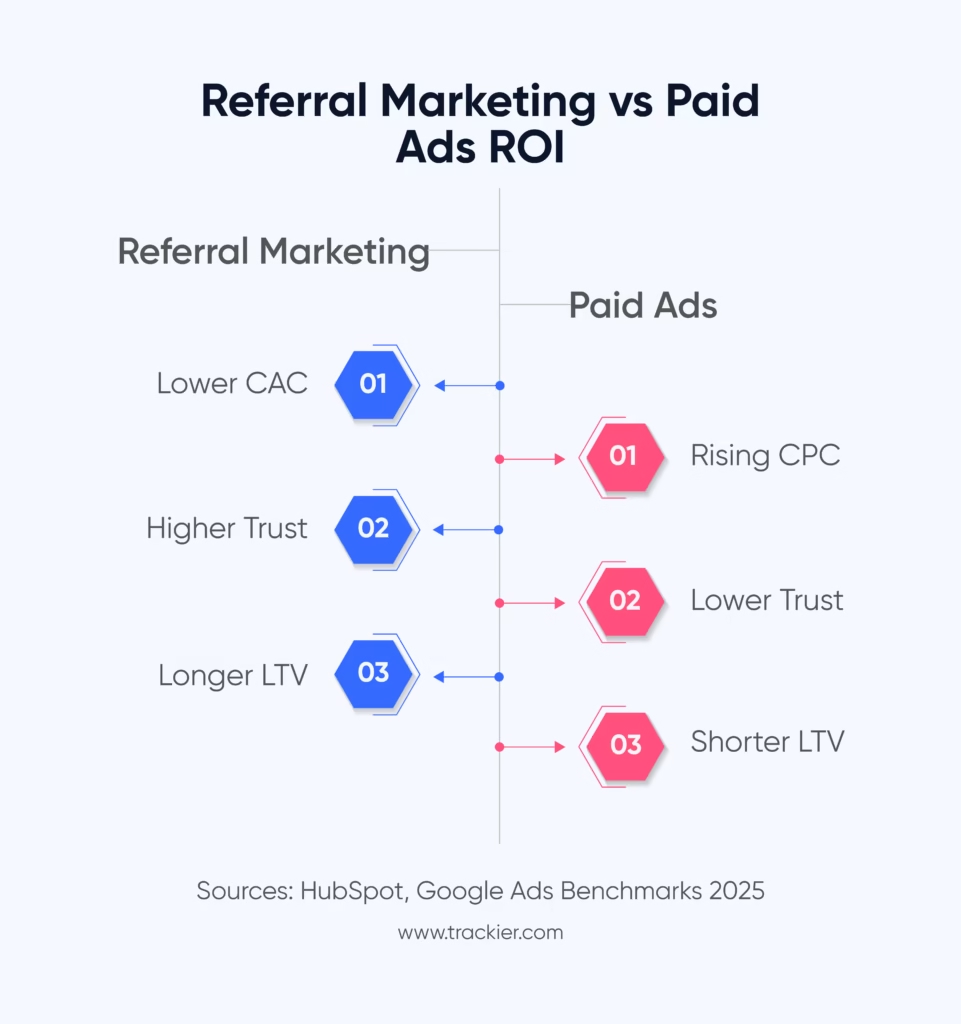
The biggest advantage of a referral program is trust. People are far more likely to try a product or service when it comes recommended by someone they know. Studies consistently show that referred customers convert faster, stay longer, and deliver higher lifetime value compared to those acquired through paid campaigns.
Referral programs also create a compounding effect. A new customer brought in through a referral can become a referrer themselves, creating a self-sustaining growth loop.
Over time, this reduces reliance on ad spend and builds a more engaged customer base. For brands looking to balance acquisition with retention, referral marketing delivers both.
Trends in Referral Marketing in 206
Referral marketing in 2026 looks sharper than ever. Buyers expect rewards that feel worth their effort, the ability to share instantly on mobile, and clarity around what they will get.
Marketers, on the other hand, want measurable ROI and integrations with the rest of their stack. Here’s what recent data shows.
Personalized rewards lift participation
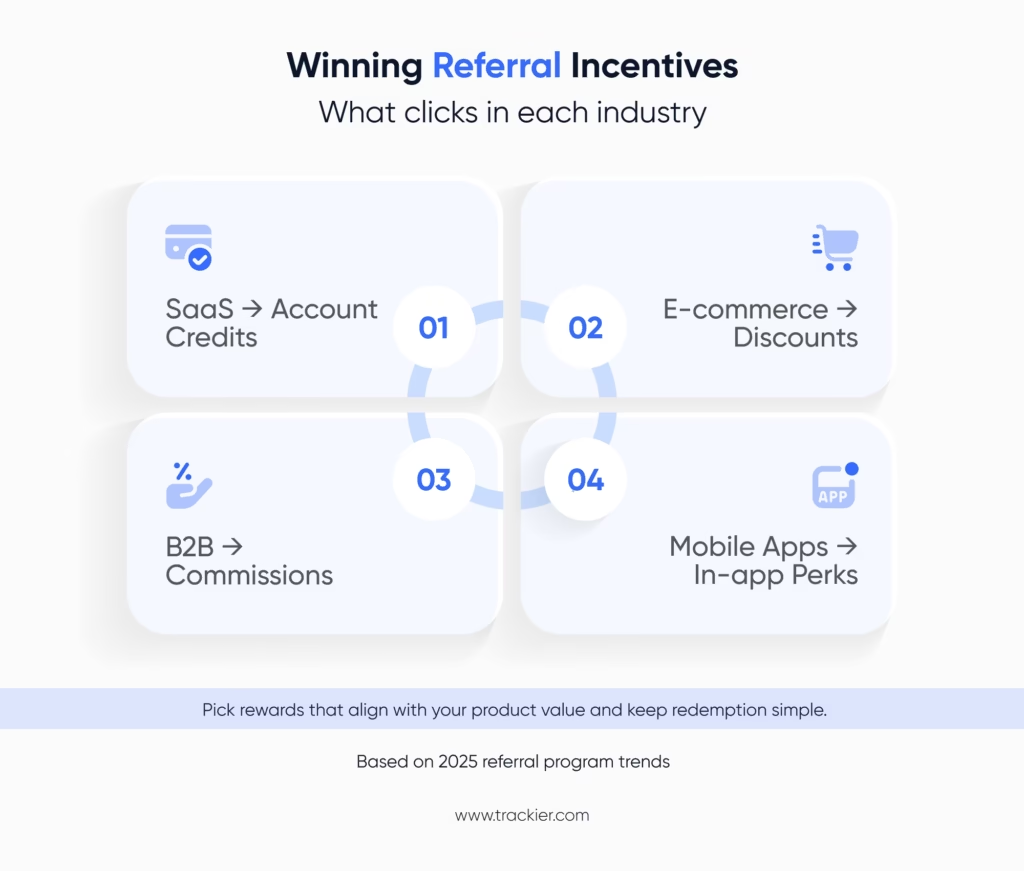
Consumers are more likely to engage with referral programs when the rewards feel relevant and worthwhile. Rather than offering the same incentive to everyone, brands can tailor rewards based on customer preferences, purchase behavior, loyalty, or referral activity.
This could include discounts, account credits, exclusive perks, free products, or tiered rewards. Making incentives more relevant and keeping the redemption process simple can encourage more customers to participate, strengthen advocacy, and keep referrals flowing.
Mobile and social sharing drive flow
Referral sharing is becoming increasingly mobile-first, making a seamless sharing experience essential. A July 2026 analysis of 809 mobile apps found that 25.3% had a visible referral or “invite friends” feature, with adoption reaching 50% among social networking and health & fitness apps.
For brands, this means referral programs should make sharing effortless across mobile messaging, social platforms, and other channels customers already use. Simple referral links, one-tap sharing, and timely incentives can reduce friction, shorten the path from recommendation to action, and encourage more peer-to-peer referrals.
B2B buyers rely on peers
Ad-saturated buyers are becoming more selective about the information they trust. In 2026, 73% of B2B decision-makers said they trust peer recommendations, ranking them above vendor websites, search engines, and review sites when researching business purchases.
Program design connects with lifecycle marketing
Good referral programs thrive when integrated with owned marketing. Combining referrals with post-purchase flows, loyalty updates, and lifecycle campaigns.
This makes referrals feel like a natural extension of customer engagement, not a bolted-on side campaign.
Why this matters
The data is clear. Referral programs are most effective when they provide customers with valuable rewards, sit inside existing lifecycle marketing, and are measured against reliable benchmarks.
Benefits of a Referral Program
When done right, a referral program becomes a powerful acquisition and retention lever. It goes beyond just pulling in new customers and creates sustainable long-term growth.
Conversion efficiency
Recommendations can shorten the path from discovery to purchase because they arrive with built-in trust and social proof. Rather than treating referrals as just another acquisition source, marketers can use them to create a more direct path from advocacy to conversion.
The key is to make the referral experience easy to act on, clearly communicate the value for both sides, and track the journey from share to purchase. This gives teams a clearer view of what is driving conversions and where the referral experience can be improved.
Acquisition cost and ROI
Paid ads get more expensive every year. Referral programs provide predictable and capped acquisition costs through fixed-value rewards like credits or gift cards.
Instead of bidding endlessly in auctions, marketers can budget referrals as a steady acquisition channel with clearer ROI.
Retention and lifetime value
Loyal customers can contribute far beyond the initial purchase. Referral programs strengthen this relationship by turning satisfied customers into active advocates while bringing in new buyers through trusted recommendations.
The result is a growth loop where advocacy supports both acquisition and retention. When customers are rewarded for sharing a positive experience, they have another reason to stay engaged with the brand, while referred customers can enter the relationship with greater trust from the start.
A well-designed referral program therefore shouldn’t be viewed only as an acquisition channel. It can become part of a broader loyalty strategy that encourages repeat engagement, strengthens customer relationships, and creates more opportunities for long-term value.
Real program examples
A referral program trims acquisition costs, drives predictable conversions, and strengthens customer lifetime value. When treated as a core acquisition channel, not a side project, it becomes one of the most sustainable growth levers for 2026.
How Trackier Adds Value to Referral Program Tracking
While referral programs deliver proven ROI, tracking and managing them across multiple channels is often challenging. This is where Trackier’s partner marketing platform plays a crucial role.
1. Unified Tracking Across Channels
Referral activities may happen on websites, mobile apps, or through affiliate partnerships. Trackier enables businesses to track all referral-driven conversions under a single dashboard, ensuring no attribution gaps.
2. Fraud Prevention and Security
Referral fraud is a real risk, from fake signups to self-referrals. With Trackier’s advanced fraud detection, brands can filter invalid leads and maintain the integrity of their referral program. This ensures that only genuine referrals are rewarded, preserving ROI.
3. Scalable Partner and Referral Management
Referral programs rarely exist in silos. Many businesses run affiliate, influencer, and referral partner programs alongside them. Trackier allows marketers to unify these channels, measure performance holistically, and scale programs without complexity.
4. Real-Time Analytics for Smarter Optimization
With Trackier, businesses gain access to detailed metrics such as conversion rates, customer lifetime value, and partner-level performance. This allows marketers to identify top referrers, optimize campaigns in real-time, and double down on strategies that actually drive growth.
5. Compliance Made Easier
In industries like telecom, finance, and gaming, regulatory compliance can make or break referral strategies. Trackier provides compliance-focused tools that help brands stay within guidelines while scaling their referral and referral partner program globally.
By combining a referral program’s organic trust with Trackier’s ability to measure, protect, and optimize, businesses can transform referrals from a side tactic into a scalable growth engine.
Referral Program Best Practices
1. Keep the Referral Process Simple
Complex referral flows can create unnecessary friction and make customers less likely to complete a referral. The best programs keep the journey clear: share a referral link, have the new customer sign up, and reward both sides when the required action is completed.
Airbnb is a strong example of this approach. Its current guest referral program lets users share a unique referral link, while the referred friend receives a coupon for their first booking and the referrer earns travel credits after the friend completes a qualifying trip.
2. Offer Dual-Sided Rewards
When both the referrer and the referred customer benefit, the referral feels more balanced and valuable. A shared incentive gives existing customers a reason to recommend the brand while making the offer more compelling for new customers. Dropbox is a well-known example, using additional storage as a reward for both sides of the referral.
The key is to make the value clear, easy to understand, and relevant to both participants. When customers feel that everyone benefits from the referral, they are more likely to share it with people in their network.
3. Align Rewards with Customer Motivation
Generic incentives can struggle to create meaningful engagement. The most effective referral rewards reflect what customers actually value, whether that is savings, convenience, exclusive access, recognition, or experiences.
Tesla demonstrated this approach by using exclusive experiences and product-related perks rather than relying solely on conventional cash incentives. The lesson is simple: understand what motivates your audience and build the referral reward around that motivation.
4. Promote the Program Everywhere
Even a well-designed referral program can underperform if customers do not know it exists. Make referral opportunities visible across the customer journey, including email, account dashboards, checkout pages, mobile apps, post-purchase communications, and relevant social channels.
Uber incorporated referrals into its app experience, making it easy for users to discover and share the program without leaving the platform. The goal is to put the referral opportunity where customers are already engaged rather than expecting them to search for it.
5. Track and Optimize Continuously
Referral programs should evolve based on customer behavior and campaign performance. Track metrics such as referral participation, shares, clicks, referred conversions, reward redemptions, and customer value to understand what is working.
Use A/B testing to experiment with referral messaging, calls to action, reward structures, placement, and timing. The takeaway is to treat referral marketing as an ongoing optimization process rather than a one-time campaign.
Advanced Referral Program Strategies
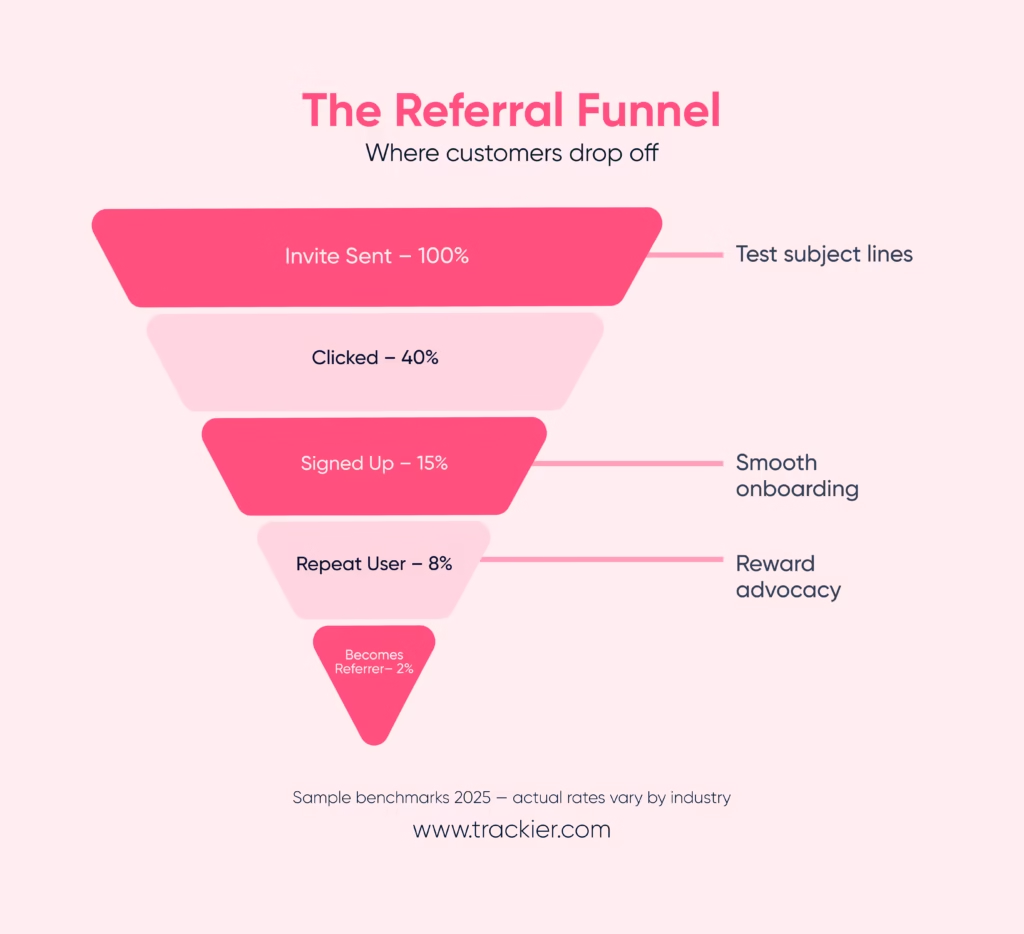
1. Use Referrals to Reduce Churn
Referral programs can support retention when they turn satisfied customers into active advocates. Referred customers often arrive with greater trust and clearer expectations, while existing customers have another reason to stay engaged with the brand.
Build referral prompts into key moments in the customer journey and pair them with meaningful rewards to create a stronger connection between advocacy and retention.
2. Track LTV vs. CAC to Optimize ROI
Referral marketing should be evaluated beyond the initial conversion. Compare the cost of acquiring referred customers with their long-term value, retention, repeat purchases, and expansion.
This gives you a clearer picture of whether your rewards and program costs are generating sustainable returns. Tracking referral LTV alongside CAC also helps identify which customer segments and referral sources deserve more investment.
3. Expand Across Multiple Channels
Make referrals available wherever customers already interact with your brand. Promote referral opportunities through email, SMS, social media, websites, and in-app experiences rather than relying on a single channel.
A consistent presence across these touchpoints makes sharing easier and gives customers more opportunities to recommend your brand when the intent is highest.
4. Segment Rewards by Customer Tier
Not every customer has the same motivation to refer. Segment advocates based on factors such as purchase behavior, loyalty, engagement, and referral activity, then tailor incentives accordingly.
Tiered rewards can give frequent advocates a reason to keep participating while keeping entry-level incentives accessible to newer customers.
5. Automate, Test, and Optimize
A referral program should evolve as you learn what drives participation and conversions. Test different messages, incentives, placements, and sharing experiences to identify what works best for each audience.
Automation can handle referral links, reward delivery, notifications, and reporting at scale, while fraud checks help protect the program as participation grows.
Next Steps
Referral programs are no longer a side experiment for marketers. They have proven to be one of the most cost-efficient ways to acquire and retain customers when built with strategy and supported by technology.
- Cost-effectiveness: Referral programs can help brands reduce reliance on paid acquisition by turning existing customers into a source of qualified, trust-driven leads.
- Loyalty impact: Referral activity can strengthen the relationship between customers and brands, creating a cycle where satisfied customers become advocates while continuing to engage with the business.
- Growth potential: Brands can scale referral programs by combining compelling incentives with frictionless sharing, reliable tracking, and automated workflows. The result is a repeatable acquisition loop rather than a one-off campaign.
The opportunity for marketers is clear. Instead of competing purely on ad spend, referral programs let your happiest customers bring in new ones while strengthening retention.
What to Do Next
Here is a practical roadmap for marketers who want to better their referral marketing efforts:
1. Audit your current program
- Are incentives compelling enough?
- Do you track both acquisition and retention from referrals?
2. Define measurable goals
- Target metrics like referral conversion rate, CAC vs. LTV, churn rate of referred customers.
3. Integrate tracking and automation
- Tools like Trackier centralize referral and partner data, helping you identify what channels and incentives work best.
4. Experiment and optimize continuously
- A/B test referral messages and rewards.
- Monitor fraud prevention so ROI stays intact.
5. Scale across channels
- Don’t restrict referrals to email. Expand to SMS, in-app, and social platforms to reach wider audiences.
Final Takeaway
Good referral programs succeed when they move beyond being just a one-time growth tactic. They should be treated as a long-term, data-driven acquisition and retention strategy. By combining the right incentives with robust tracking and continuous testing, marketers can transform referrals into a scalable, revenue-generating channel.
With platforms like Trackier, the process becomes measurable, fraud-proof, and scalable. This ensures that every referral is not only attributed correctly but also contributes directly to sustained business growth.
Hungry For More?
Sign up for our weekly newsletter to get tips like these delivered straight to your feed.
FAQs
1. What is a referral program?
A referral program is a structured system where businesses encourage their existing customers or partners to bring in new customers. In return, the referrer usually earns a reward such as discounts, credits, or cash incentives. Unlike general word-of-mouth, referral programs are measurable and trackable, which means businesses can clearly see how many new customers are joining through referrals and what the ROI looks like.
2. How is referral marketing different from affiliate marketing?
While both referral and affiliate programs involve third parties driving new customers, the difference lies in who participates and how incentives are structured.
– Referral programs and referral marketing are typically driven by existing customers who share the product with friends or peers. Rewards are usually consumer-focused, like credits or discounts.
– Affiliate marketing involves professional partners or publishers promoting the product to their audience. They often earn a commission for each sale or lead.
A business can run both models simultaneously, but the goals and strategies differ. Referral programs focus more on trust and loyalty, while affiliate programs lean toward reach and scale.
3. Do referral programs actually work?
Yes, referral programs are proven to work when built strategically. Data shows:
– Referred customers are 4x more likely to convert than non-referred ones.
– They also show a 16% higher lifetime value compared to non-referred customers (Harvard Business Review).
Well-designed referral programs reduce acquisition costs, drive higher engagement, and strengthen brand loyalty.
4. What makes a referral program successful?
A referral program succeeds when three factors align:
1. Clear incentives: Rewards must be valuable enough for customers to share.
2. Seamless experience: The referral process should be simple, with minimal steps.
3. Accurate tracking: Businesses need reliable platforms to attribute referrals correctly and prevent fraud.
Platforms like Trackier help businesses track referral traffic alongside other partner channels, ensuring attribution and ROI measurement are accurate.
5. Can small businesses run referral programs?
Absolutely. Referral programs are highly scalable and cost-efficient, making them perfect for small businesses. Even without large marketing budgets, a well-designed program can turn happy customers into the most effective growth channel. Starting simple, like offering a discount on the next purchase for both referrer and referee, can deliver measurable results.
6. How do I measure the success of my referral program?
The success of a referral program can be measured through key metrics such as:
– Referral conversion rate: Percentage of referrals that turn into customers.
– Customer Acquisition Cost (CAC) vs. Lifetime Value (LTV): Whether referred customers generate higher profitability.
– Churn rate of referred customers: Do referred customers stay longer than others?
– ROI of referral incentives: How much revenue is being generated compared to rewards given.
These metrics provide a clear picture of whether the program is driving sustainable growth.