Managing affiliate payments can quickly become complicated as programs grow. Brands need to keep track of payable amounts, payment cycles, documentation, KYC, approvals, and payment releases, while publishers need visibility into when and how they will be paid.
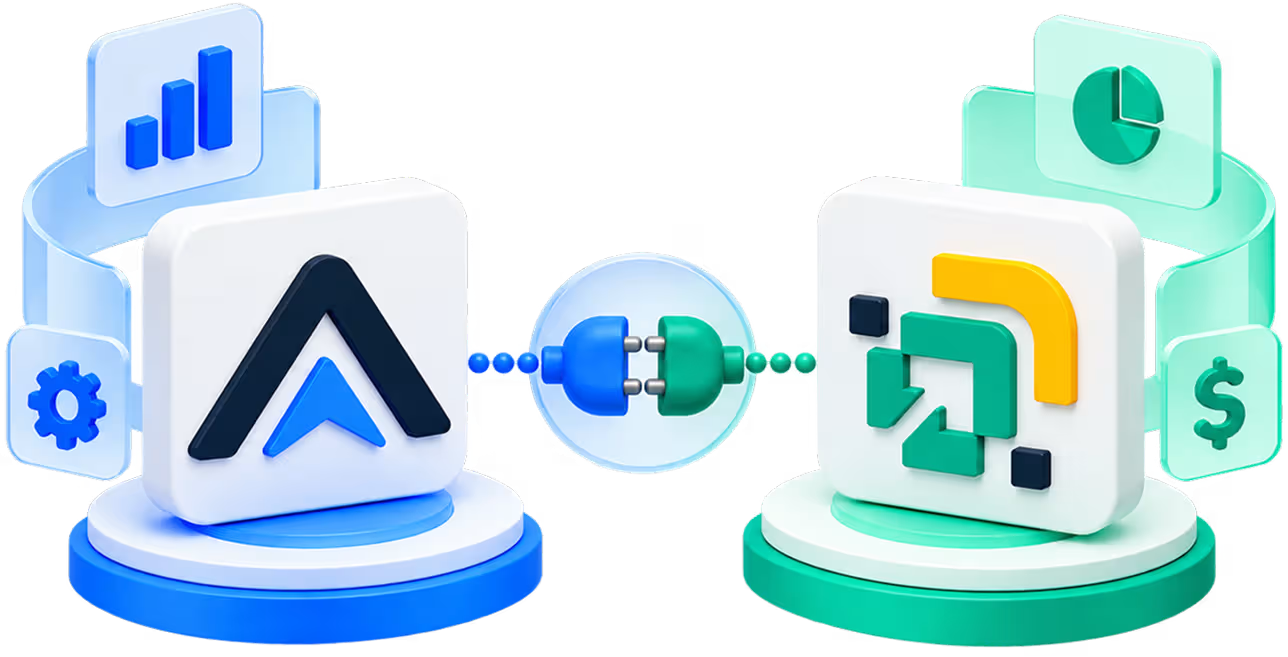
To make this process more structured, Trackier integrates with NookPay, bringing affiliate payment data and payment operations into a more streamlined workflow.
The integration supports two payment models: Custodian and Self-Pay, allowing brands to choose the approach that fits their payment operations.
How Trackier × NookPay Works
Trackier remains the source for affiliate performance and payment data, while NookPay acts as the payment layer.
Once the payable amount is determined, the payment workflow moves through NookPay, where the required payment information and KYC processes are managed.
For publishers, completing KYC is an important part of the process. Once verified, publishers can access the relevant payment details and move through the payment workflow.
The integration essentially connects:
Trackier → Payment Data → NookPay → KYC → Payment Processing
But the exact workflow depends on the payment model selected.
1. Custodian Model: Let Trackier Handle the Payment Operations
The Custodian Model is designed for brands that want Trackier’s finance operations team to manage the payment workflow on their behalf.
Trackier Finance Operations creates a Debit Note representing the total payable amount for the selected payment period. Brands can define their preferred payment cycle, whether that is weekly, bi-weekly, or monthly.
Once the Debit Note is created, the relevant brand or publisher completes the required KYC process on NookPay. After the necessary verification and approval, the payment can proceed through the NookPay workflow.
In simple terms:
Trackier calculates → Trackier Finance creates the Debit Note → KYC → Approval → Payment
This model reduces the operational workload for brands by giving them a Trackier-assisted payment workflow.
2. Self-Pay Model: Keep Payment Control In-House
For brands that prefer to manage their own payment operations, the Self-Pay Model provides greater control.
In this model, Trackier’s Finance Operations team does not manage or release the payment. Trackier provides the relevant affiliate and payment data, while the brand takes responsibility for reviewing the payable amount and managing the payment process.
The workflow looks like:
Trackier provides data → Brand reviews payable amount → Brand manages payment → Payment released
This approach works well for brands that already have an established internal finance and payment process.
One Integration, Two Payment Approaches
The Trackier × NookPay integration gives brands flexibility instead of forcing every business into the same payment workflow.
With the Custodian Model, brands can rely on Trackier’s finance operations for payment management.
With the Self-Pay Model, brands retain control and manage payments through their own finance operations.
For publishers, the KYC process provides the necessary verification before they can access their payment details.
Ultimately, the integration brings affiliate tracking data and payment operations closer together, helping create a more organized payment experience for both brands and publishers.
Whether you want Trackier to assist with payment operations or prefer to manage payments internally, Trackier × NookPay gives you the flexibility to choose the model that fits your business.