For today’s businesses, partner programs are among the most powerful channels of growth. However, the first step of launching your program is the easiest; you need to promote partner programs, which is much more difficult for many brands.
In 2026, affiliate and partner marketing will be a $22.5 billion global industry, with over 80% of brands using these channels to drive revenue. Even though most brands now use affiliate and partner marketing to drive revenue, many are not seeing their partners promote their program because there is a lack of visibility and engagement with the partners activating their program.
The reality is simple: partners don’t promote programs; they promote opportunities that convert.
To succeed, brands need to have a structured promotion strategy combined with the right technology to do so. Trackier helps brands not only launch their partner program but also grow their partner program using advanced tracking technology, automation, and real-time reporting.
This blog will explore the best ways to promote your partner program and make it a source of recurring revenue.
Why Promoting a Partner Program is Difficult?
Launching a partner program often creates the illusion of growth, but in reality, most programs struggle long before they scale.
Among all the difficulties associated with launching a partner program, the primary challenge is Activation. It is not uncommon to find dozens or hundreds of partner signups with little or no performance at all. In fact, most partner programs typically follow a similar pattern, wherein approximately 90% of affiliates will generate zero traffic and/or zero sales.
The reason behind this is that partner programs are often treated as passive channels. Most brands simply expect that their partners will begin promoting their products immediately following their sign-up as a partner.
However, most partners analyze which programs they will promote and prefer those that are easy to promote, provide a reasonable return on investment, and offer strong support. Many structural issues make promotion harder:
- Low Visibility – Your program exists, but the right partners are unaware of the program.
- Weak Incentives – If your rewards do not match your partners’ effort, your partners will lose interest in your program.
- Poor Onboarding – If your partners are not provided with clear direction on how to begin their promotion of your program, then most partners will never become “activated.”
- Lack of System Support – Most partner programs will fail if they are relying upon manual tracking or inconsistent communication.
Therefore, promoting a partner program is not just about reach. Rather, it is building a system whereby partners can start quickly, see results, and remain motivated.
Best Ways to Promote Partner Programs
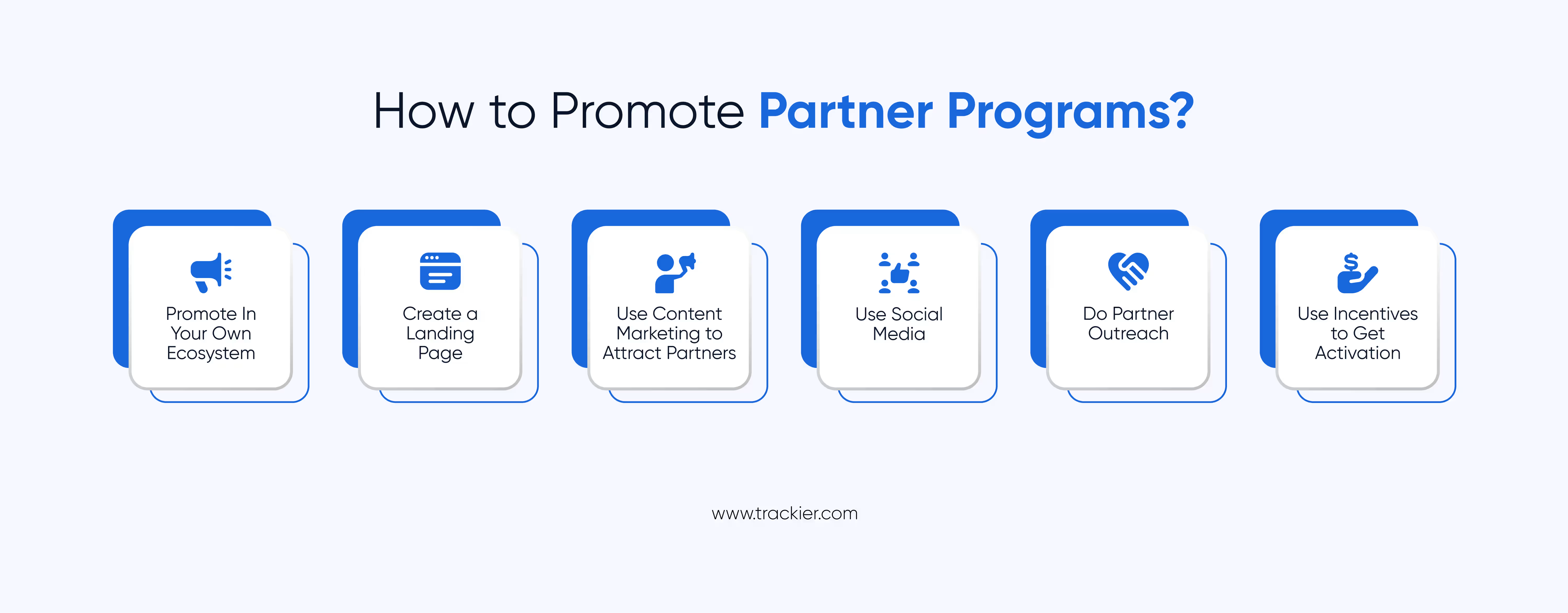
Promoting a partner program isn’t about using one channel; it’s about building a multi-channel acquisition system where partners discover, join, and start promoting quickly. Here are the most effective, proven strategies:
1. Promote Inside Your Own Ecosystem
Your highest-converting partners are already in your ecosystem: website visitors, users, and customers. Use:
- Homepage banners and pop-ups
- Blog CTAs
- Product dashboards or user panels
2. Create a Dedicated Partner Landing Page
Your landing page is your program’s “sales page” for partners. Include:
- Commission structure
- Benefits and earning potential
- FAQs and clear signup flow
- Testimonials or proof
3. Use Content Marketing to Attract Partners
Most potential partners are already searching for opportunities. Create:
- “Best affiliate programs in [industry]” blogs
- Earning guides and tutorials
- Case studies of successful partners
4. Leverage Social Media and Communities
Partners don’t just search, they hang out in communities. Focus on:
- LinkedIn and Twitter for B2B
- Facebook groups, Reddit, Discord
- Niche creator communities
5. Do Targeted Partner Outreach
Don’t wait for partners, go find them. Identify:
- Bloggers and niche creators
- Influencers and media buyers
- Agencies and consultants
6. Turn Customers into Partners
Your best promoters are often your existing users. Why this works:
- They already trust your product
- They understand the value
- They convert better
7. List on Affiliate Networks and Marketplaces
If you want scale, go where affiliates already are. Benefits:
- Faster discovery
- Access to active partners
- Reduced acquisition effort
8. Use Incentives to Drive Activation
Getting signups is easy; getting action is hard. Boost performance with:
- Tiered commissions
- Performance bonuses
- Limited-time incentives
How to Keep Partners Actively Promoting?
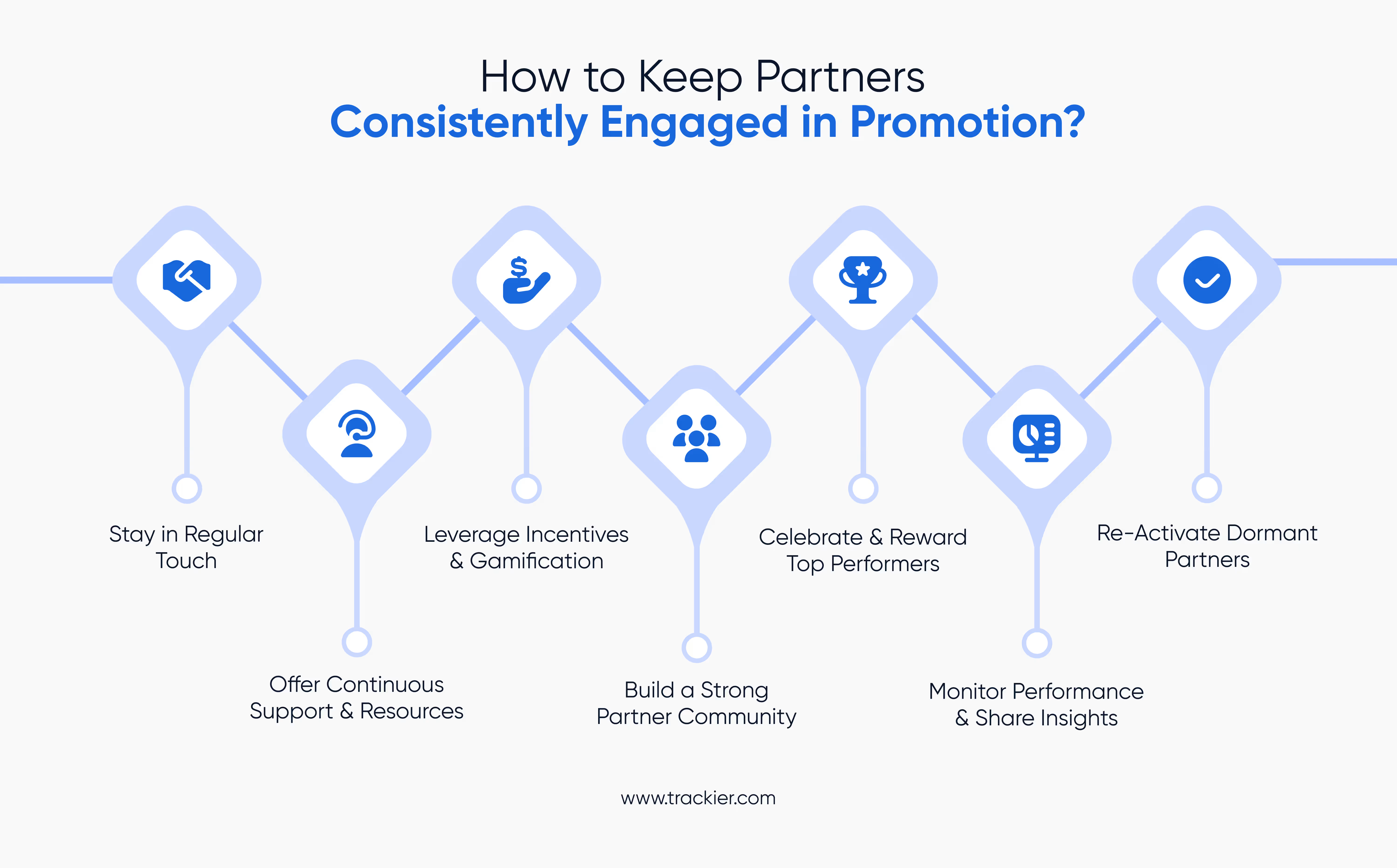
Getting partners to sign up is just the beginning; real growth comes from keeping them consistently active. The most successful programs don’t treat partners as one-time promoters; they treat them as long-term collaborators.
1. Maintain Regular Communication
Partners need constant visibility into what’s happening.
- Share updates, new campaigns, and offers
- Send newsletters or weekly nudges
- Highlight what’s working
2. Provide Ongoing Support and Resources
Most partners don’t fail due to lack of intent; they fail due to lack of direction. Enable them with:
- Ready-to-use creatives, copy, and landing pages
- Content ideas and campaign suggestions
- Clear playbooks on what converts
3. Use Incentives and Gamification
Motivation increases when there’s something to aim for.
- Tiered commissions
- Performance bonuses
- Leaderboards, contests, and milestones
4. Build a Partner Community
Engagement increases when partners feel part of something bigger.
- Create Slack, WhatsApp, or Discord groups
- Encourage sharing strategies and wins
- Host webinars or partner meetups
5. Recognize and Reward Top Performers
Recognition is often as powerful as money.
- Feature top partners in newsletters
- Share success stories
- Offer exclusive perks or early access
6. Track Performance and Share Insights
Partners stay engaged when they can see results.
- Share clicks, conversions, and earnings
- Highlight winning campaigns
- Show what top partners are doing
7. Re-Engage Inactive Partners
Inactivity is normal, but it’s often reversible.
- Send reactivation emails with new offers
- Provide updated creatives or angles
- Offer limited-time bonuses
How Technology Helps You Scale Partner Promotion?
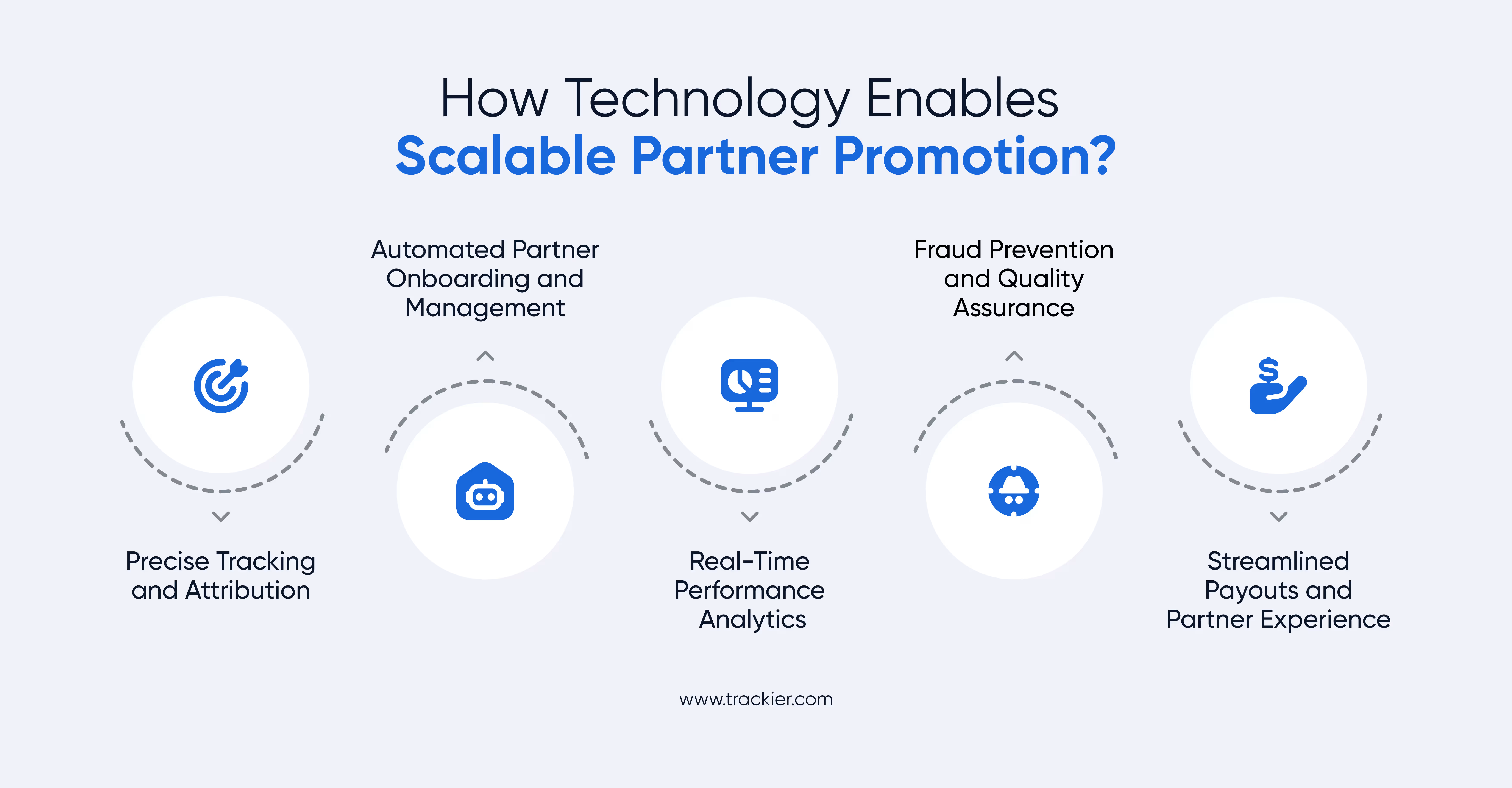
As your partner program grows, manual efforts quickly become a bottleneck. Managing partners, tracking performance, and ensuring accurate payouts across multiple channels is nearly impossible without the right technology.
This is where partner marketing platforms play a critical role.
1. Accurate Tracking and Attribution
One of the biggest challenges in partner promotion is knowing which partner drove which result. Advanced tracking systems help you:
- Attribute conversions across channels
- Track clicks, installs, and sales in real time
- Avoid duplication or misattribution
2. Automated Onboarding and Management
Scaling partner acquisition means handling hundreds of partners efficiently. Technology enables:
- Automated onboarding flows
- Instant partner approvals
- Centralized dashboards to manage all partners
3. Real-Time Performance Insights
To keep partners active, you need visibility into what’s working. With analytics dashboards, you can:
- Identify top-performing partners
- Spot high-converting campaigns
- Optimize underperforming channels
4. Fraud Detection and Quality Control
As programs scale, so does the risk of fraud: fake traffic, invalid leads, or coupon abuse. Modern platforms help:
- Detect suspicious activity
- Block fraudulent partners
- Ensure you only pay for genuine performance
5. Seamless Payout and Partner Experience
Delayed or inaccurate payouts can quickly kill partner motivation. Technology simplifies:
- Commission calculations
- Multi-currency payouts
- Transparent earnings tracking for partners
Conclusion
Partner programs have become a popular way for generating revenue, achieving up to 16:1 ROI in certain cases. Partner programs also provide long-term revenue growth, not simply by their launch, but rather by how they are marketed, facilitated, and expanded.
The strategies we covered, from leveraging your own ecosystem to activating partners and using incentives, are what separate stagnant programs from high-performing ones. The key is consistency. Promotion isn’t a one-time effort; it’s an ongoing system that compounds over time.
However, as your program grows, manual processes will slow you down. That’s where the right technology becomes critical.
If you’re serious about leveraging your partner program into a predictable revenue stream, you should move away from the use of spreadsheets. Trackier allows you to efficiently manage and scale your partner program, utilizing one powerful platform to manage everything.
Book a demo and see how you can build, manage, and scale a high-performing partner program faster.
FAQs
1. How do I measure the success of my partner program?
Track metrics like partner activation rate, revenue per partner, total conversions, and ROI. Monitoring performance regularly helps identify top partners and optimize campaigns. Continuous analysis allows you to refine strategies and focus on what drives the most revenue.
2. What are the most common mistakes in promoting partner programs?
Common mistakes include focusing only on recruitment, ignoring partner engagement, offering low incentives, and lacking proper tracking. Many brands also fail to provide resources or guidance. Avoiding these issues and building a structured system can significantly improve program performance and scalability.
3. How do I keep partners motivated over time?
Regular communication, incentives, and recognition are key. Share updates, provide fresh campaigns, and reward performance through bonuses or leaderboards. Programs that continuously engage partners and provide support see higher retention and long-term activity compared to those that don’t invest in relationships.
4. What role does technology play in partner programs?
Technology enables accurate tracking, automation, and performance insights. It helps manage partners at scale, ensures correct attribution, and prevents fraud. Without proper tools, managing multiple partners becomes inefficient and error-prone, limiting your ability to grow the program effectively.
5. What type of content helps promote partner programs?
Content like product reviews, comparison blogs, tutorials, and case studies performs best. These formats address user intent and drive conversions. High-value, problem-solving content builds trust and encourages users to take action, making it highly effective for partner-driven growth.