Partnerships are no longer just a growth experiment; they’ve become a core revenue strategy for modern businesses.
In fact, the global affiliate marketing industry alone is expected to cross $20 billion in 2026, continuing its rapid growth as brands shift toward performance-based, scalable acquisition channels. More than 80% of brands now run some form of affiliate or partner program, and it’s clear: partnerships aren’t optional anymore, they’re foundational.
Not all partner programs work the same way. An affiliate program might help you scale traffic quickly, while a referral program brings in high-quality leads. Co-sell partnerships can unlock enterprise deals, and influencer collaborations build trust long before a buyer enters your funnel.
Choosing the wrong partner program isn’t just inefficient; it can stall growth, waste budget, and create operational friction.
That’s why today’s fastest-growing brands don’t rely on a single model. They build structured partnership ecosystems and use Trackier to manage affiliates, referrals, influencers, and strategic partners in one platform, with clear attribution and performance insights.
In this blog, we’ll break down the four major types of partner programs and help you identify which one fits your growth stage, goals, and market.
What Are Partner Programs?
Partner programs are structured business initiatives where brands collaborate with external partners, such as affiliates, customers, agencies, or creators, to promote, sell, or support their products.
These programs create mutually beneficial relationships, helping businesses expand reach, generate leads, and drive revenue through shared incentives like commissions or revenue share.
In today’s performance-driven industry, Trackier makes it easier to manage these partnerships with tracking, attribution, and partner performance insights in one single platform.
Types of Partner Programs
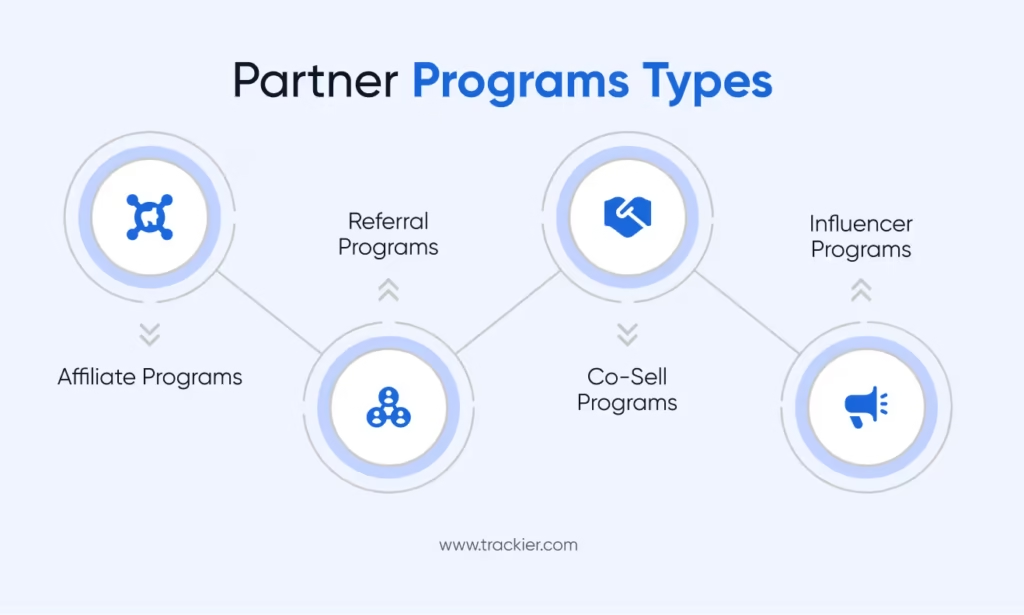
Not all partner programs are built the same, and that’s exactly why choosing the right one matters.
Each type plays a different role in your growth strategy, from driving awareness to closing high-value deals. Let’s break down the four most important partnership programs you should know:
1. Affiliate Programs: Scalable Performance Growth
Affiliate programs are the most common starting point for brands entering partnerships. In this model, partners (bloggers, publishers, media buyers, or creators) promote your product using unique tracking links and earn a commission for every conversion they generate.
What makes affiliate programs powerful is their scalability. You can onboard hundreds (or thousands) of partners without increasing fixed costs, because you only pay for results.
Best for:
- SaaS, eCommerce, D2C brands
- Companies looking for a cost-efficient acquisition
Key advantage: Performance-based model with measurable ROI
With Trackier, brands can track clicks, conversions, and partner performance in real-time, making it easier to scale affiliate programs without losing visibility.
2. Referral Programs: High-Quality Lead Generation
Referral programs turn your existing customers, users, or partners into customers. Instead of promoting at scale, they recommend your product to their network and get rewarded when those referrals convert.
Because referrals come from trusted sources, they bring higher-quality leads and better conversion rates compared to cold traffic.
Best for:
- Products with strong customer satisfaction
- Businesses relying on trust (SaaS, fintech, services)
Key advantage: Warm leads that close faster
The challenge, however, lies in enabling partners with the right resources, like sales decks, email templates, and clear incentives, to make referrals effective.
3. Co-Sell Programs: Closing Bigger Deals
Co-sell partnerships go beyond marketing; they align sales teams. In this model, your team and your partner’s team work together on shared accounts, combining expertise, relationships, and product value to close deals.
This is especially common in B2B ecosystems where products complement each other (e.g., CRM with analytics tool).
Best for:
- B2B SaaS companies
- Enterprise or high-ticket sales
Key advantage: Higher deal size and win rates
However, co-sell requires strong coordination, clear deal ownership, and shared incentives, making it more resource-intensive than other partner programs.
4. Influencer (Creator) Programs: Demand and Awareness Way
Influencer programs focus on building trust and awareness through creators who already have the attention of your target audience.
These partnerships can include sponsored content, product reviews, webinars, or even long-term ambassador programs.
In 2026, this model has expanded beyond B2C, B2B creators on LinkedIn, YouTube, and newsletters are now influencing buying decisions early in the funnel.
Best for:
- New or competitive markets
- Brands looking to build category awareness
Key advantage: Strong brand credibility and top-of-funnel demand
The trade-off? Measuring ROI can be more complex compared to affiliate or referral programs, unless you have proper tracking.
Affiliate vs Referral vs Co-Sell vs Influencer
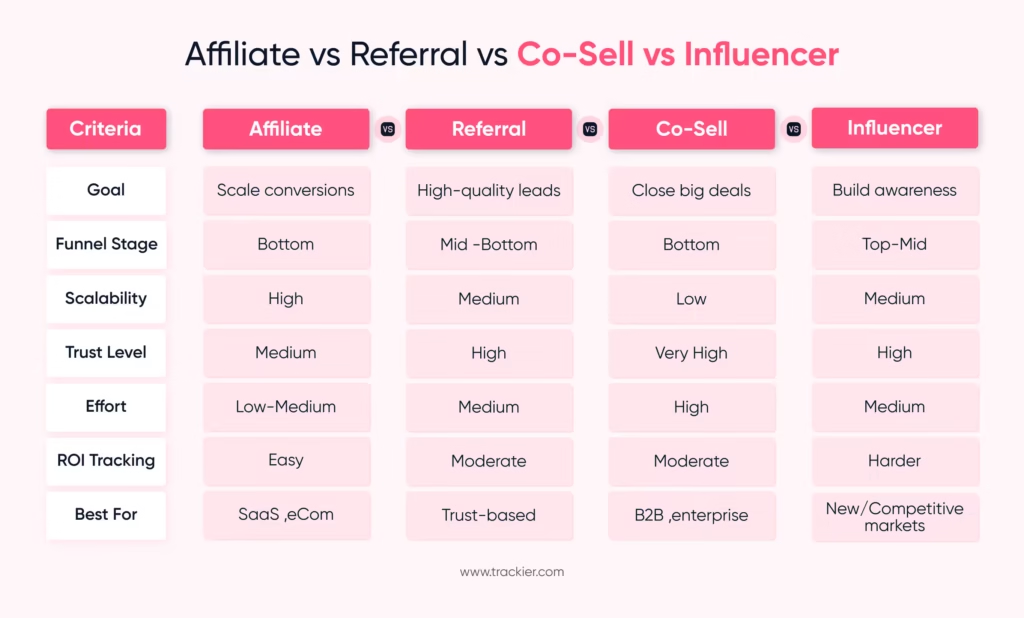
Choosing the right partner program becomes easier when you understand how each model performs across key dimensions like scalability, trust, ROI, and effort. Here’s a clear comparison:
1. Affiliate Programs: Scale + Measurable ROI
Affiliate programs are built for performance and scale. Brands only pay when results happen, making it one of the most efficient acquisition channels today.
- The affiliate marketing industry is projected to reach $22.5 billion in 2026
- 81% of brands already use affiliate programs as a core strategy
- Affiliate channels influence 38% of online purchase decisions
What does this mean? If your goal is fast, scalable growth with clear attribution, affiliate is the strongest starting point.
2. Referral Programs: Trust + Higher Conversions
Referral programs rely on existing relationships: customers, partners, or networks recommending your product.
- Referral leads convert better because trust is already established
- Word-of-mouth remains one of the most influential buying drivers in 2026
What does this mean? Referrals may not scale as fast as affiliates, but they consistently deliver higher-quality pipeline and faster deal closures.
3. Co-Sell Programs: Bigger Deals, Deeper Collaboration
Co-sell is less about volume and more about value per deal. It works best when two companies combine strengths to win shared accounts.
Especially effective in B2B, where buyers need multiple touchpoints (7–10 on average) before converting.
What does this mean? If you’re targeting enterprise or high-ticket clients, co-sell partnerships can significantly increase average deal size and win rates, but require strong alignment and resources.
4. Influencer Programs: Awareness + Market Influence
Influencer (creator) programs are now a core growth lever, especially in early-stage or competitive markets.
- The influencer marketing industry is expected to exceed $30 billion in 2026
- 74% of marketers plan to increase influencer budgets
- Creators are driving 45% more affiliate sales YoY
What does this mean? Influencers don’t just drive awareness, they increasingly impact purchase decisions and pipeline, especially in B2B.
When Should You Choose Each Partner Program?
The biggest mistake brands make is not choosing the wrong partner program, but choosing the right one at the wrong time.
Each partnership model is designed to solve a specific growth problem. The key is aligning it with your current stage, resources, and goals. Here’s how to decide:
1. Choose Affiliate Programs When You Need Scalable Growth
Affiliate programs are ideal when your goal is fast, measurable acquisition.
- They are often the first partnership motion companies that launch because they are easy to scale and performance-driven
- You only pay for conversions, making it low-risk and budget-efficient
Choose an affiliate if:
- You have a product that already converts well
- You want to scale traffic without increasing ad spend
- You’re building a partner marketplace or network
Reality check: Affiliate works best when you have strong tracking and attribution. Without that, scaling becomes messy.
2. Choose Referral Programs When You Want Better Quality Leads
Referral programs are built on trust, not scale. Referral leads typically convert faster because they come from existing relationships and credibility
Choose referral if:
- You already have happy customers or partners
- You want high-intent leads, not just traffic
- Your sales team needs a better-quality pipeline
Best use case: SaaS, fintech, and service-based businesses where trust plays a major role in decision-making.
3. Choose Co-Sell Programs When You’re Moving Upmarket
Co-sell is not about volume; it’s about closing bigger deals. Works best when you’re targeting enterprise buyers or complex sales cycles. Especially effective when your product complements another solution
Choose co-sell if:
- You’re entering mid-market or enterprise segments
- You have a dedicated sales team
- Your deals require multiple stakeholders and trust signals
Reality check: Co-sell requires alignment, shared incentives, and structured processes. Without that, it slows down instead of accelerating growth.
4. Choose Influencer Programs When You Need Awareness & Demand
Influencer (creator) programs are your top-of-funnel strategy. In 2026, creators are no longer just promoting; they’re actively driving buying decisions and shaping demand
Choose an influencer if:
- You’re entering a competitive or new market
- You need brand awareness before conversions
- Your audience actively consumes content (LinkedIn, YouTube, newsletters)
Best use case: Early-stage products, new categories, or crowded markets where trust needs to be built first.
How to Combine Multiple Partnership Programs?
The real growth doesn’t come from running one partner program; it comes from combining them into a full-funnel ecosystem.
In fact, brands that integrate affiliate and influencer strategies see up to 46% higher sales compared to using them separately. Here’s how to do it effectively.
1. Map Programs to the Funnel
Each partner type plays a different role:
- Top of funnel – Influencers → Build awareness
- Mid funnel – Affiliates + referrals → Build trust
- Bottom of funnel – Affiliates (conversion-focused) + co-sell → Drive revenue
2. Combine Influencer + Affiliate for Better ROI
In 2026, the biggest shift is clear: Influencers are becoming affiliates, and affiliates are becoming creators.
- 42% of influencers now monetize through affiliate links
- Hybrid influencer-affiliate campaigns drive higher ROI and revenue per partner
3. Use a Layered Growth Approach
Don’t launch everything at once. Scale step by step:
1. Start with affiliate → for acquisition
2. Add referral → for better lead quality
3. Introduce influencer → for awareness
4. Expand into co-sell → for bigger deals
4. Centralize Tracking & Attribution
The biggest challenge in combining programs is visibility. Without proper tracking:
- You can’t measure what’s working
- You risk double-counting conversions
That’s why performance marketing software helps you:
- Track affiliates, influencers, and referrals in one platform
- Understand cross-channel attribution
- Optimize partner performance with real data
How Technology Enables Partner Program Success?
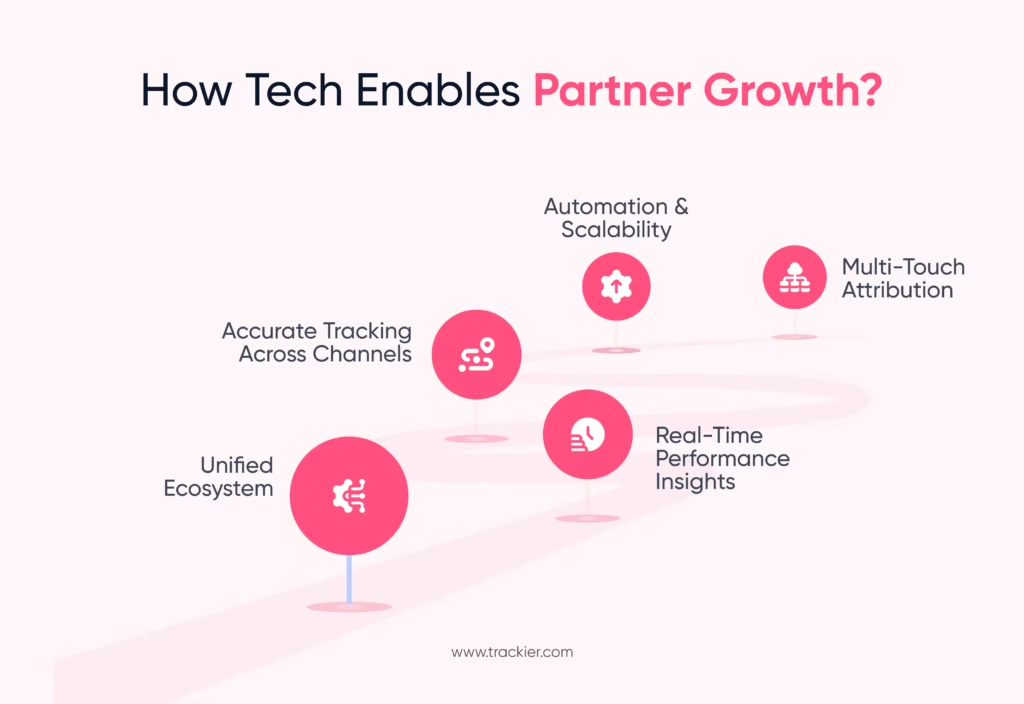
Running partner programs today isn’t just about partnerships; it’s about managing data, attribution, and scale. As customer journeys become more complex, technology is what turns partner efforts into measurable revenue.
For example, 35% of affiliate conversions now involve multiple touchpoints, which means simple tracking models are no longer enough. Here’s how technology makes partner programs successful.
1. Accurate Tracking Across Channels
Modern buyers interact across multiple devices and channels before converting. 77% of users switch devices during their journey.
Advanced tracking (like server-to-server and first-party tracking) ensures you capture every interaction, not just the last click.
2. Multi-Touch Attribution
Attribution is no longer optional; it’s standard. 84% of marketers now use attribution in 2026. Multi-touch models can reduce CAC by up to 22%.
3. Real-Time Performance Insights
Technology gives you:
- Partner-level performance data
- Campaign insights
- Instant optimization opportunities
4. Automation & Scalability
Managing partners manually doesn’t scale. Modern platforms automate:
- Onboarding
- Commission tracking
- Payouts
5. Unified Ecosystem
The biggest shift in 2026 is moving from single programs to unified ecosystems. Trackier helps you:
- Manage affiliate, referral, and influencer programs together
- Track cross-channel attribution
- Optimize partner performance from one dashboard
Conclusion
Choosing the right partner program isn’t about picking what’s popular; it’s about aligning with your current growth stage and goals. Whether you start with affiliates for scale, referrals for quality, influencers for awareness, or co-sell for bigger deals, the real impact comes when these programs work together.
The challenge? Managing multiple partners, tracking performance, and attributing revenue accurately can quickly become overwhelming without the right system.
That’s where Trackier makes the difference. Instead of running disconnected programs, you can build a unified partner ecosystem: track every touchpoint, optimize performance in real time, and scale confidently.
If you’re serious about turning partnerships into a predictable revenue channel, it’s time to move beyond manual efforts.
Book a demo and see how you can launch, manage, and scale high-performing partner programs, all in one platform.
FAQs
1. How do you measure success in partner programs?
Success is measured through metrics like conversions, revenue contribution, customer acquisition cost (CAC), and partner performance. Affiliate-driven customers often show higher purchase intent and order value, making it important to track both short-term conversions and long-term customer value.
2. Can you run multiple partner programs at the same time?
Yes, and most high-growth companies do. Combining affiliate, referral, influencer, and co-sell programs allows you to cover the entire customer journey, from awareness to conversion. Each program serves a different purpose, and together they create a stronger, more predictable revenue strategy.
3. What are the biggest challenges in partner programs?
The biggest challenges include poor tracking, unclear attribution, low partner engagement, and difficulty measuring ROI. As partner ecosystems grow, managing multiple channels without proper technology can lead to inefficiencies, missed opportunities, and inaccurate performance insights that limit scalability.
4. When should a business start a co-sell program?
A business should start a co-sell program when it begins targeting larger or enterprise clients. If your sales process involves multiple stakeholders or integrations, co-selling with strategic partners helps build credibility, shorten sales cycles, and close higher-value deals through shared expertise and relationships.
5. How do influencer programs work in B2B?
In B2B, influencer programs involve working with creators on platforms like LinkedIn, YouTube, or newsletters who educate and influence decision-makers. These creators build trust early in the buying journey and often combine content with affiliate links, making influencer marketing both an awareness and performance-driven channel.