E-commerce will soon entirely depend on the metaverse. The metaverse can enable companies to offer their customers an experience that is unrivalled for online purchases by many technological developments working in seamless harmony. NFTs, augmented and virtual reality, online gaming, and many more are providing unique opportunities for your business to attract new clients in unprecedented ways. This shift is shaping the future of the metaverse for brands.
You can expand your brand in the metaverse through these seven ways, making the metaverse for brands a strategic growth channel:
1. Market Virtual Products
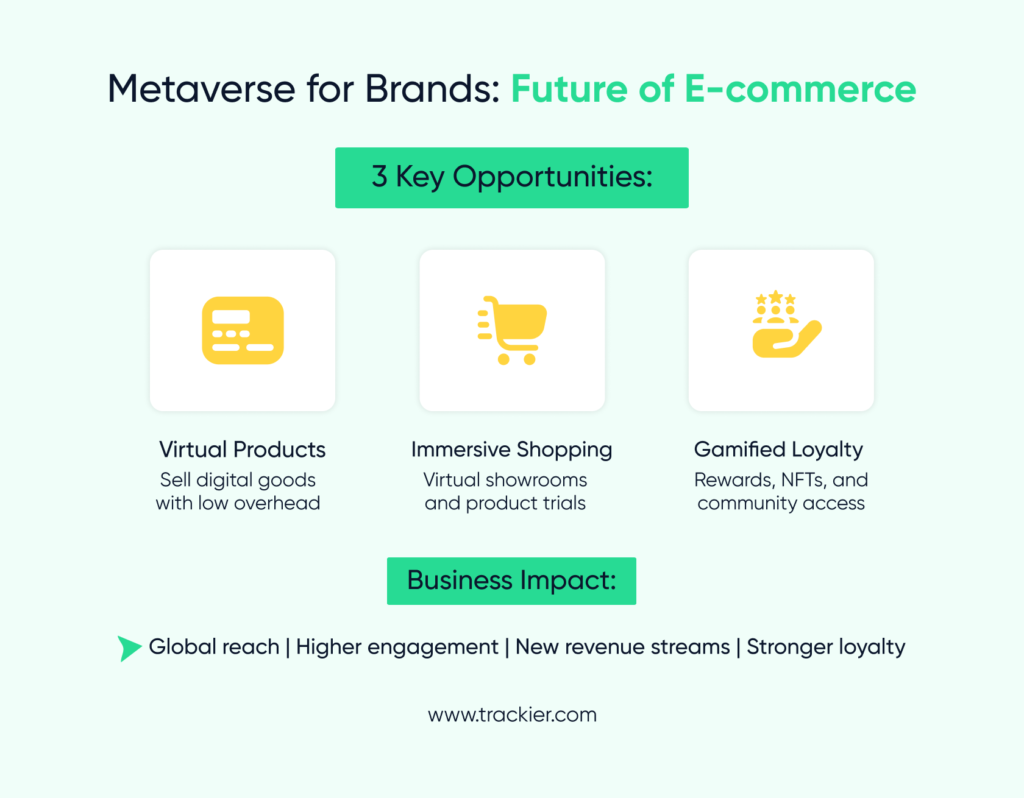
Over $100 billion was predicted to be spent on virtual goods on gaming platforms in 2021. People have paid real money for these virtual things, and predictions indicate that this trend will continue. Eliminating the expenses of manufacturing and shipping tangible goods is a huge opportunity for all brands. There are numerous methods for your company to profit from selling virtual items, including selling updates, online avatars, and virtual replicas of physical products in the metaverse for brands ecosystem.
2. VIP access using NFTs
One of the most current technological innovations that is on the blockchain is NFTs. You can show ownership of everything, from property to digital art, with the help of NFTs that give you a unique digital asset. One of the main ways brands are using NFTs to grow their business currently is by offering VIP access. Consumers can be rewarded by your brand for being regular users with special NFTs to gain unique access whenever your company produces new products or special events are being held. A consumer can attend events where he can give some ideas on products which have yet to be available through NFT, strengthening loyalty in the metaverse for brands spaces.
3. Creating Community
The metaverse heavily relies on social commerce, thus offering enormous opportunities for all brands. Brands can create vibrant communities where customers can interact with both the brand and other brand enthusiasts. They can use NFTs along with social media channels to give VIP access to special events and conferences. Selling NFTs that grant a three-year VeeCon access pass is similar to what Gary Vaynerchuck has done with VeeFriends, a strong example of community-led metaverse for brands execution.
4. Virtual Showrooms
Virtual showrooms are essential tools for both consumers and brands. They allow clients to conduct comprehensive explorations of a product before purchasing it. The clients can touch, move, and experience the products virtually before buying them to see whether they like the way they look and feel. Virtual showrooms eliminate the return of products as well as bridge the gap between online and offline shopping for everything from clothes to furniture, making them core to metaverse for brands strategies.
5. Product Individualization
The metaverse can also benefit your brand in the form of product configurators and customizers. Users can fully personalize goods such as autos or spectacles using these live demonstrations. Users can check whether their ideal product matches what they are looking for by trying it on or viewing it in real time, a key personalization driver in metaverse for brands adoption.
6. Reach a huge new audience
Utilizing the absence of local boundaries is one of the biggest opportunities for brands to succeed in the metaverse. The metaverse is unlimited, whereas a traditional store can only actually reach a limited number of people around it. This also allows you access to a ready market that you can sell into, like the video game industry, which is larger than both sports and film markets. Virtual goods like skins and other in-game items are sold. They will be the best shots at dominating the metaverse, being younger consumers, which is why metaverse for brands is gaining traction.
7. The Flywheel of Gamification for Metaverse
Gamification applies video game elements to non-game contexts. For example, the reward system in a video game is a brilliant technique for ensuring high involvement. Such an incentive system, taken from a video game and applied to e-commerce, could include strategies encouraging customers to engage with the brand or to assist in spreading major brand news. By offering virtual awards, which can be redeemed across multiple parts of a brand’s metaverse ecosystem, brands can start building their very own metaverse flywheel within the metaverse for brands landscape.
Managing rewards, partnerships, and performance across virtual ecosystems will require strong tracking infrastructure, which is where partner marketing platforms like Trackier become important.
As the metaverse evolves, so will the potential for profit for your brand. To remain ahead of your competition, consider adding these seven ideas to your e-commerce plan and exploring the long-term potential of metaverse for brands.
What is metaverse for brands?
Metaverse for brands refers to how businesses use virtual worlds, immersive experiences, and digital assets to engage customers, sell products, and build communities. It combines technologies like virtual reality, augmented reality, blockchain, and gaming environments. Brands can create virtual stores, launch digital products, and offer interactive experiences that go beyond traditional e-commerce channels and physical retail limitations.
How can brands make money in the metaverse?
Brands can generate revenue by selling virtual products, offering NFT-based memberships, hosting paid virtual events, and creating branded digital experiences. They can also monetize through partnerships with gaming platforms, advertising in virtual spaces, and selling digital collectibles. These revenue streams often have lower production and logistics costs compared to physical product sales and traditional retail distribution models.
Is the metaverse only useful for large global brands?
No, small and mid-sized brands can also benefit from metaverse adoption. Many platforms allow affordable entry through virtual storefronts, digital merchandise, and community-building experiences. Early adoption can help smaller brands stand out, reach global audiences, and build strong digital-first communities without needing massive physical infrastructure or large-scale retail investments to compete effectively.
What industries benefit the most from metaverse adoption?
Industries like fashion, gaming, entertainment, real estate, education, and automotive benefit significantly from metaverse integration. These sectors can use virtual experiences for product trials, immersive storytelling, digital product launches, and customer engagement. However, almost any consumer-facing industry can experiment with metaverse strategies to enhance brand interaction, personalization, and digital customer journeys.
Is the metaverse replacing traditional e-commerce?
The metaverse is more likely to enhance rather than fully replace traditional e-commerce. It adds immersive layers like virtual shopping, social commerce, and interactive product experiences. Many brands will operate hybrid models where physical stores, online websites, and metaverse experiences work together. This creates a more connected and personalized shopping ecosystem for modern digital consumers.