In today’s fast-evolving digital economy, affiliate marketing isn’t just another channel; it’s a core growth strategy for brands worldwide. In fact, more than 80% of brands now use affiliate marketing programs as a key part of their customer acquisition and revenue strategy.
However, as this performance-driven channel scales, maintaining consistency, trust, and brand safety becomes increasingly complex. Without clear affiliate marketing guidelines, brands risk misrepresentation, inconsistent messaging, and even compliance breaches, all of which can dilute brand value and hurt campaign performance.
That’s why defining affiliate marketing guidelines isn’t optional; it’s strategic. Whether you’re managing direct partners, working with large networks, or overseeing multi-tier sub-affiliates, setting and using the right rules is essential to protect your brand identity and unlock long-term affiliate ROI.
With comprehensive tracking, compliance monitoring, and automated tools from platforms like Trackier, brands can confidently scale affiliate channels while protecting how their brand is represented across global campaigns.
In this blog, we’ll walk you through the why and how of building affiliate marketing guidelines that protect your brand and drive measurable results, without sacrificing creative performance or partner satisfaction.
Why Is It Necessary To Protect Your Brand Using Brand Guidelines?
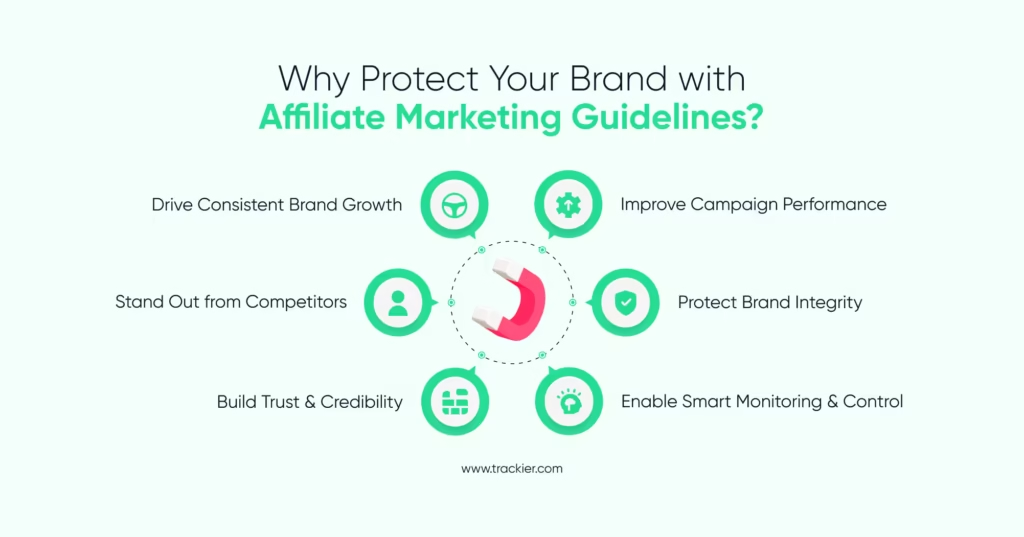
Staying a stable brand across the affiliate marketing industry empowers the development of your organization and differentiates you from your rivals. At Trackier, we’ve found a steady brand system and dedicated performance marketing software for affiliate marketing networks that helps to construct validity and reliability with existing and potential clients.
It also helps the brands and impacts the buying choices of their clients, while cultivating trust. Along these lines, organization development, cutthroat differentiators, validity, steadfastness, trust, and more – all great stuff can be gathered from here.
On the other hand, neglecting to follow the said brand guidelines can prompt unfortunate mission execution and adversely affect brand loyalty and integrity.
This is why Affiliate marketing brand guidelines become an integral factor to help you in accomplishing positive results.
Essential Eight Elements To Frame Guidelines
The principal significant advance is to set the standard procedures for subsidiary marketing efforts. Advertisers need to lay out and convey clear brand rules that are implemented by agreements (T&Cs) that are given to networks, which are imparted to associates.
The brand guidelines must need to have below mentioned 8 elements required to make an affiliate marketing campaign successful:
- Promotional Policies: Outline the OK purposes of the organization name and explicit occasions to stay away from while referring to the organization. As a best practice, it is useful to furnish Affiliates with visual guides to outline the OK purposes, notwithstanding the disallowed uses of the organization name.
- Logo Use: Define how the logo can be utilized, including the favored structure, dispersing rules, estimating, and satisfactory positioning. To stay away from logo abuse, remember the models for this part.
- Creatives: Provide directions on the most proficient method to use the endorsed imaginative resources (i.e., flags, advertisements, email pictures, and so on), notwithstanding arrangement rules, estimating, and models. On the other hand, give imaginative rules to members to make their resources whenever supported by the publicist.
- Brand names: Include the legitimate use of brand-name images and a connection to every reserved resource. Use tools that can image extender to expand and enhance your visuals without losing quality. This allows you to adjust compositions, add creative backgrounds, or adapt images for different formats seamlessly.
- Photography: Offer admittance to a library of supported photography, in addition to incorporating OK position rules and particulars to stay away from the photography. For instance: modifying colors, adding movements, resizing, and so on.
- Content: Determine the allowed typography and supported backup typography, outstanding channel-explicit content arrangements (i.e., social, email, show, and so forth), and distortions to stay away from (i.e., advancing limits, reserve funds).
- Connecting: Specify the adequate connecting technique from member limited-time offers and where to coordinate traffic.
- Disallowed action: List all unsuitable special ways of behaving. For instance: offering marked keyphrases or advancing proposals without endorsement.
Step-by-Step Instructions To Screen And Uphold Brand Guidelines
When the brand rules and T&Cs are set up, the following fundamental advance incorporates observing and requirement. For this, you’ll require an approach to effectively gather and examine your mission traffic information.
The following are useful arrangement highlights and tips to screen and implement subsidiary advertising brand rules:
- Track sub-associates: With many member marketing efforts, sponsors work with networks that have Affiliated, and those associates frequently have accomplices of their own, called sub-associates.
- Sub-offshoots offer significant worth. Be that as it may, being taken out a few times by publicists makes checking sub-offshoots more involved, and a stage component, for example, sub ID following is urgent. With the sub ID following, you can gauge sub-associate traffic quality and amount to guarantee that all the accomplices in your Affiliate marketing efforts are complying with brand rules.
- Influence an offshoot entrance: An Affiliate gateway is an incorporated center where members can access supported marketing resources for the offers they are driving traffic to.
Furthermore, they get continuous detailing, consistency devices for email campaigns, and self-administration gadgets for incorporating the following. To find out about member gateways, look at this video about the nuts and bolts of Affiliate entrances.
Bottom Line
Strong affiliate marketing guidelines are the foundation of a scalable and brand-safe affiliate program. As partnerships expand across networks, influencers, and sub-affiliates, maintaining control over messaging, trademarks, creatives, and promotional practices becomes critical to protecting brand equity and performance outcomes.
Well-defined guidelines not only prevent misuse and compliance risks but also improve campaign efficiency, traffic quality, and partner accountability. However, guidelines alone are not enough. Continuous monitoring, data transparency, and automated enforcement are essential to ensure every partner aligns with brand standards.
With advanced tracking capabilities, sub-ID visibility, fraud detection, and centralized affiliate management, Trackier helps brands to enforce affiliate marketing guidelines with precision while confidently scaling global affiliate programs.
Protect brand integrity. Strengthen partnerships. Drive performance, all with the right systems.
FAQs
1. How does Trackier support affiliate marketing guideline management?
Trackier provides advanced tracking, fraud detection, sub-ID monitoring, and centralized affiliate management tools that help brands enforce affiliate marketing guidelines. With real-time insights and compliance visibility, organizations can protect brand integrity while scaling global affiliate programs confidently and efficiently.
2. What risks arise without affiliate marketing guidelines?
Without affiliate marketing guidelines, brands may face trademark misuse, misleading promotions, brand bidding conflicts, compliance violations, and reputational damage. Lack of oversight can also result in low-quality traffic and inflated marketing costs, ultimately reducing the effectiveness of affiliate programs.
3. How often should affiliate marketing guidelines be updated?
Affiliate marketing guidelines should be reviewed periodically to reflect evolving compliance regulations, marketing strategies, and platform policies. Updates may also be required when launching new products, entering new markets, or adjusting brand positioning to ensure continued alignment across affiliate campaigns.
4. Do affiliate marketing guidelines apply to sub-affiliates?
Yes, affiliate marketing guidelines must extend to sub-affiliates and third-party partners. Multi-tier affiliate structures increase the risk of brand misuse. Proper tracking mechanisms, such as sub-ID monitoring and partner visibility tools, ensure that all downstream partners comply with defined brand standards.
5. How do affiliate marketing guidelines impact campaign performance?
Clear affiliate marketing guidelines improve campaign efficiency by aligning affiliates with brand objectives. When messaging, creatives, and traffic sources are standardized, brands experience better conversion quality, reduced fraud, and improved ROI. Structured guidelines also foster stronger partnerships built on transparency and accountability.