The e-commerce industry is bigger than you can imagine in 2026, and naturally, it’s become more competitive than ever. As per the report, globally online sales are expected to reach $6.88 trillion, and more than 2.7 billion people buy stuff online worldwide.
In this competitive market, scaling revenue is challenging for brands because old fundamentals have changed. CAC is increasing, and fluctuating conversion rates. But brands can leverage performance marketing to scale up their revenue.
However, to increase e-commerce sales, brands need a comprehensive performance marketing software to get correct attribution, required automation, and partner-driven growth capabilities. Trackier offers comprehensive campaign insights and smartlinks.
In this blog, we will break down how brands can increase sales using performance marketing and be profitable in 2026.
E-commerce Growth in 2026
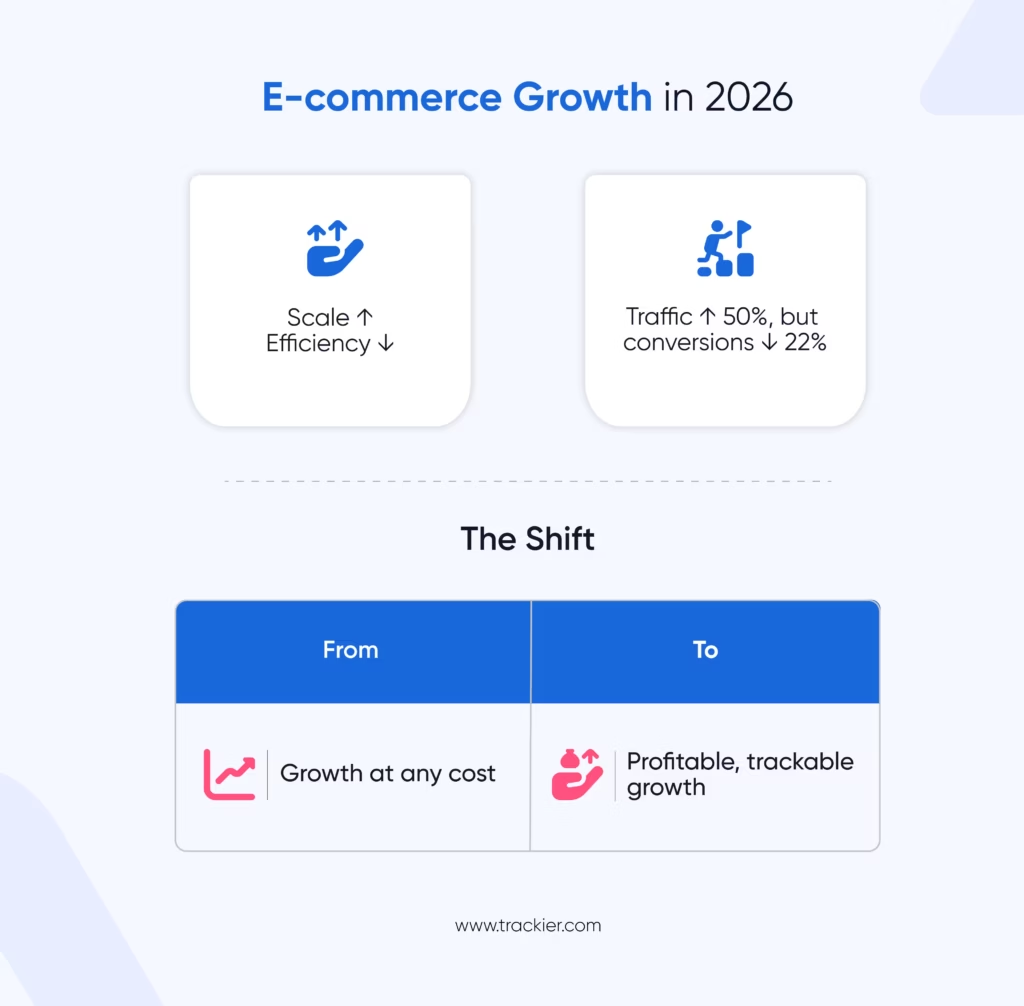
E-commerce in 2026 is defined by a paradox: massive scale, but slowing growth and shrinking margins.
But, at the same time, competition has been rising across every channel, CPC is increasing, while conversion rates are volatile, as we talked before. The result? As we already expect, brands have to spend more to acquire new customers, and because of this rising cost, their profitability takes a hit.
Now, another shift is happening in the customer journey. Before buying any stuff online, buyers interact with many touchpoints, including ads, social media, influencers, marketplaces, email, etc. This makes the identifying attribution more challenging.
Brands should use a performance marketing software to resolve these challenges, and that is exactly what Trackier offers by providing comprehensive performance data, campaign insights in real-time, and built-in fraud prevention.
What is Performance Marketing in E-commerce?
Performance marketing is a result-driven approach where brands have to pay only for results, it could be clicks, leads, etc. Instead of paying for impressions or awareness, you get the actual ROI.
Performance marketing channels include paid search, social media advertising, affiliate marketing, influencer campaigns, and email marketing. In fact, with the help of performance marketing software, you can track all of the activity in real-time.
Trackier helps in end-to-end tracking, attribution, and partner management. E-commerce brands could scale up their revenue significantly with the help of performance marketing.
Best Ways to Increase E-commerce Sales: A Performance Marketing Playbook
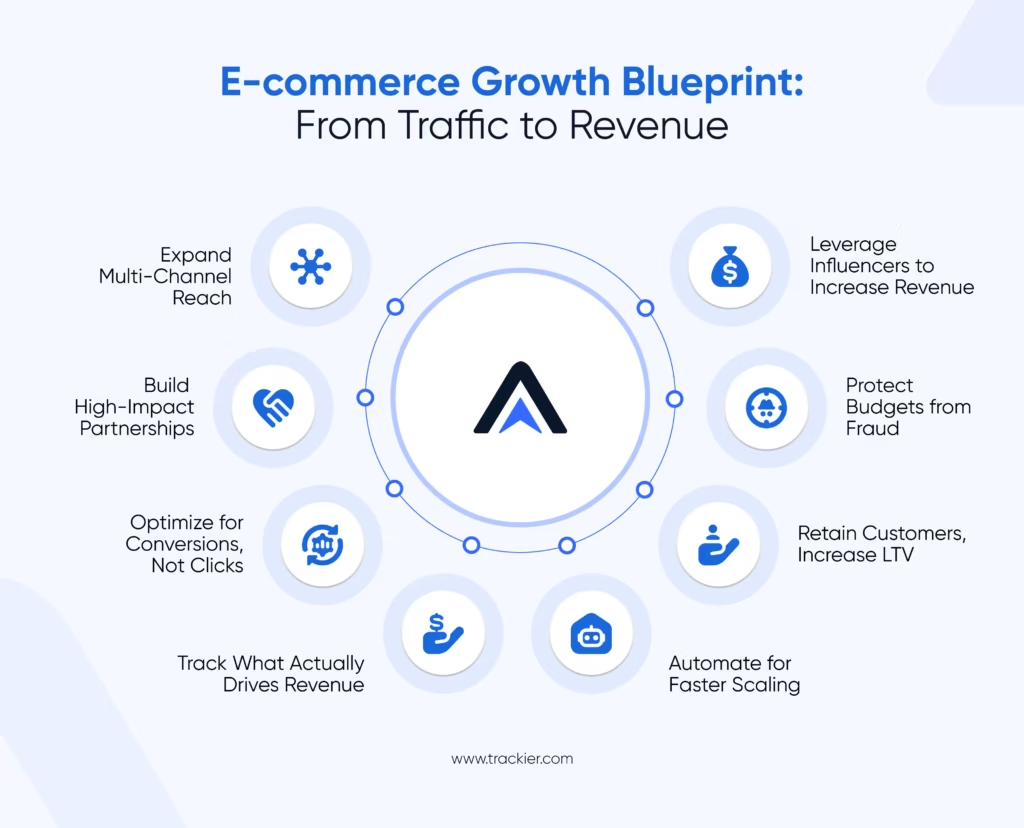
To grow e-commerce sales in 2026, brands need to take a performance marketing approach that supports interconnected strategies rather than isolated tactics.
All of the most successful brands focus on business growth strategies that work to combine data, automating processes, and partnering with others.
Use the following proven playbook to implement a strategy that builds a multi-channel acquisition channel.
1. Build a Multi-Channel Acquisition Channel
Single-channel reliance, including paid ads and organic traffic, is one of the biggest limitations to growth for an e-commerce brand. The customer experience can now occur across multiple journeys.
For example, one customer may discover your product via Instagram, read a review blog, click on an affiliate link, and then retarget that customer using retargeted ads. Consequently, it is critical for brands to develop multi-channel acquisition strategies that can be funded through paid ads like Google, Meta, affiliate marketing, influencer marketing, and organic marketing.
Using a multi-channel acquisition approach helps brands not only to increase brand reach but also to reduce risk, increase scalability, and maximize returns on advertising dollars spent.
Trackier enables brands to track results from all of their marketing channels across multiple objectives, allowing them to better understand their return on investment and the overall contribution to revenue, eliminating siloed objectives.
2. Invest in Affiliate and Partner Marketing
Affiliate marketing has become one of the highest ROI channels in e-commerce. In fact, it drives up to 16% of total e-commerce sales globally, with brands earning $12–$15 for every $1 spent.
What makes it powerful is simple: you pay only for results. Some of the partner types that you should give focus to are coupon and cashback platforms that inent on these are high-converting, content publishers, review sites, influencers, and creators.
Affiliate marketing also scales distribution without increasing internal costs. Your partners become an extended sales force.
Trackier enables this by helping brands:
- Onboard and manage partners at scale
- Create custom commission structures
- Track every sale with accuracy
3. Optimize Conversion Rate, Not Just Traffic
More traffic doesn’t always mean more sales. In 2026, the real growth lever is conversion rate optimization (CRO). Focus on:
- Faster, frictionless checkout experiences
- Mobile-first design
- Personalized product recommendations
- A/B testing landing pages
Even a 1% increase in conversion rate can significantly impact revenue without increasing ad spend. With performance tracking software, brands can identify:
- Which landing pages convert best
- Which traffic sources drive high-intent users
4. Use Data-Driven Attribution Models
Most brands still rely on last-click attribution, and that’s a problem. In reality, conversions are influenced by multiple touchpoints:
- Ads
- Affiliates
- Influencers
- Email campaigns
Without proper attribution, you:
- Overvalue some channels
- Undervalue others
- Misallocate budgets
Data-driven attribution gives you a complete view of the customer journey, helping you to identify high-performing channels, optimize spend, and scale profitably.
5. Automate Campaign Optimization
Manual campaign management is no longer scalable. With increasing data complexity and channel volume, automation is now essential. Top brands use automation for:
- Smart traffic routing
- Budget allocation
- Rule-based campaign optimization
For example:
- Redirecting traffic to high-converting offers
- Pausing underperforming campaigns automatically
- Scaling winning channels instantly
This not only improves efficiency but also ensures real-time optimization at scale. Trackier’s SmartLinks help brands maximize performance without constant manual intervention.
6. Focus on Customer Retention and LTV
Acquiring customers is expensive; retaining them is where profitability lies. In 2026, leading e-commerce brands are shifting focus toward:
- Customer Lifetime Value (LTV)
- Repeat purchases
- Retention-driven campaigns
Key strategies include:
- Email and WhatsApp marketing
- Retargeting campaigns
- Loyalty and rewards programs
Performance marketing plays a role here, too, especially through retargeting ads and affiliate re-engagement campaigns.
7. Prevent Ad Fraud and Budget Loss
One of the most overlooked challenges in e-commerce growth is ad fraud. From fake clicks to fraudulent conversions, brands often lose a significant portion of their budget without realizing it. Common risks include:
- Click fraud
- Fake leads or installs
- Invalid affiliate traffic
Without proper detection, this directly impacts ROI. Modern performance marketing requires built-in fraud prevention mechanisms that:
- Filter invalid traffic
- Protect campaign budgets
- Ensure accurate attribution
Trackier’s fraud detection helps brands to protect their campaigns and ensure every rupee spent drives real results.
8. Leverage Influencer Performance Campaigns
Influencer marketing is no longer just about awareness; it’s now a performance channel. Today, influencers and affiliates contribute up to 20% of e-commerce revenue during peak sales periods. Affiliate-linked products are 6x more likely to convert than non-tracked promotions.
The shift is clear: brands are moving from vanity metrics to trackable influencer ROI. Winning strategies include:
- Giving influencers unique tracking links
- Running commission-based campaigns
- Measuring performance at a granular level
Key Metrics Every E-commerce Brand Must Track
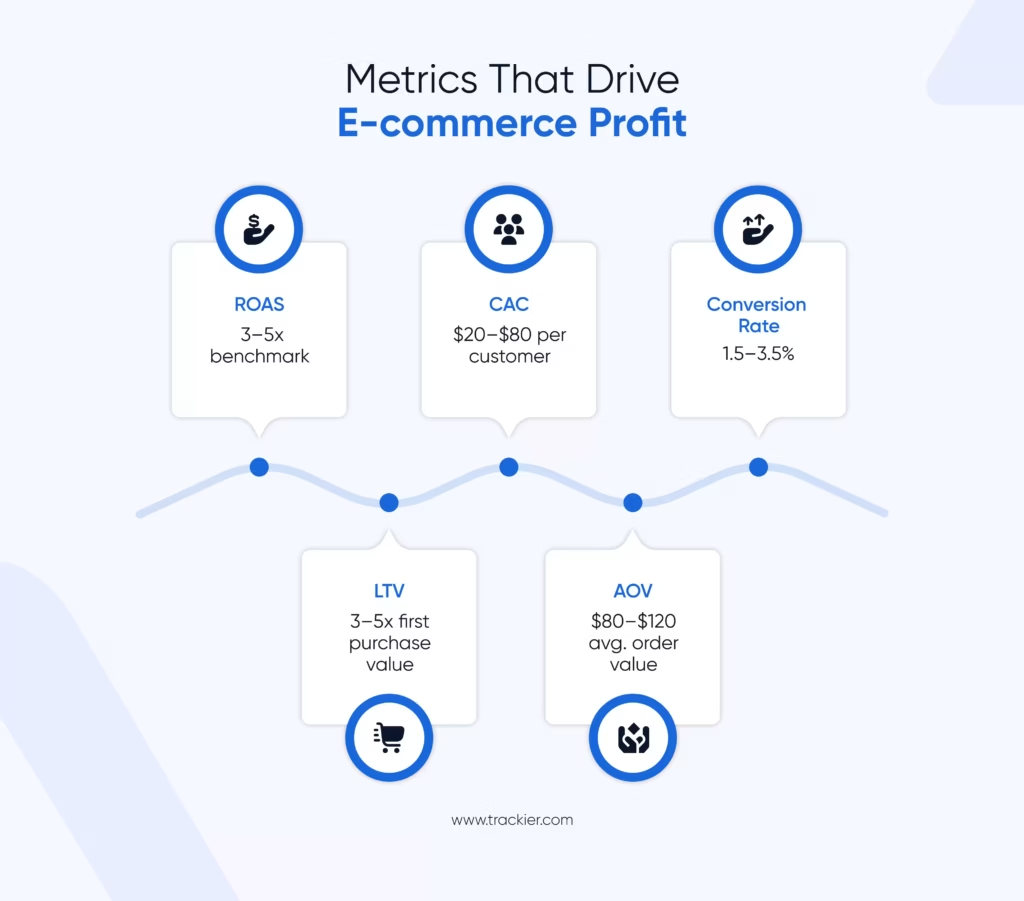
Scaling e-commerce sales isn’t just about running more campaigns; it’s about tracking the right metrics that directly impact profitability. Without clear visibility into performance, even high traffic can fail to convert into sustainable revenue.
Start with Return on Ad Spend (ROAS), which measures how efficiently your campaigns generate revenue. Alongside this, Customer Acquisition Cost (CAC) helps you understand how much you’re spending to acquire each customer, critical in a time when acquisition costs are steadily rising.
Conversion Rate is another key indicator, showing how effectively your traffic turns into paying customers. To ensure long-term growth, brands must also focus on Customer Lifetime Value (LTV), which highlights the total revenue a customer brings over time.
Additionally, tracking Average Order Value (AOV) can help you identify opportunities to increase revenue per transaction through upselling or bundling.
Trackier makes it easier to monitor these metrics in real time, giving brands the insights needed to optimize campaigns, allocate budgets effectively, and scale profitably across multiple channels.
How Trackier Helps Increase E-Commerce Sales Conversion?
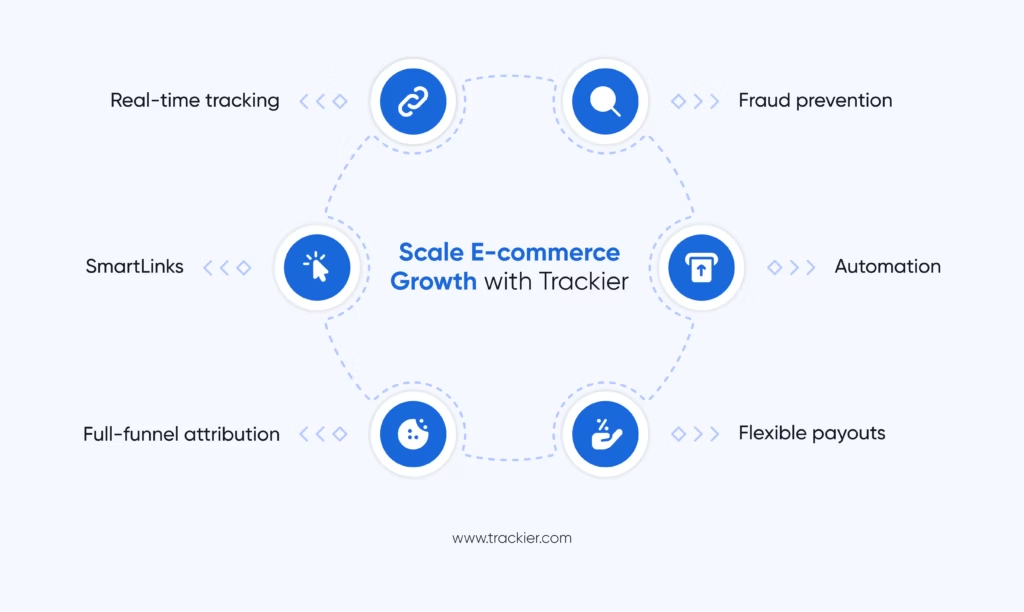
Scaling e-commerce today requires more than just running campaigns; it demands real-time visibility, automation, and precise control over performance. Trackier enables this by acting as a centralized performance marketing engine for brands.
- Real-time tracking and analytics – Track every click, conversion, and revenue source across channels with live data, helping you make faster, data-backed decisions.
- Full-funnel attribution across channels – Understand which campaigns, affiliates, and touchpoints actually drive sales; not just last-click results, so you can allocate budgets more effectively.
- SmartLinks for higher conversions – Automatically route users to the most relevant offers based on geo, device, or behavior, ensuring no traffic is wasted.
- Advanced fraud prevention – Identify and block fake clicks, bot traffic, and invalid conversions in real time, protecting your marketing budget and ROI.
- Flexible payout and partner management – Manage affiliates, influencers, and partners at scale with customizable commission models (CPS, CPA, CPL) and automated workflows.
- Automation and optimization at scale – Reduce manual effort with rule-based automation, campaign controls, and performance-driven optimization.
Conclusion
E-commerce continues to expand globally, but with average conversion rates hovering around 2.5%–3% in 2026, growth is no longer guaranteed; it depends on how efficiently brands convert and optimize performance.
If you want to increase sales, don’t just scale spend; fix attribution, diversify channels, automate optimization, and eliminate wasted budget. That’s the difference between brands that grow and those that plateau.
The fastest-growing e-commerce brands already operate on performance-driven systems. If you’re still relying on fragmented tools, you’re decreasing your revenue.
Book a demo and see exactly where your growth is not happening, and how to scale profitably.
FAQs
1. What role does automation play in e-commerce growth?
Automation helps streamline campaign optimization, traffic distribution, and reporting. It reduces manual effort, improves efficiency, and enables real-time decision-making, allowing brands to scale faster without increasing operational complexity.
2. How do I improve conversion rates for my online store?
Improve conversion rates by optimizing landing pages, simplifying checkout, improving page speed, and using personalized offers. A seamless user experience reduces friction and increases the likelihood of turning visitors into paying customers.
3. What tools help scale e-commerce performance marketing?
Trackier helps scale e-commerce marketing by providing real-time tracking, attribution, affiliate management, and fraud prevention. These capabilities allow brands to optimize campaigns, manage partners, and maximize ROI through a centralized performance marketing platform.
4. What are the most important e-commerce metrics to track?
Key metrics include conversion rate, customer acquisition cost (CAC), average order value (AOV), customer lifetime value (LTV), and cart abandonment rate. Tracking these helps brands understand performance, identify bottlenecks, and optimize marketing strategies effectively.
5. How can I reduce customer acquisition cost (CAC)?
To reduce CAC, optimize targeting, improve conversion rates, and invest in organic and partner channels like affiliates. Retargeting existing users and improving attribution also help eliminate wasted ad spend and improve marketing efficiency.