Many businesses build a wide range of partnerships in the hopes that they can consistently deliver marketing and sales results. Yet, a common problem becomes apparent, partners often stay inactive or underperform because they do not have the right tools, guidance, or motivation. This difference results in missed opportunities and lower returns on partnership investment.
The answer lies in channel activation. Businesses can achieve better outcomes from their ecosystems through structured efforts that inform, empower, and motivate partners.
When integrated with performance marketing software, activation becomes measurable. It makes it easy to determine which partners add value and which areas require development. This change helps businesses to transform passive networks into dynamic catalysts of growth.
What is Channel Activation?
Channel activation is the process of converting recruited partners into productive contributors. The partners are provided with the information, tools, and support they require to market and sell. It focuses on helping partners put their training into practice rather than just onboarding.
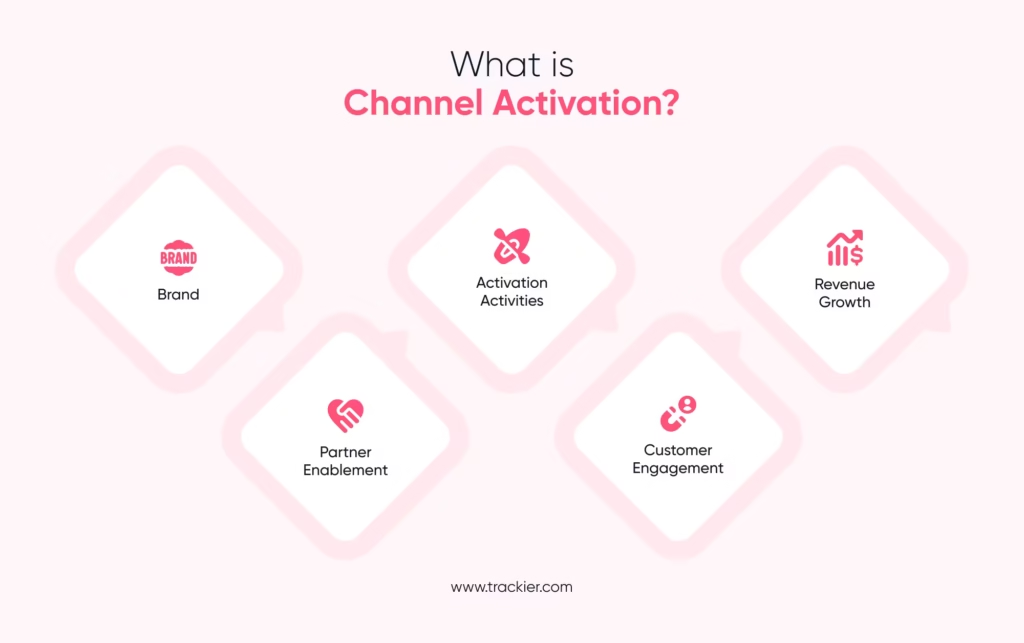
This involves multiple steps. Clear communication, training, access to co-branded content, and performance measurement. The goal is to provide every partner with trust and the capacity to execute campaigns, contact clients, and create income.
While channel enablement gives information and materials, channel activation ensures that these resources are used properly. Similarly, partner activation refers to encouraging each partner to actively participate, which is a direct result of a well-structured activation program.
Why is Channel Activation Important in Modern Marketing
Consumers interact with brands at several touchpoints before making a purchase. For businesses that rely on partners, this means that third-party resellers and vendors represent the brand consistently.
Even successful partner ecosystems fail when channels are not activated. Partners might not prioritize your product or service or lack confidence in doing so. Activation fills the gap by:
- Guaranteeing partners understand the positioning of the brand.
- Equipping them to implement multi-channel marketing activation programs.
- Motivating them by recognition, rewards, or revenue incentives.
On top of that, channel activation gives business benefits such as increased partner engagement, shorter sales cycles, and greater market coverage.
Core Elements of Channel Activation
Channel activation works best when it is built on a few key elements:
- Communication: Partners require regular information on new goods, sales procedures, and market trends.
- Training and Enablement: Regular training ensures that partners understand how to position, sell, and support the product.
- Marketing Support: Access to pre-designed assets, co-marketing dollars, and promotional programs.
- Technology: Using channel activation software or partner portals to simplify onboarding, asset sharing, and campaign execution.
- Measurement and Feedback: Clear metrics for evaluating participation, sales contribution, and overall impact.
Understanding these fundamental factors allows organizations to create effective channel activation strategies that convert trained partners into active contributors.
Channel Marketing vs. Channel Activation
Channel marketing is a larger method of advertising products or services via third-party partners such as resellers, distributors, or affiliates. It focuses on extending market reach and customer access via partner networks.
Channel activation, on the other hand, ensures that marketing efforts bring returns. Channel marketing creates the groundwork through campaigns and strategy, but activation provides partners with training, content, tools, and incentives for executing it effectively. A vendor, for example, can create a co-branded campaign under channel marketing, but it will only be of benefit if partners are equipped with tools and support to implement it.
These functions complement one another: channel marketing defines what is to be done, while channel activation makes sure that it is done.
Channel Activation Strategies
Businesses use planned actions to get their partners to work well together. Some of the common processes include:
- Onboarding Programs: Introduce partners to company culture, product information, and sales protocols.
- Sales Playbooks: Offers a ready-to-use guide and protocols for partner sales teams.
- Training and Certification: Providing partners with advanced information while rewarding them for achieving milestones.
- Incentive Programs: Financial incentives, recognition, or performance-based bonuses.
- Co-Marketing Campaigns: Run campaigns with partners to increase reach and reputation.
- Gamification: Using leaderboards or contests to promote healthy competition and engagement.
All of the strategies increase partner engagement so that partners are actively contributing to growth rather than simply keeping their place within the system. Businesses benefit from an established channel activation plan that outlines targets, resources, and measurement techniques so that these initiatives are regularly followed.
Channel Activation Plan
A channel activation plan defines the actions required to turn partner relationships into results that generate income. A typical plan contains:
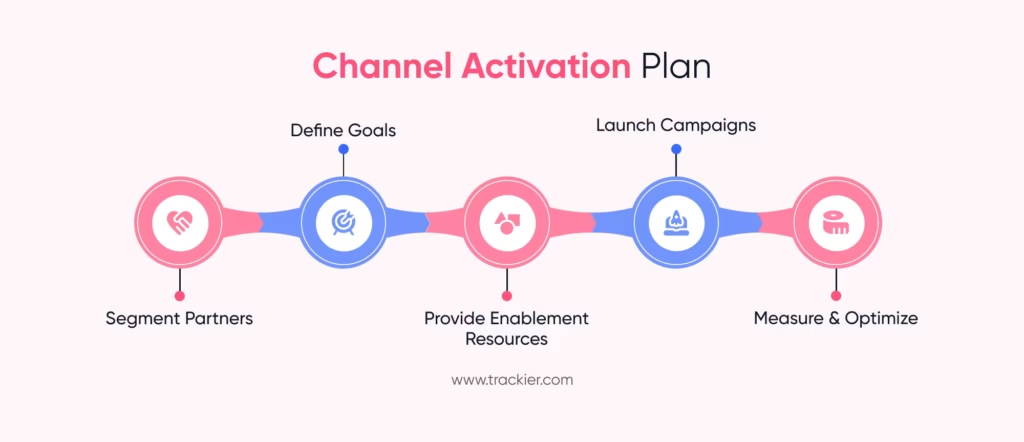
- Segmentation: Categorizing partner kinds depending on their strengths, region, or consumer base.
- Goal Setting: Establish measurable objectives such as lead generation, sales volume, and campaign involvement.
- Enablement Resources: Offer learning modules, sales kits, and co-branded content.
- Technology Setup: Utilizing technologies such as partner portals or channel activation software to execute faster.
- Engagement Programs: Run ongoing campaigns, events, or workshops to keep partners engaged.
- Monitoring: Monitor performance indicators and adjust the plan as needed.
A well-structured plan makes sure that activation efforts are focused on outcomes. Beyond internal planning, the next stage is to allow partners to effectively use many marketing channels through multi-channel marketing activation.
Multi-Channel Marketing Activation & Its Link to Channel Activation
Multi-channel activation enables partners to implement campaigns across various digital and offline channels. These platforms can be email, social media, search advertisements, webinars, and events.
Channel activation ensures that partners have access to these initiatives and understand how to implement them successfully. For example, a corporation may offer partners social post templates, pre-approved ad creatives, or ready-to-send email campaigns.

By integrating channel activation and multi-channel marketing, businesses can maintain consistent brand messaging while reaching a larger audience via partner-led campaigns.
Activating partners across channels involves launching customized activation campaigns to engage and motivate partners or consumers.
What are Activation Campaigns?
Activation campaigns are precision marketing tactics that work to trigger partners or end users. They are used to trigger a specific activity, for example, driving the promotion of a product launch, creating trial sign-ups, or boosting seasonal sales.
Common types of activation campaigns are:
- Product Launch Campaigns: Preparing partners to introduce new offerings.
- Awareness Campaigns: Building visibility for a brand or solution.
- Sales Incentive Campaigns: Encourage partners to meet targets within a specific term.
- Co-Marketing Initiatives: Joint activities between vendors and partners to target new market segments.
Activation programs transform strategic planning into real partner involvement, converting passive partners into active contributors. While ads motivate people to take action, businesses have to be mindful of potential channel activation challenges that can have an impact on success.
Challenges in Channel Activation
Despite its importance, channel activation comes with challenges:
- Low Partner Engagement: Some partners may not value your brand.
- Lack of Training: Your partners may be unaware of how to properly position or market your products.
- Technology Barriers: Complex systems might prevent implementation.
- Difficulties Measuring ROI: Without the proper tools, it can be difficult to track the effect of activation efforts.
Addressing these difficulties requires established programs, ongoing support, and data-based insights using performance marketing software. To ensure activation efforts are functional, businesses need simple methods of measuring success in channel activation.
Measuring Success in Channel Activation
The success of channel activation should be measured using clear, measurable indicators. Common metrics include:

- Partner engagement in campaigns.
- Adoption rate of marketing assets.
- The number of leads generated by partners.
- Revenue contribution from partnership-driven transactions.
- Partner satisfaction and retention.
Monitoring these KPIs helps businesses to continuously adjust plans, optimize promotional activities, and solidify partner connections.
Bottom Line
Channel activation has become an essential component of how businesses grow in competitive markets. It is no longer restricted to onboarding partners, but now includes providing them with the resources, tools, and strategies they need to be successful. Partner engagement and support improve their capacity to increase demand, close sales, and continuously represent the brand.
A well-organized channel activation strategy also guarantees that marketing efforts are not wasted. Instead, campaigns are consistent, measurable, and adaptive to various partner networks. Businesses that adopt multi-channel marketing activation, supported by a clear strategy and dependable software, observe increased collaboration and returns from their partnerships.
FAQs
What is channel activation in marketing?
Channel activation in marketing is the process of preparing and motivating partners, such as resellers, distributors, or affiliates, to actively promote and sell a company’s products or services. It includes training, enablement tools, campaigns, and technical support. Effective partner activation improves engagement, maintains consistent messaging, and generates demonstrable growth across multiple customer touchpoints.
What is activation marketing?
Activation marketing is a technique that aims for instant client action, typically through campaigns that promote trial, purchase, or engagement. In contrast to wide awareness marketing, activation attempts for immediate responses, whether through events, digital campaigns, or experiential activities. The goal is to turn interest into measurable results like leads, signups, and sales.
What is channel marketing and what are its examples?
Channel marketing is the activity of advertising products or services through partners such as distributors, resellers, or affiliates rather than direct sales. It helps businesses to expand their market reach while lowering costs. Examples include co-branded campaigns with retail partners, e-commerce affiliate programs, distributor-led promotions, and training-based partner enablement initiatives.
